

Read in: English | Pidgin English
🩺 Medically reviewed by the Health Decoded Guide Editorial Team · Last reviewed: July 2026
🔍 Quick Summary
Work-life balance means managing work and personal life in a healthy way.
Good balance improves energy, productivity, and overall wellbeing.
1️⃣ Introduction
Work-life balance is about how you divide time and energy between work and personal life.
• includes work, rest, family, and personal time
• affects both mental and physical health
• varies depending on individual needs
👉 Balance does not mean equal time—it means sustainable living.
2️⃣ How it happens
Balance is influenced by daily habits and boundaries (deliberate intentional actions).
• workload and expectations affect time use
• rest and recovery restore energy
• boundaries help separate work and personal life
👉 Without boundaries, work can gradually take over.
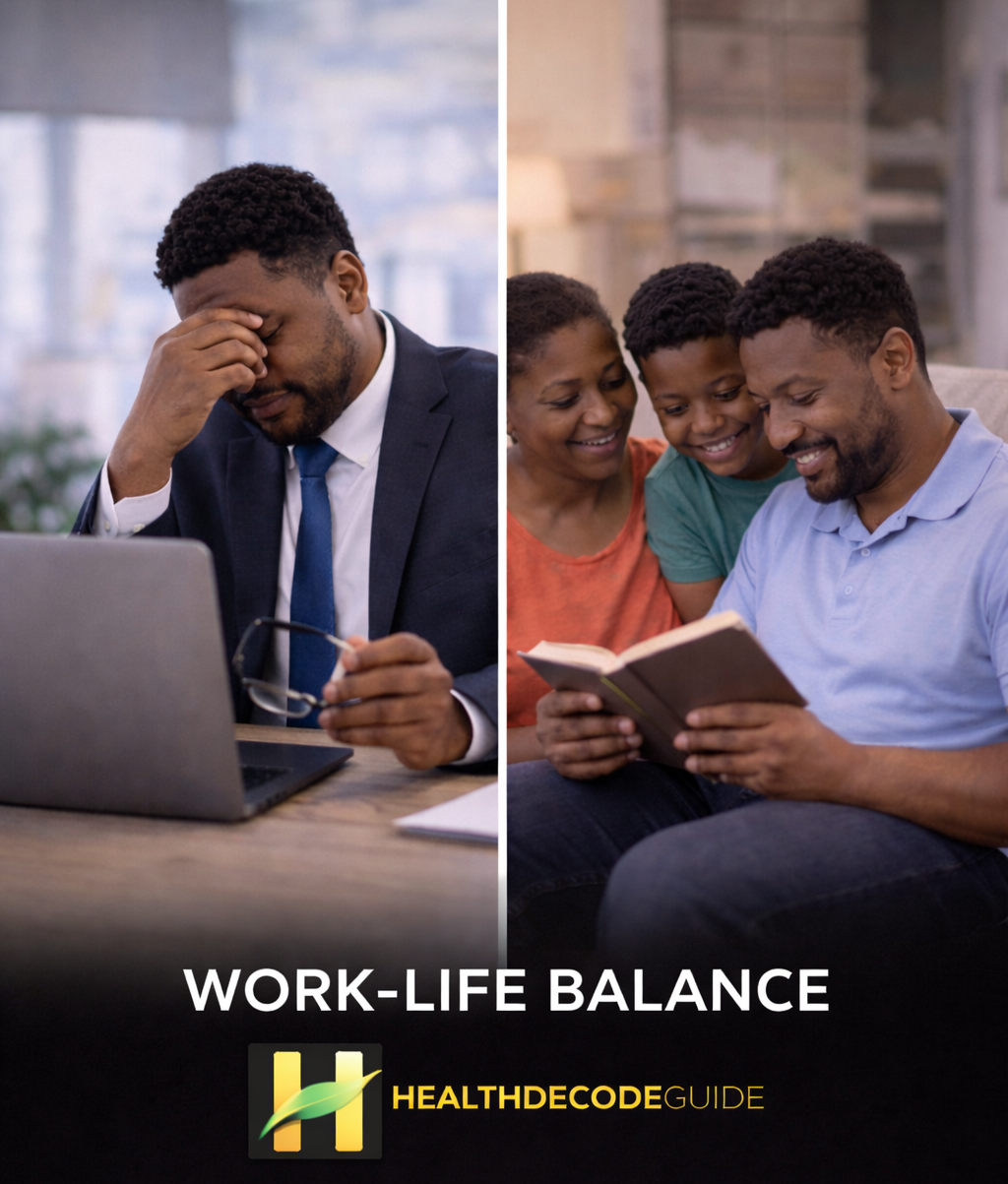
3️⃣ "Types"
• Balanced routine
- clear separation between work and personal time
- regular rest and recovery
• Imbalanced routine
- excessive work or constant stress
- limited recovery time
👉 The difference often lies in boundaries and habits.
4️⃣ Common causes of imbalance
Work-related factors
• long working hours
• high workload or pressure
• shift work or multiple jobs
Personal factors
• difficulty saying no
• poor time management
• lack of boundaries between work and personal life
Social and financial factors
• financial pressure
• family responsibilities or caregiving
• pressure to succeed or support relatives
• long commuting times
👉 Many people experience poor work-life balance because of a combination of work, family, financial and social pressures—not just one cause.
5️⃣ Symptoms of Poor Work-Life Balance
• feeling tired most of the time
• difficulty concentrating or staying productive
• feeling stressed, overwhelmed or irritable
• poor sleep
• losing interest in hobbies, family or friends
👉 These symptoms can develop when work demands consistently outweigh time for rest, recovery and personal life.
6️⃣ Effects on your mind and body
If poor work-life balance continues, it may lead to:
• burnout
• anxiety or depression
• ongoing physical tension
• reduced productivity
• relationship problems
👉 Over time, poor work-life balance can affect both your physical and mental health.
7️⃣🩺 When it becomes concerning 🚨
Seek support if you have:
• persistent exhaustion despite resting
• symptoms of burnout
• ongoing sleep problems
• work affecting your relationships or health
• feeling unable to cope with daily demands
👉 These may be signs that you need to make changes, seek support or speak with a healthcare professional.
8️⃣ Management / strategies
• set clear boundaries between work and personal life
• prioritize important tasks and learn to say no
• schedule time for rest, family and hobbies
• ask for support when work becomes overwhelming
• speak with your employer if your workload is unrealistic
👉 Small changes to your routine and workload can make a big difference over time.
9️⃣ Practical daily habits
• take regular breaks during the day
• disconnect from work after working hours when possible
• exercise regularly
• get enough sleep
• make time for family, friends and activities you enjoy
👉 Healthy daily habits help you recharge and reduce the risk of stress and burnout.
🟢Important message
Work-life balance is essential for sustainable health.
👉 Protecting your time and energy improves both work and life quality.
FAQ
• Is it possible to fully balance work and life?
Balance changes over time—but can be improved.
• What is the first step?
Setting boundaries and prioritizing rest.
• Can working longer hours make me more productive?
Not always. Long hours without enough rest can reduce productivity and increase burnout.
• How do I know if my work-life balance is unhealthy?
If work regularly affects your sleep, relationships or physical and mental health, your balance may need attention.
• Can small changes really make a difference?
Yes. Simple changes, such as taking regular breaks and setting boundaries, can improve work-life balance over time.
🔗 Related Health Topics
• Stress management
• Stress and Burnout
• Sleep and recovery
• Chronic fatigue syndrome
• Heart Disease
• Heart Disease prevention
📚 Medical References
• World Health Organization (WHO). Mental health at work.
• Centers for Disease Control and Prevention (CDC). Providing Support for Worker Mental Health.
• Mayo Clinic. Job burnout: How to spot it and take action.
• National Institute for Health and Care Excellence (NICE). Mental wellbeing at work (NG212).
• American Psychological Association (APA). Coping with stress at work.
⚠️ Medical Disclaimer
This article is for educational purposes only and does not replace professional medical advice.