Read in: English | Pidgin English
🩺 Medically reviewed by the Health Decoded Guide Editorial Team · Last reviewed: July 2026
🔎 Quick Summary
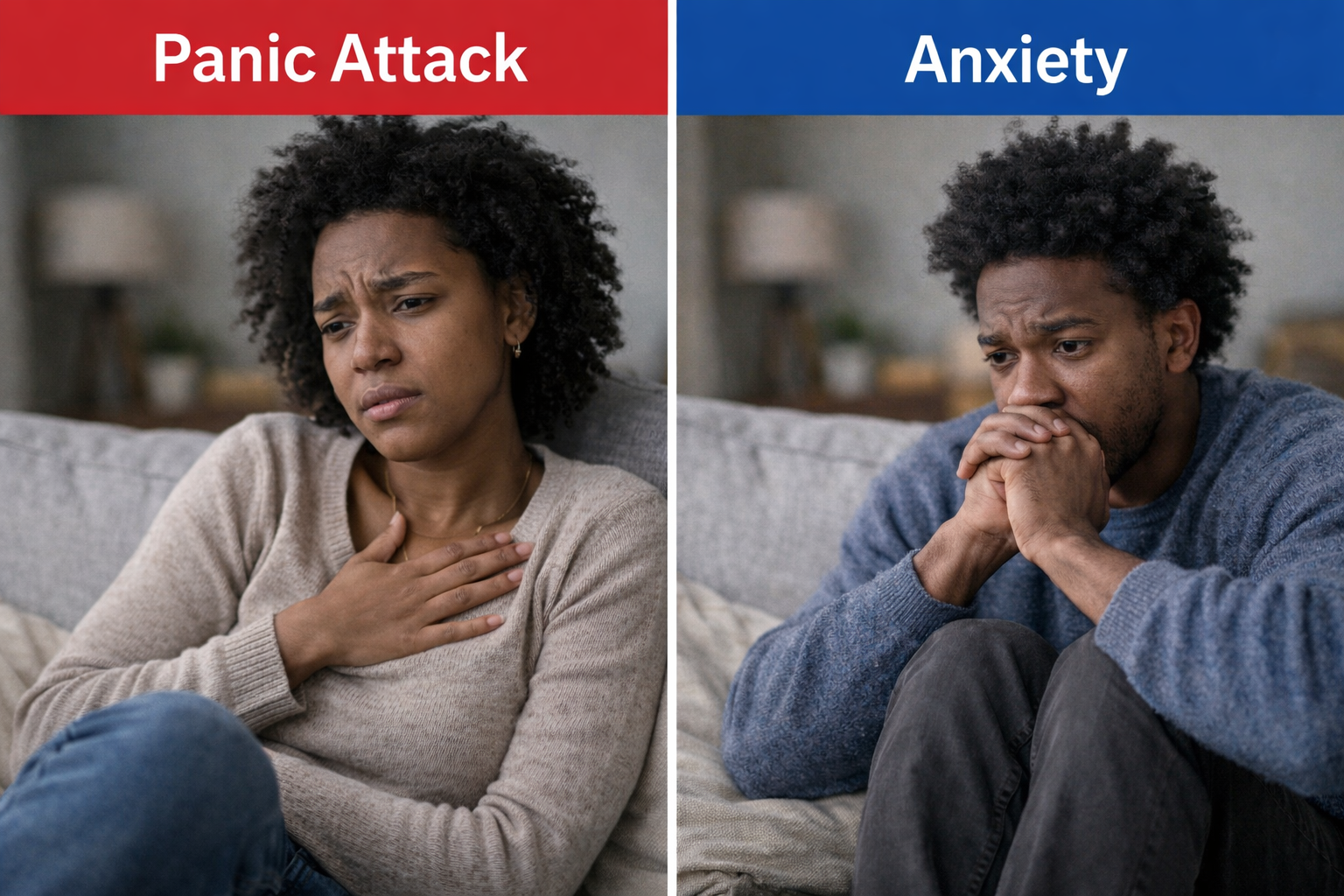
Anxiety is usually gradual and ongoing, while panic attacks are sudden, intense episodes that peak quickly.
1️⃣ Introduction
Anxiety and panic attacks are closely related but not the same.
Many people confuse them because they share similar symptoms such as:
• fast heartbeat
• shortness of breath
• chest discomfort
Understanding the difference helps reduce fear and guides the right response.
2️⃣ How they develop
Anxiety
• builds gradually
• linked to stress or worry
• can last for hours or days
Panic attack
• starts suddenly
• often without warning
• peaks within minutes
3️⃣ Symptoms
Both may cause:
• palpitations
• breathlessness
• dizziness
• sweating
But differences include:
Anxiety:
• constant worry
• tension
• restlessness
Panic attack:
• intense fear
• feeling of losing control
• fear of dying
4️⃣ Symptom explanation
Both conditions activate the fight-or-flight response.
However:
• anxiety = lower intensity but longer duration
• panic attack = very intense but short duration
Panic attacks feel overwhelming because the body reacts very strongly in a short time.
5️⃣ Key differences (simple table style)
Onset
• Anxiety → gradual
• Panic attack → sudden
Intensity
• Anxiety → mild to moderate
• Panic attack → severe
Duration
• Anxiety → long-lasting
• Panic attack → short (minutes)
Trigger
• Anxiety → often linked to stress
• Panic attack → may occur without trigger
6️⃣ When it becomes serious
Seek medical help if:
• symptoms are severe
• first episode (to rule out heart problems)
• symptoms interfere with daily life
• frequent panic attacks
⚠️ Always take chest symptoms seriously.
7️⃣ Management
For both conditions:
• breathing techniques
• stress management
• regular exercise
• good sleep
Professional help may include:
• therapy (CBT)
• medication
8️⃣ Diagnosis / assessment
Doctors may:
• review symptoms
• rule out physical conditions
• perform mental health assessment
9️⃣ Important message
Anxiety and panic attacks are common and treatable.
Understanding the difference reduces fear and helps you respond calmly.
🔟 FAQ
🔹 Can anxiety turn into a panic attack?
Yes, in some cases.
🔹 Which one is more dangerous?
Neither is usually dangerous, but symptoms can feel severe.
🔹 Should I go to hospital?
Yes, especially for first-time symptoms.
🔹 Can they be treated?
Yes, very effectively.
🔹 Are they the same condition?
No, but they are closely related.
Related Health Topics
🔹 Anxiety – Symptoms and Causes
🔹 Panic Attacks – Symptoms and Causes
🔹 Palpitations – Causes
🔹 Chest Pain – Causes
🔹 Panic attack vs Heart Attack – Warning Signs
🔹 Shortness of Breath – Causes
Medical References
• World Health Organization – Mental health disorders
• National Institute of Mental Health – Anxiety & panic disorders
• National Health Service – Anxiety vs panic attacks
• Mayo Clinic – Anxiety and panic attack overview
• American Psychiatric Association – Diagnostic criteria
• Peer-reviewed psychiatric guidelines
Medical Disclaimer
This article is for educational purposes only and does not replace professional medical advice, diagnosis, or treatment.
Always consult a qualified healthcare professional if you have symptoms or concerns about your health.