Read in: English | Pidgin English
🩺 Medically reviewed by the Health Decoded Guide Editorial Team · Last reviewed: July 2026
🔎 Quick Summary
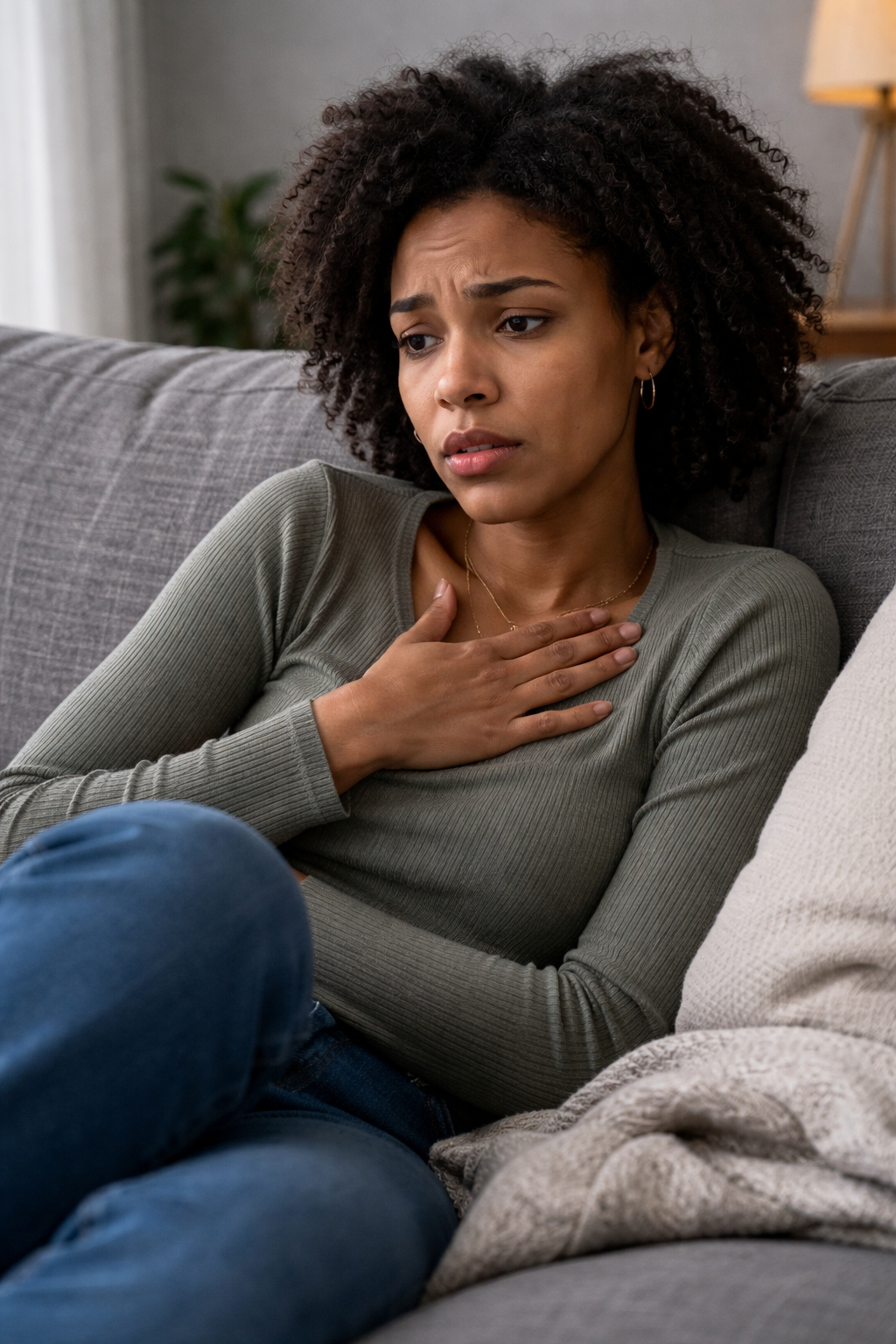
A panic attack is a sudden wave of intense fear that causes powerful physical symptoms, even when there is no real danger.
Although it can feel like a heart attack or another medical emergency, a panic attack is not usually life-threatening.
👉 If chest pain or other symptoms could be caused by a heart problem, always seek urgent medical assessment.
1️⃣ Introduction
A panic attack can come on suddenly, even when you are resting or there is no obvious danger.
The symptoms often become very intense within a few minutes, making many people think they are having a medical emergency.
👉 Although panic attacks feel frightening, they are not usually dangerous.
2️⃣ What happens in the body?
When the brain mistakenly believes there is danger, it activates the body's fight-or-flight response.
Stress hormones such as adrenaline are released, causing:
• a rapid heartbeat
• faster breathing
• tense muscles
• increased alertness
Your body prepares to escape danger—even though there is no actual threat.
👉 During a panic attack, the body's alarm system switches on at the wrong time.
3️⃣ Early symptoms
Panic attacks usually begin suddenly and reach their peak within about 10 minutes.
Common symptoms include:
• rapid heartbeat (palpitations)
• chest discomfort or tightness
• shortness of breath
• dizziness or feeling faint
• sweating
• trembling
• tingling sensations
• nausea
👉 Symptoms usually improve gradually after reaching their peak.
4️⃣ Symptom explanation
Because the body reacts as if it is in danger, panic attacks can cause both physical and emotional symptoms.
Physical symptoms
• rapid heartbeat → caused by adrenaline
• fast breathing → may lead to dizziness or tingling
• chest tightness → muscles become tense
• sweating and trembling → part of the body's emergency response
Emotional symptoms
• intense fear
• feeling out of control
• fear of dying
• fear of "going crazy"
👉 Even though the symptoms feel severe, they are usually caused by the body's alarm system rather than a life-threatening emergency.
🩷 Why we delay
Many people delay seeking help because they think:
• "It was probably just stress."
• "People will think I'm overreacting."
• "It only lasts a few minutes."
• "It won't happen again."
Others become afraid of having another panic attack and begin avoiding certain places or situations.
👉 Panic attacks are treatable, and early support can help prevent them from becoming more frequent.
5️⃣ Comparison note
Panic attacks can sometimes be confused with:
• heart attack
• anxiety
• asthma
Key differences
• panic attacks begin suddenly and usually peak within minutes
• anxiety often develops more gradually and can last much longer
• asthma mainly causes wheezing and difficulty breathing because of narrowed airways
• heart attacks are more likely to occur because of reduced blood flow to the heart and always require urgent assessment
👉 If you are unsure whether your symptoms could be a heart attack, seek emergency medical care immediately.
6️⃣ When it becomes a problem 🚨
Seek medical attention if:
• it is your first panic attack
• attacks happen repeatedly
• symptoms interfere with work, school or daily life
• you begin avoiding places because you fear another attack
👉 A healthcare professional can confirm the diagnosis and rule out other medical conditions.
7️⃣ Treatment and self-care
Many people improve with the right treatment.
Helpful strategies include:
• slow, controlled breathing
• relaxation techniques
• regular physical activity
• stress management
• getting enough sleep
• reducing caffeine if it triggers symptoms
Professional treatment may include:
• cognitive behavioural therapy (CBT)
• medication when appropriate
👉 Learning what panic attacks are and how they work often helps reduce fear during future episodes.
8️⃣ Diagnosis
There is no single test for panic attacks.
Your healthcare professional may:
• ask about your symptoms and when they occur
• review your medical history
• examine you and, if necessary, arrange tests to rule out conditions such as heart or lung disease
• assess for anxiety or other mental health conditions
👉 An accurate diagnosis helps ensure you receive the right treatment.
🟢 Important message
A panic attack can feel terrifying, but it is not usually life-threatening.
Understanding what is happening inside your body can reduce fear, improve confidence and help you regain control.
👉If you are experiencing chest pain, severe shortness of breath or symptoms that could be due to a heart attack, seek emergency medical care immediately.
FAQ
• How long does a panic attack last?
Usually 5–20 minutes.
• Can panic attacks kill you?
No, but they feel very frightening.
• Why do they feel like a heart attack?
Because of strong physical symptoms like chest tightness and palpitations.
• Can they be treated?
Yes, very effectively.
• Should I go to hospital?
Yes, especially the first time.
🔗 Related Health Topics
• Anxiety
• Palpitations
• Shortness of Breath
• Chest Pain
• Stress Management
• Anxiety vs Panic Attack
• Panic attack vs Heart Attack
📚 Medical References
• National Institute of Mental Health (NIMH). Panic Disorder: When Fear Overwhelms.
• National Health Service (NHS). Panic disorder.
• Mayo Clinic. Panic attacks and panic disorder.
• National Institute for Health and Care Excellence (NICE). Generalised anxiety disorder and panic disorder in adults: management (CG113).
• American Psychiatric Association (APA). What Are Anxiety Disorders?
⚠️ Medical Disclaimer
This article is for educational purposes only and does not replace professional medical advice, diagnosis, or treatment.
Always consult a qualified healthcare professional if you have symptoms or concerns about your health.