Read in: English | Pidgin English
🩺 Medically reviewed by the Health Decoded Guide Editorial Team · Last reviewed: July 2026
🔍 Quick Summary
Benign paroxysmal positional vertigo (BPPV) is a common inner ear condition that causes brief spinning sensations.
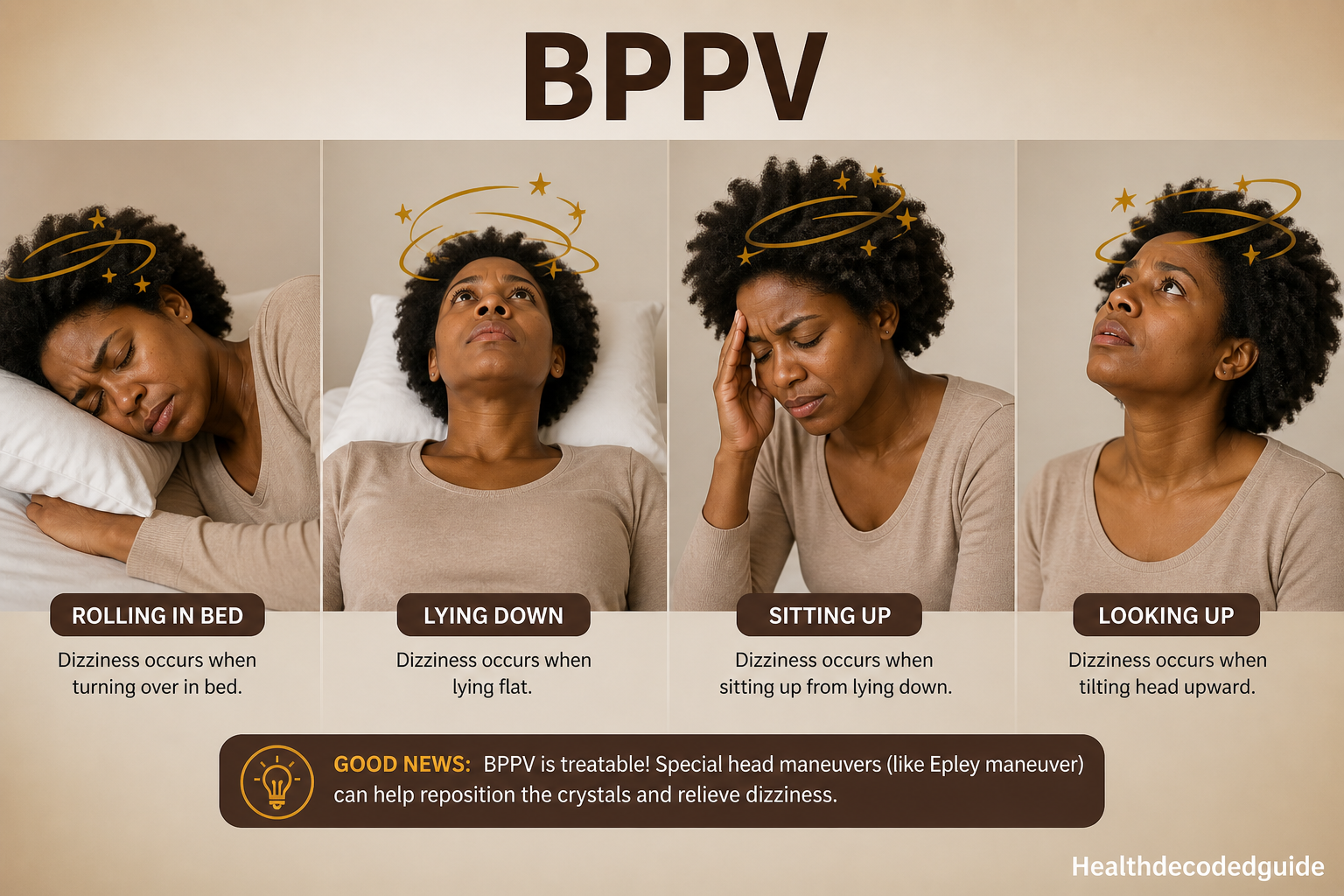
Symptoms are usually triggered by head movements such as turning in bed, looking up, or bending down.
Although BPPV can feel frightening, it is usually not life-threatening and often improves with treatment.
1️⃣ Introduction
BPPV affects the inner ear balance system.
• vertigo episodes are usually short but intense
• symptoms are often triggered by certain head positions
• BPPV is one of the most common causes of vertigo
👉 Many people describe the sensation as “the room spinning.”
2️⃣ How it happens
The inner ear contains tiny crystals that help control balance.
• in BPPV, small crystals move into the wrong part of the inner ear
• head movement then sends abnormal balance signals to the brain
• this mismatch creates spinning sensations and dizziness
👉 Symptoms often happen suddenly with movement but improve once the head stays still.
3️⃣ Types
• Posterior canal BPPV
- the most common type
- often triggered by rolling in bed or looking upward
• Horizontal canal BPPV
- may cause stronger spinning sensations
- symptoms often occur when turning the head sideways
• Recurrent BPPV
- symptoms return after previous improvement
- common in some individuals over time
👉 Different inner ear canals can produce slightly different dizziness patterns.
4️⃣ Common causes
• Age-related inner ear changes
- more common in older adults
- balance structures become more vulnerable over time
• Head movement or injury
- falls or minor head trauma
- sudden positional changes
• Other contributing factors
- prolonged bed rest
- previous inner ear disorders
👉 Sometimes BPPV develops without a clear cause.
5️⃣ Symptoms
• spinning sensation triggered by movement
• dizziness when turning in bed or looking up
• brief episodes lasting seconds to minutes
👉 Symptoms happen because the inner ear sends incorrect movement signals to the brain.
6️⃣ Associated symptoms
• nausea or vomiting
• imbalance or unsteady walking
• fear of movement due to dizziness
• abnormal eye movements during attacks
👉 BPPV usually does not cause hearing loss or major neurological symptoms.
7️⃣🩺 When it becomes dangerous 🚨
• dizziness with weakness or speech difficulty
• severe headache or collapse
• persistent neurological symptoms or inability to walk safely
👉 These may indicate:
• stroke or neurological emergencies
• serious medical conditions needing urgent assessment immediately
8️⃣ Management / treatment
• repositioning maneuvers may help move crystals back into place
• vestibular physiotherapy can improve balance and symptoms
• some people improve gradually without medication
Supportive Measures
• move slowly during severe episodes
• avoid sudden head movements temporarily
• use support when walking if balance poor
• stay hydrated and rest if symptoms intense
👉 Special head-position exercises often improve symptoms significantly.
9️⃣ Diagnosis
• medical history and symptom pattern review
• positional testing such as the Dix-Hallpike maneuver
• neurological assessment to exclude other causes
👉 Doctors often diagnose BPPV based on dizziness triggered by specific head movements.
🟢 Important message
BPPV can feel alarming because of sudden spinning sensations, but it is usually manageable and treatable.
Medical assessment helps confirm the diagnosis and rule out more serious neurological conditions.
👉 Sudden dizziness with weakness, speech changes, or severe headache should never be ignored.
FAQ
• What does BPPV feel like?
Many people feel sudden spinning sensations when moving the head.
• Is BPPV dangerous?
BPPV itself is usually not life-threatening, but falls and injuries may occur during severe dizziness.
• Can BPPV come back?
Yes. Some people experience recurrent episodes over time.
• Does BPPV cause hearing loss?
Usually no. Hearing loss suggests other possible inner ear conditions.
• When should emergency help be sought?
If dizziness occurs with weakness, speech problems, severe headache, or collapse.
🔗 Related Health Topics
• Balance Problems
• Dizziness
• Stroke Warning Signs
• Tinnitus
• Physiotherapy and Rehabilitation
📚 Medical References
• World Health Organization (WHO). Deafness and hearing loss.
• National Health Service (NHS). Benign paroxysmal positional vertigo (BPPV).
• Mayo Clinic. Benign paroxysmal positional vertigo (BPPV): Symptoms and causes.
• National Institute on Deafness and Other Communication Disorders (NIDCD). Balance Disorders.
• American Academy of Otolaryngology–Head and Neck Surgery. Benign Paroxysmal Positional Vertigo (BPPV).
⚠️ Medical Disclaimer
This article is for educational purposes only and does not replace professional medical advice.
If you have symptoms or concerns, please consult a qualified healthcare professional.