Read in: English | Pidgin English
🩺 Medically reviewed by the Health Decoded Guide Editorial Team · Last reviewed: July 2026
🔍 Quick Summary
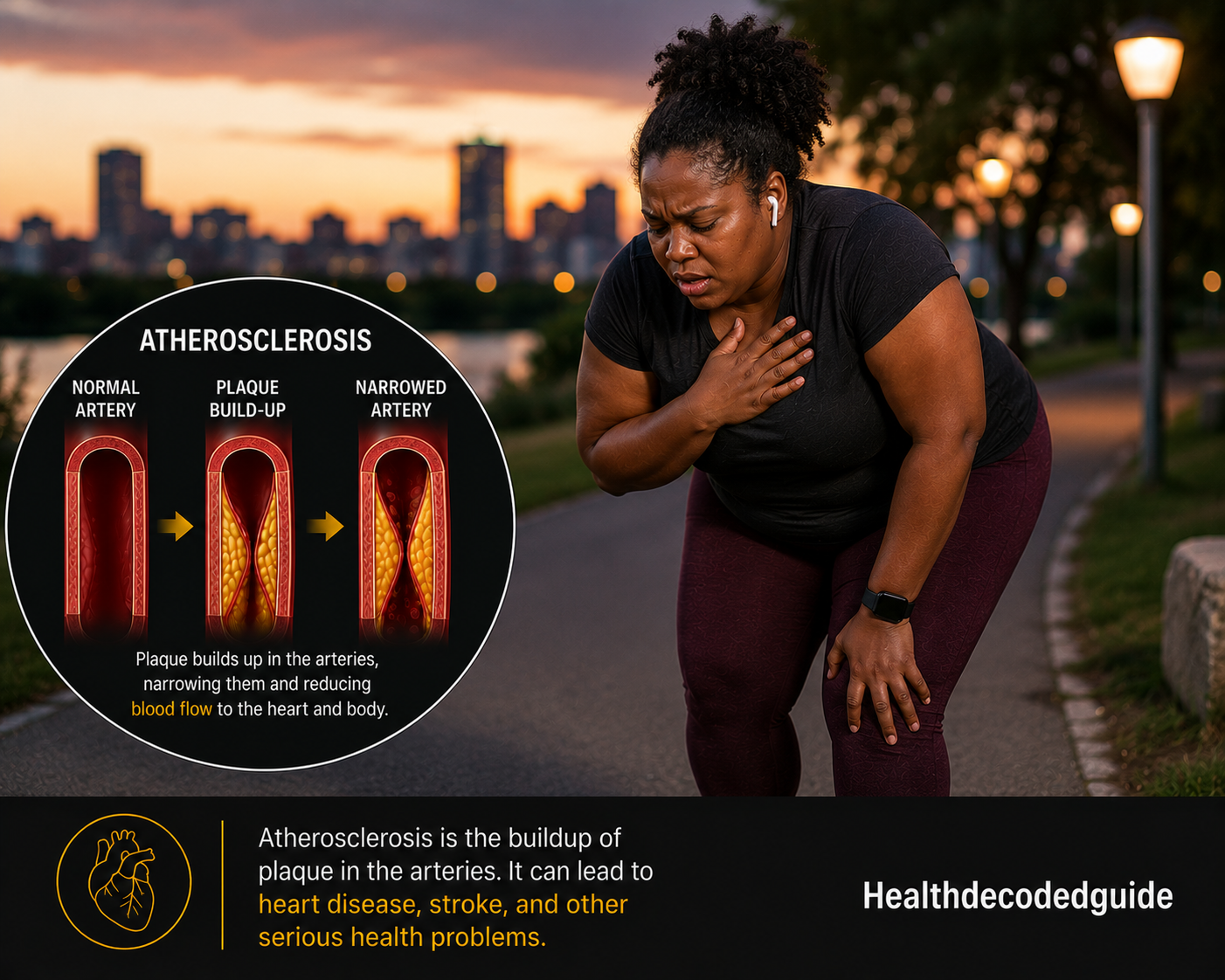
Atherosclerosis is a condition where fatty deposits (plaque) build up inside arteries.
This narrows blood vessels and reduces blood flow to organs and tissues.
It increases the risk of heart attack, stroke, and circulation problems.
1️⃣ Introduction
Atherosclerosis affects the body’s blood vessels.
• arteries become narrowed and less flexible
• blood flow becomes restricted over time
• symptoms may not appear until the condition is advanced
👉 It is a gradual process that can develop silently for years.
2️⃣ How it happens
Arteries normally carry oxygen-rich blood smoothly.
• fatty deposits (plaque) build up along artery walls
• inflammation and damage make the plaque grow
• arteries narrow and blood flow becomes reduced
👉 Plaque can also rupture, causing sudden blockage.
3️⃣ Types
• Coronary artery atherosclerosis
- affects heart arteries
- may lead to heart attack
• Cerebral artery atherosclerosis
- affects brain circulation
- may lead to stroke
• Peripheral artery atherosclerosis
- affects legs and limbs
- may cause claudication
👉 The location of plaque determines the symptoms and complications.
4️⃣ Common causes
• Lifestyle factors
- smoking
- unhealthy diet high in fats
• Medical conditions
• Other risk factors
- age
- lack of physical activity
👉 These factors damage artery walls and promote plaque buildup.
5️⃣ Symptoms
• often no symptoms early
• chest pain (angina) if heart arteries affected
• leg pain during walking if limb arteries affected
👉 Symptoms usually appear when blood flow becomes significantly reduced.
6️⃣ Associated symptoms
• shortness of breath
• fatigue
• dizziness
• cold or pale limbs
👉 Symptoms depend on which part of the body is affected.
7️⃣🩺 When it becomes dangerous 🚨
• chest pain or pressure
• sudden weakness or speech difficulty
• severe leg pain with pale, cold limb
👉 These may indicate:
• heart attack or stroke
• severe circulation blockage requiring urgent treatment
8️⃣ Management / treatment
• lifestyle changes (diet, exercise, smoking cessation)
• medications to control cholesterol, blood pressure, and blood sugar
• procedures such as angioplasty or surgery in severe cases
Supportive Measures
• eat a balanced, heart-healthy diet
• stay physically active
• maintain healthy weight
• attend regular health check-ups
Early lifestyle changes can slow or prevent progression.
👉🏽 For more guidance, explore healthy lifestyle, weight management,
and prevention tips in our Prevention and Wellness section
9️⃣ Diagnosis
• medical history and physical examination
• blood tests (cholesterol, glucose)
• imaging tests such as ultrasound or angiography
👉 Early detection helps prevent complications.
🟢 Important message
Atherosclerosis is a common but preventable condition that develops over time.
Healthy lifestyle choices and early medical care can significantly reduce risks.
👉 Preventing artery damage early is key to avoiding heart attack and stroke.
FAQ
• What is atherosclerosis?
A condition where plaque builds up inside arteries, reducing blood flow.
• What causes it?
Lifestyle factors like smoking, poor diet, and medical conditions like diabetes.
• Can it be reversed?
It can be slowed or improved with treatment and lifestyle changes.
• Is it dangerous?
Yes. It can lead to heart attack, stroke, and circulation problems.
• When should medical help be sought?
If symptoms like chest pain, weakness, or severe leg pain occur.
🔗 Related Health Topics
• Peripheral Artery Disease
• Heart Attack
• Stroke Warning Signs
• High Blood Pressure
• High Cholesterol
• Diabetes
📚 Medical References
• World Health Organization (WHO). Cardiovascular diseases (CVDs).
• National Health Service (NHS). Atherosclerosis.
• Mayo Clinic. Atherosclerosis.
• American Heart Association (AHA). Atherosclerosis.
• Centers for Disease Control and Prevention (CDC). About Heart Disease.
• National Institute for Health and Care Excellence (NICE). Cardiovascular disease: risk assessment and reduction, including lipid modification (CG181).
⚠️ Medical Disclaimer
This article is for educational purposes only and does not replace professional medical advice.
If you have symptoms or concerns, please consult a qualified healthcare professional.