

Read in: English | Pidgin
🔎 Quick Summary
Suicide warning signs include changes in behavior, mood, and thinking — and recognizing them early can save lives.
1️⃣ Introduction
Suicide is a serious public health issue.
Many people who struggle with suicidal thoughts show warning signs before acting.
Recognizing these signs early can help prevent harm and save lives.
Talking openly about this topic is important and can reduce stigma.
2️⃣ How the condition develops
Suicidal thoughts often develop from a combination of:
• depression
• anxiety
• overwhelming stress
• traumatic experiences
• substance abuse
These factors can lead to feelings of:
• hopelessness
• isolation
• emotional pain
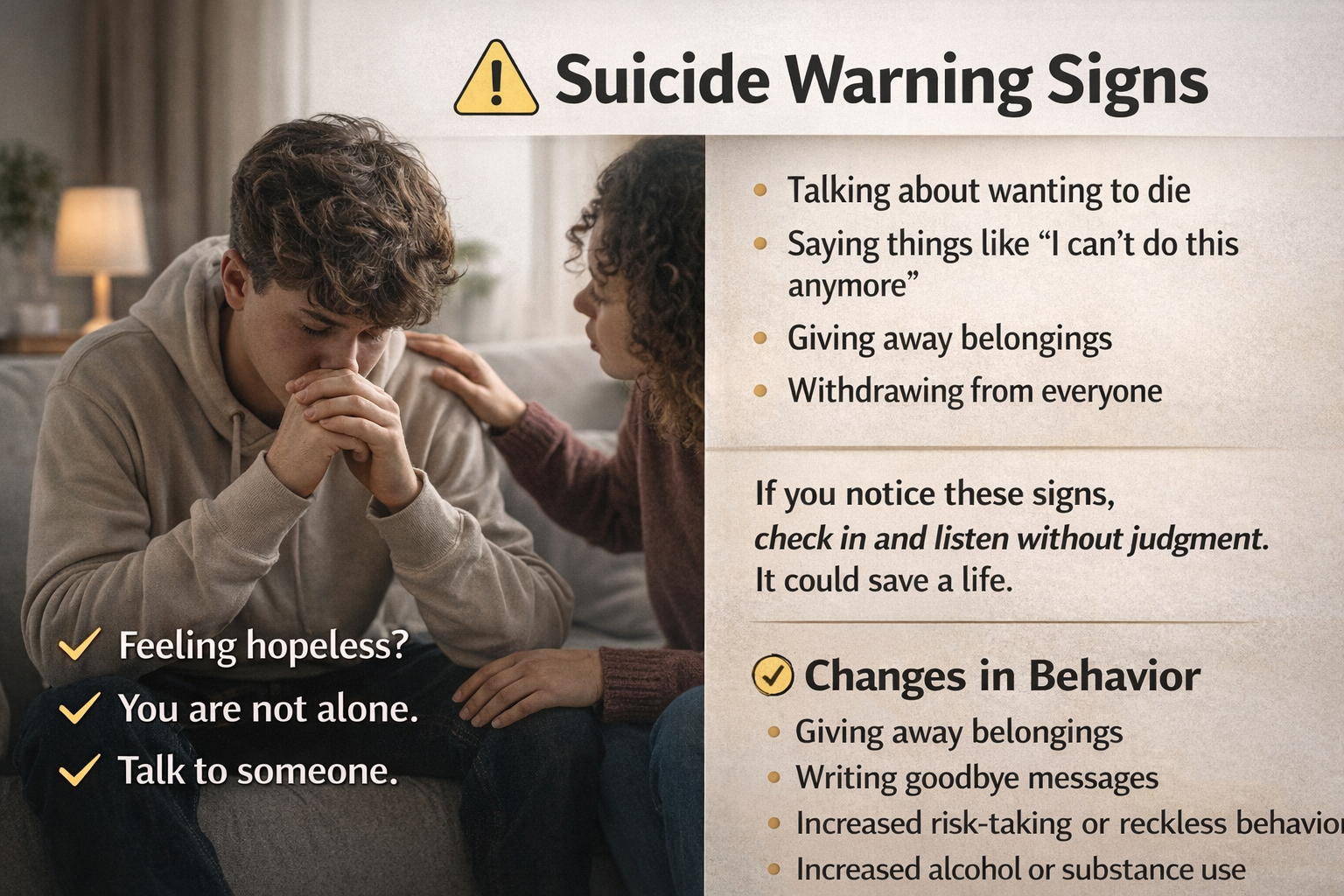
3️⃣ Early warning signs
Common warning signs include:
• talking about wanting to die
• expressing hopelessness
• withdrawing from others
• loss of interest in activities
• sudden mood changes
4️⃣ Symptom explanation
People experiencing suicidal thoughts may feel:
• trapped
• like a burden
• unable to cope
Behavioral changes may include:
• giving away possessions
• saying goodbye
• increased substance use
These are important signals that support is needed.
5️⃣ Comparison note
Suicidal thoughts are different from:
• normal sadness
• temporary stress
Key difference:
• thoughts of self-harm or death
• persistent hopelessness
• inability to see solutions
6️⃣ When it becomes dangerous
🚨 Seek immediate help if:
• someone talks about suicide
• there is a plan or intent
• behavior changes suddenly
• they withdraw completely
⚠️ Never ignore warning signs.
7️⃣ Prevention / support
Support strategies include:
• listening without judgment
• encouraging professional help
• staying connected
• removing access to harmful means
Professional help may include:
• therapy
• crisis support
• medication when appropriate
8️⃣ Diagnosis / assessment
Healthcare professionals may assess:
• mental health status
• risk level
• underlying conditions
9️⃣ Important message
Suicidal thoughts are a sign of distress — not weakness.
Help is available, and recovery is possible.
Reaching out can save a life.
🔟 FAQ
🔹 What are the first warning signs?
Changes in mood, withdrawal, and hopelessness.
🔹 Should I take all signs seriously?
Yes, always.
🔹 What should I do if someone tells me they feel this way?
Listen, support, and seek help immediately.
🔹 Can people recover?
Yes, with proper support.
🔹 Is it okay to talk about it?
Yes, it can help reduce risk.
Related Health Topics
🔹 Depression – Symptoms
🔹 Anxiety – Symptoms
🔹 Panic Attacks – Symptoms
🔹 Sleep Problems – Causes
🔹 Anxiety vs Panic Attack – Difference
🔹 Fatigue – Causes
Medical References
• World Health Organization – Suicide prevention
• National Institute of Mental Health – Suicide statistics and warning signs
• Centers for Disease Control and Prevention – Suicide prevention resources
• National Health Service – Suicide support guidance
• American Psychiatric Association – Clinical guidelines
• Peer-reviewed psychiatric literature
Medical Disclaimer
This article is for educational purposes only and does not replace professional medical advice, diagnosis, or treatment.
If you or someone else may be in immediate danger, seek emergency medical care immediately.
Contact local emergency services or a crisis support line in your area.