

Read in: English | Pidgin English
🩺 Medically reviewed by the Health Decoded Guide Editorial Team · Last reviewed: July 2026
🔍 Quick Summary
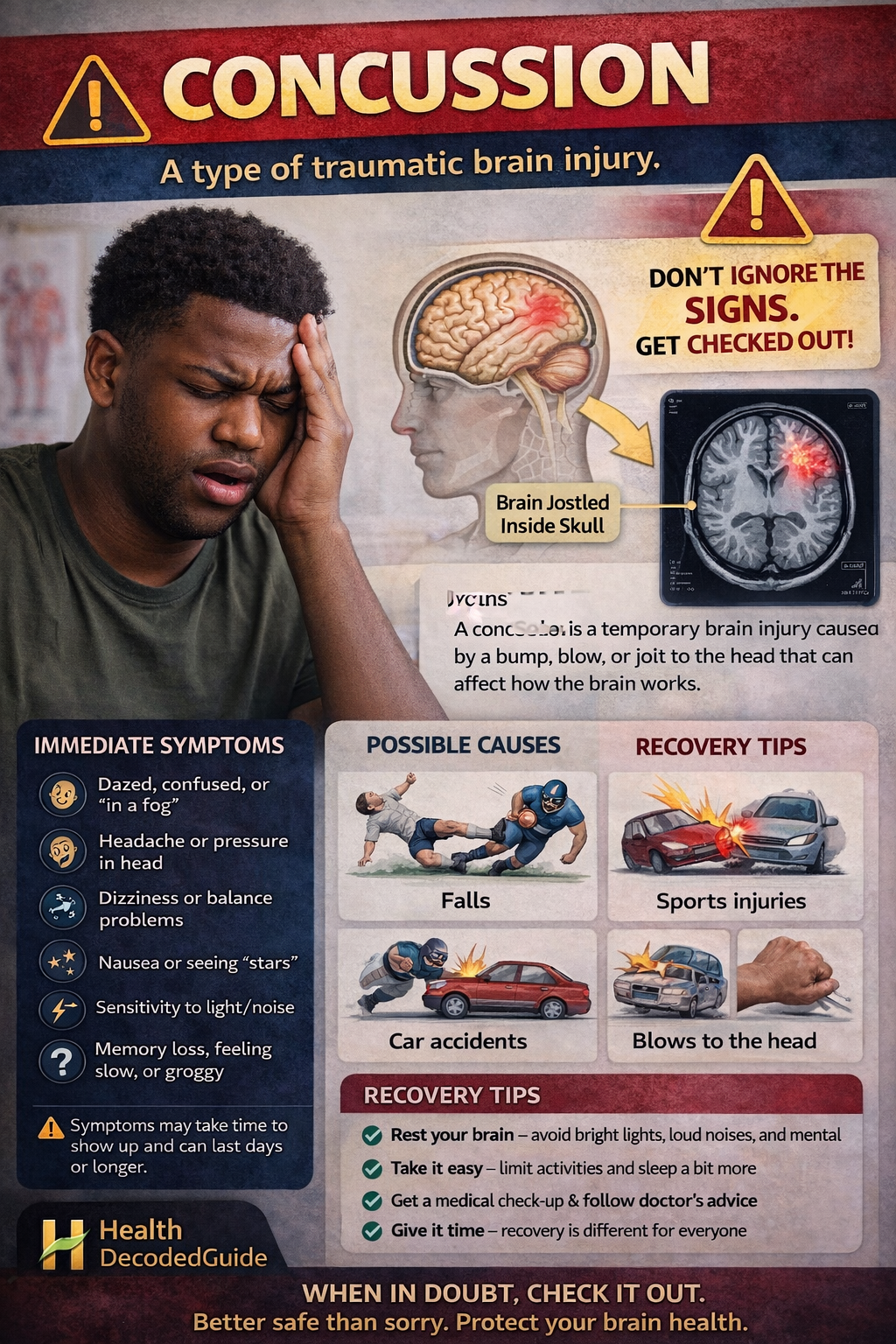
A concussion is a mild brain injury caused by a blow or sudden movement of the head.
Most recover well—but symptoms should be monitored carefully.
1️⃣ Introduction
A concussion is a type of traumatic brain injury.
• caused by a hit, fall, or sudden movement of the head
• may not always involve loss of consciousness
• affects how the brain functions temporarily
👉 Even a “mild” head injury should be taken seriously.
2️⃣ How it happens
The brain moves inside the skull during impact.
• sudden movement disrupts brain function
• nerve signals become temporarily affected
• brain chemistry changes briefly
👉 This leads to symptoms like confusion or dizziness.
3️⃣ Types
• Mild concussion
- symptoms resolve within days to weeks
- no long-term effects
• More significant concussion
- symptoms last longer
- requires closer monitoring
👉 Recovery varies from person to person.
4️⃣ Common causes
• falls
especially in young children and older adults
• sports injuries
such as football, rugby or boxing
• road traffic accidents
where the head is hit or moves suddenly
• physical assault or other accidents
any strong blow to the head can cause a concussion
👉 Any injury that makes the brain move suddenly inside the skull can cause a concussion.
5️⃣ Who is more at risk?
• children and teenagers
because they are more likely to fall or play contact sports
• athletes
especially those involved in contact sports
• older adults
because falls are more common
• people who have had a previous concussion
they may be more likely to have another one
👉 Anyone can get a concussion, but some people have a higher risk because of their activities or age.
6️⃣ Symptom explanation
• headache
the most common symptom after a concussion
• dizziness or balance problems
because the brain temporarily struggles to process movement
• confusion
difficulty thinking clearly or feeling "foggy"
• memory problems
difficulty remembering events before or after the injury
👉 Symptoms happen because the brain needs time to recover after the injury.
7️⃣ Associated symptoms
• nausea or vomiting
• sensitivity to light or noise
• tiredness or drowsiness
• blurred vision
• difficulty concentrating
👉 Some symptoms may not appear until several hours after the injury.
8️⃣ 🩺 When it becomes dangerous 🚨
Go to hospital immediately if the person has:
• repeated vomiting
• worsening or severe headache
• increasing confusion or difficulty waking up
• seizures
• weakness, numbness or difficulty walking
• clear fluid or blood coming from the nose or ears
👉 These symptoms may mean a more serious brain injury and need emergency medical care.
9️⃣ Management / treatment
• rest for the first 24–48 hours
• gradually return to school, work and exercise as symptoms improve
• avoid another head injury until fully recovered
• follow your doctor's advice before returning to contact sports
👉 Returning to normal activities too soon can delay recovery or increase the risk of another concussion.
🟢 Diagnosis
• medical history and physical examination
• assessment of memory, balance and thinking
• CT scan or other imaging if doctors suspect a more serious brain injury
👉 Most concussions are diagnosed from the person's symptoms and examination rather than brain scans.
🛡️ Prevention
• wear a properly fitted helmet when appropriate
• use seat belts in vehicles
• make homes safer to reduce falls
• follow sports safety rules and return-to-play guidance
👉 Not every concussion can be prevented, but simple safety measures can reduce the risk.
FAQ
• Do all concussions cause loss of consciousness?
No. Many people with a concussion never lose consciousness.
• How long does recovery take?
Most people recover within a few days to weeks, but some symptoms can last longer.
• Can I sleep after a concussion?
Yes, if a healthcare professional has assessed you and there are no warning signs. Seek urgent medical care if symptoms worsen.
• When can I return to sports or exercise?
Only after your symptoms have completely resolved and a healthcare professional says it is safe.
• Can I get another concussion?
Yes. Having one concussion may increase the risk of another, especially if you return to activities too soon.
🔗 Related Health Topics
• Vision problems
• Dizziness
• Headache
• Nausea
• Vomiting
📚 Medical References
• National Health Service (NHS). Concussion.
• Centers for Disease Control and Prevention (CDC). About Mild TBI and Concussion.
• Mayo Clinic. Concussion.
• National Institute for Health and Care Excellence (NICE). Head injury: assessment and early management (NG232).
• American Association of Neurological Surgeons (AANS). Concussion.
⚠️ Medical Disclaimer
This article is for educational purposes only and does not replace professional medical advice.
If symptoms worsen after a head injury, seek medical care immediately.