Read in: English | Pidgin English
🩺 Medically reviewed by the Health Decoded Guide Editorial Team · Last reviewed: July 2026
🔍 Quick Summary
COPD is a long-term lung disease that makes breathing difficult. It develops gradually—but can be managed with the right care.
1️⃣ Introduction
COPD (Chronic Obstructive Pulmonary Disease) is a condition that affects airflow in the lungs.
• COPD is one type of chronic lung disease.
• causes long-term breathing problems
• often develops over years
👉 Many people don’t notice early symptoms until it progresses.
2️⃣ How it happens
COPD damages the airways and air sacs.
• airways become inflamed and narrow
• lung tissue loses elasticity
• air gets trapped in the lungs
👉 This makes it harder to breathe out properly.
3️⃣ Types (within COPD)
COPD is a chronic lung disease. There are two main patterns that often occur as part of COPD:
• Chronic bronchitis
- long-term cough with mucus
- airway inflammation
• Emphysema
- destruction of air sacs
- reduced oxygen exchange
👉 Most people have a combination of both.
4️⃣ Common causes
• Smoking
- most common cause
- long-term exposure damages lungs
• Environmental exposure
- air pollution
- dust or chemicals
5️⃣ Symptom
• breathlessness (worse with activity)
• chronic cough
• mucus production
👉 These happen because airflow is limited and air gets trapped in the lungs.
🔷 Flare-ups (COPD Exacerbations)
COPD symptoms can suddenly get worse — this is called a flare-up.
• more breathlessness than usual
• increased cough or mucus
• change in sputum color
👉 Common triggers include:
- infections (especially chest infections like pneumonia)
- air pollution, smoke or dust
6️⃣ Associated symptoms
• wheezing
• fatigue
• frequent chest infections
• reduced activity tolerance
👉 Symptoms often worsen gradually over time.
7️⃣🩺When it becomes dangerous 🚨
• severe breathlessness at rest
• confusion or drowsiness
• lips or fingers turning blue
👉 These may indicate:
• low oxygen levels
• need for emergency care
8️⃣ Management / treatment
• lifestyle changes: stop smoking
• inhalers and medications
• pulmonary rehabilitation
9️⃣ Diagnosis
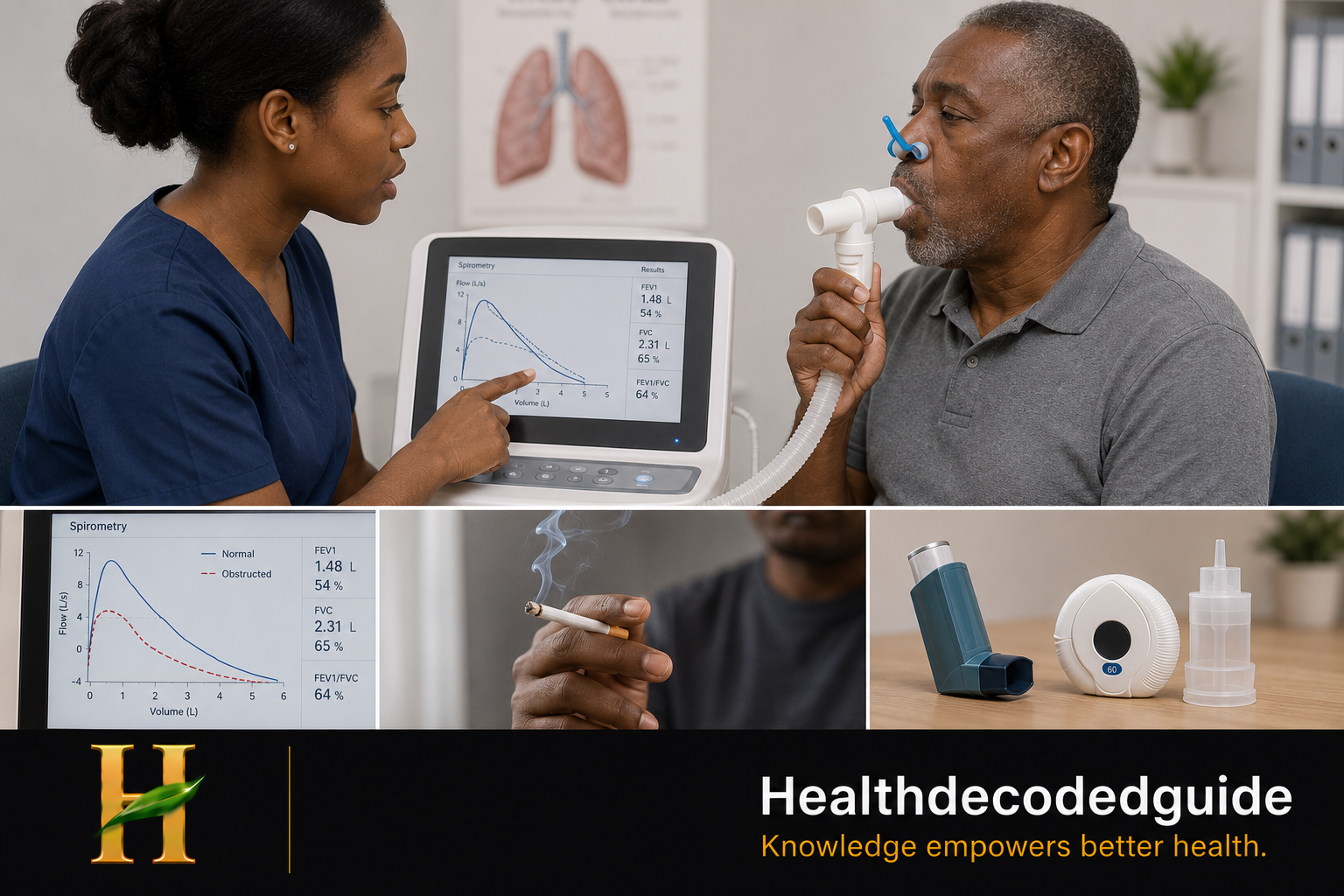
• spirometry (lung function test)
• imaging (chest X-ray/CT)
• clinical assessment
👉 Spirometry confirms airflow limitation.
🟢 Important message
COPD is progressive—but manageable.
👉 Early diagnosis and lifestyle changes improve quality of life.
FAQ
• Can COPD be cured?
No, but treatment can help control symptoms, improve quality of life, and slow disease progression.
• What is the main cause?
Smoking is the leading cause, although long-term exposure to air pollution, dust, fumes and biomass smoke can also contribute.
• Is COPD the same as asthma?
No. Although both affect breathing, COPD is usually permanent, while asthma often causes reversible narrowing of the airways.
• Can people with COPD exercise?
Yes. Regular exercise and pulmonary rehabilitation can improve breathing, strength and overall fitness.
• When should I go to the hospital?
Seek urgent medical care if you have severe shortness of breath, chest pain, blue lips or fingers, or new confusion.
🔗 Related Health Topics
• Chronic lung disease
• COPD exacerbation
• Asthma
• Heart disease
• Shortness of Breath
📚 Medical References
• World Health Organization (WHO). Chronic obstructive pulmonary disease (COPD).
• National Health Service (NHS). Chronic obstructive pulmonary disease (COPD).
• Centers for Disease Control and Prevention (CDC). About COPD.
• Mayo Clinic. COPD.
• National Institute for Health and Care Excellence (NICE). Chronic obstructive pulmonary disease in over 16s: diagnosis and management (NG115).
• Global Initiative for Chronic Obstructive Lung Disease (GOLD). Global Strategy for the Diagnosis, Management, and Prevention of COPD.
⚠️ Medical Disclaimer
This article is for educational purposes only and does not replace professional medical advice.
If you have symptoms of COPD, consult a healthcare professional.