

Read in: English | Pidgin English
🩺 Medically reviewed by the Health Decoded Guide Editorial Team · Last reviewed: July 2026
🔍 Quick Summary
Chronic lung disease refers to long-term conditions affecting breathing.
It often develops gradually—but can significantly impact daily life.
1️⃣ Introduction
Chronic lung disease includes conditions that affect the lungs over time.
• commonly includes COPD, chronic bronchitis, and emphysema
• affects airflow and oxygen exchange
• often long-term and progressive
👉 Early recognition helps slow progression and improve quality of life.
2️⃣ How it happens
The lungs and airways become damaged or inflamed.
• airways may narrow or become blocked
• lung tissue may lose elasticity
• gas exchange becomes less efficient
👉 This reduces oxygen delivery to the body.
3️⃣ Types
Chronic lung diseases are often grouped into:
• Obstructive lung diseases
airways become narrow or blocked, making it hard to breathe out
(e.g. COPD, asthma, bronchiectasis)
• Restrictive lung diseases
lungs become stiff or cannot fully expand, making it hard to take a deep breath
(e.g. pulmonary fibrosis)
👉 The type affects how breathing is limited and guides treatment.
💡Think:
Obstructive = can’t get air out
Restrictive = can’t get air in
🔷Simple way to remember
Obstructive lung diseases (hard to breathe out)
• Chronic bronchitis → airway problem (mucus + inflammation)
• Emphysema → air sac destruction (air gets trapped)
• Asthma → airway tightening (often reversible)
• Bronchiectasis → damaged, widened airways (mucus builds up)
👉 All of the above= airflow blockage → obstructive
Restrictive lung diseases (hard to breathe in)
• Pulmonary fibrosis → lungs become stiff (scar tissue)
• Interstitial lung disease → inflammation/scarring of lung tissue
• Chest wall/neuromuscular → lungs can’t fully expand
👉 All of the above= reduced lung expansion → restrictive
4️⃣ Common causes
• Environmental factors
- smoking (most common cause)
- long-term exposure to pollution or dust
• Other factors
- repeated lung infections
- genetic conditions (rare)
5️⃣ Symptom explanation
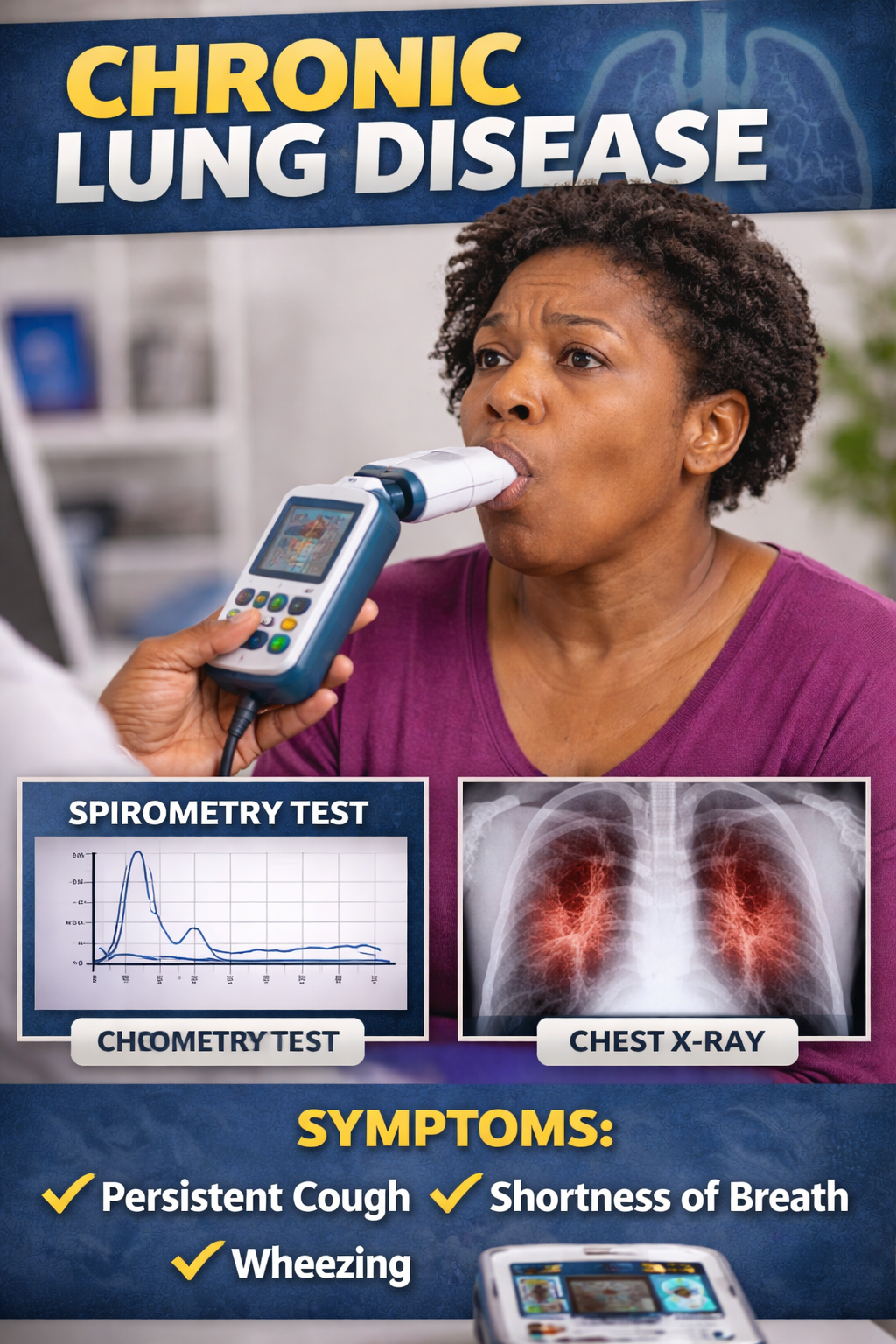
• shortness of breath
• chronic cough
• mucus production
👉 These occur due to airway narrowing and lung damage.
6️⃣ Associated symptoms
• wheezing
• fatigue
• frequent chest infections
• reduced exercise tolerance
👉 Symptoms often worsen over time if untreated.
7️⃣🩺 When it becomes dangerous 🚨
• severe breathlessness at rest
• worsening cough with fever
• lips or fingers turning blue
👉 These may indicate:
• acute flare-up or infection
• need for urgent medical care
8️⃣ Management / treatment
• stop smoking
• inhalers and medications
• pulmonary rehabilitation
9️⃣ Diagnosis
• lung function tests (spirometry)
• imaging (chest X-ray or CT)
• clinical history
👉 Diagnosis focuses on airflow limitation and symptoms.
🔟 Important message
Chronic lung disease cannot always be cured—but it can be managed.
👉 Early action helps preserve lung function and quality of life.
FAQ
• Is chronic lung disease reversible?
No. Lung damage from COPD cannot usually be reversed, but treatment can help slow the disease and improve symptoms.
• What is the main cause?
Smoking is the leading cause, although long-term exposure to dust, smoke, air pollution and biomass fuels can also cause COPD.
• Can COPD get worse over time?
Yes. Without treatment or if smoking continues, COPD usually gets worse gradually.
• Can people with COPD exercise?
Yes. Regular physical activity and pulmonary rehabilitation can improve breathing, strength and quality of life.
• When should I go to the hospital?
Go immediately if you have severe shortness of breath, blue lips or fingers, chest pain, confusion, or difficulty speaking because of breathlessness.
🔗 Related Health Topics
• Asthma
• COPD
• Cough
• Heart Disease
• Shortness Breath
📚 Medical References
• World Health Organization (WHO). Chronic obstructive pulmonary disease (COPD).
• National Health Service (NHS). Chronic obstructive pulmonary disease (COPD).
• Centers for Disease Control and Prevention (CDC). About COPD.
• Mayo Clinic. COPD.
• National Institute for Health and Care Excellence (NICE). Chronic obstructive pulmonary disease in over 16s: diagnosis and management (NG115).
• Global Initiative for Chronic Obstructive Lung Disease (GOLD). Global Strategy for Prevention, Diagnosis and Management of COPD.
⚠️ Medical Disclaimer
This article is for educational purposes only and does not replace professional medical advice.
If you have breathing problems, consult a healthcare professional.