

Read in: English | Pidgin English
🩺 Medically reviewed by the Health Decoded Guide Editorial Team · Last reviewed: July 2026
🔍 Quick Summary
Health screening tests help detect diseases early—often before symptoms appear.
Early detection allows earlier treatment and better outcomes.
1️⃣ Introduction
Health screening tests are checks done to detect potential health problems early.
• performed even when you feel well
• aim to find disease before symptoms start
• help reduce complications
👉 Screening is about prevention—not waiting for illness.
2️⃣ How it happens
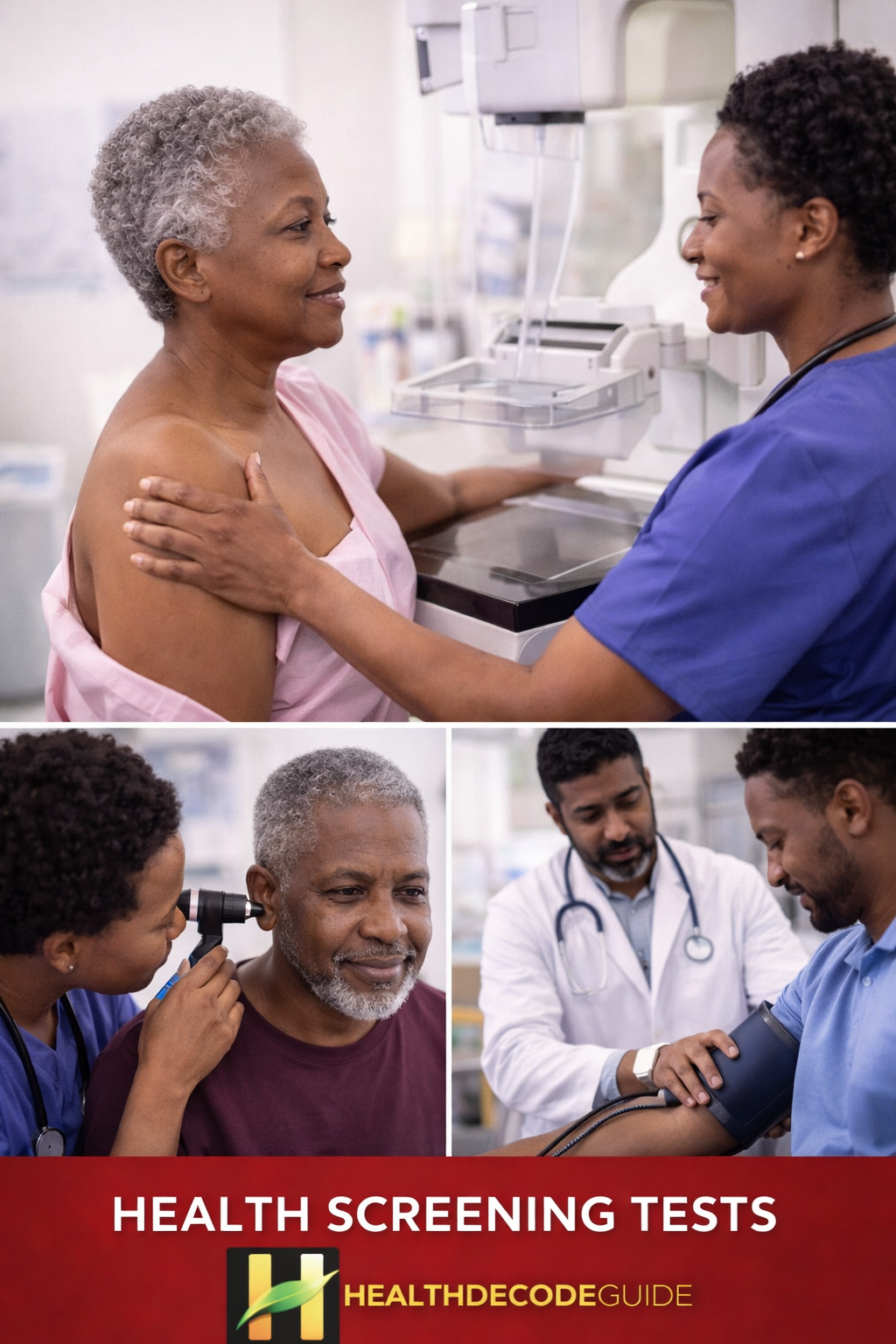
Screening tests look for early signs of disease.
• blood tests detect abnormal levels
• imaging shows structural changes
• measurements assess risk factors
👉 These tests identify problems before they become serious.
3️⃣ Types
• General screening tests
- blood pressure, blood sugar, cholesterol
- routine health checks
• Specific screening tests
- cancer screening (e.g. breast, cervical)
- age or risk-based testing
👉 The right test depends on age, sex, and risk.
4️⃣ Common reasons for screening
• Early detection
- diseases like diabetes or hypertension
• Risk monitoring
- family history or lifestyle risks
5️⃣ Symptom
• usually no symptoms
• person often feels completely well
👉 That’s why screening is important—it detects silent conditions.
6️⃣ Associated benefits
• early treatment
• reduced complications
• better long-term outcomes
• improved health awareness
👉 Prevention is often simpler than treatment.
7️⃣🩺When it becomes important 🚨
• family history of disease
• increasing age
• lifestyle risk factors (e.g. smoking, obesity)
👉 These may indicate:
• higher risk
• need for regular screening
8️⃣ Common screening tests
• blood pressure check
• blood sugar test
• cholesterol test
• cancer screenings (based on age and risk)
9️⃣ How often to screen
• depends on age and risk factors
• may be yearly or as advised
• follow healthcare recommendations
👉 Regular screening is more useful than one-time testing.
🟢Important message
Screening helps detect problems early—even when you feel fine.
👉 Regular checks can prevent serious illness later.
FAQ
• Do I need screening if I feel healthy?
Yes—many conditions have no early symptoms.
• How often should I screen?
It depends on your age, health, and risk factors.
• Can screening prevent disease?
Screening cannot prevent disease, but it can help detect some conditions early when treatment is often more effective.
• Does everyone need the same screening tests?
No. The right screening tests depend on your age, sex, family history and personal risk factors.
• What if my screening test is abnormal?
It does not always mean you have a disease, but you may need further tests.
• Can screening detect cancer early?
Yes. Some screening tests can detect certain cancers before symptoms develop.
• Should I still screen if I have no family history?
Yes. Many people diagnosed through screening have no family history of the condition.
• Should I speak to my healthcare professional about screening?
Yes. They can recommend the screening tests that are right for you based on your individual risk.
🔗 Related Health Topics
• Blood pressure monitoring
• Diabetes prevention
• Healthy Diet Basics
• Exercise and Health
• Heart disease prevention
📚 Medical References
• National Health Service (NHS). NHS screening.
• Centers for Disease Control and Prevention (CDC). Are You Up to Date on Your Preventive Care?
• U.S. Preventive Services Task Force (USPSTF). A & B Recommendations.
• Canadian Task Force on Preventive Health Care. Information on Screening.
⚠️ Medical Disclaimer
This article is for educational purposes only and does not replace professional medical advice.
For personalized screening advice, consult a healthcare professional.