

Read in: English | Pidgin English
🩺 Medically reviewed by the Health Decoded Guide Editorial Team· Last reviewed: July 2026
🔍 Quick Summary
Early detection means finding disease before symptoms appear or become severe.
It improves treatment outcomes and can prevent complications.
1️⃣ Introduction
Early detection is the process of identifying disease at an early stage.
• often before symptoms develop
• allows earlier treatment
• improves long-term outcomes
👉 Many serious diseases start silently—early detection changes the outcome.
2️⃣ How it happens
Detection relies on monitoring and testing.
• routine health checks identify risk factors
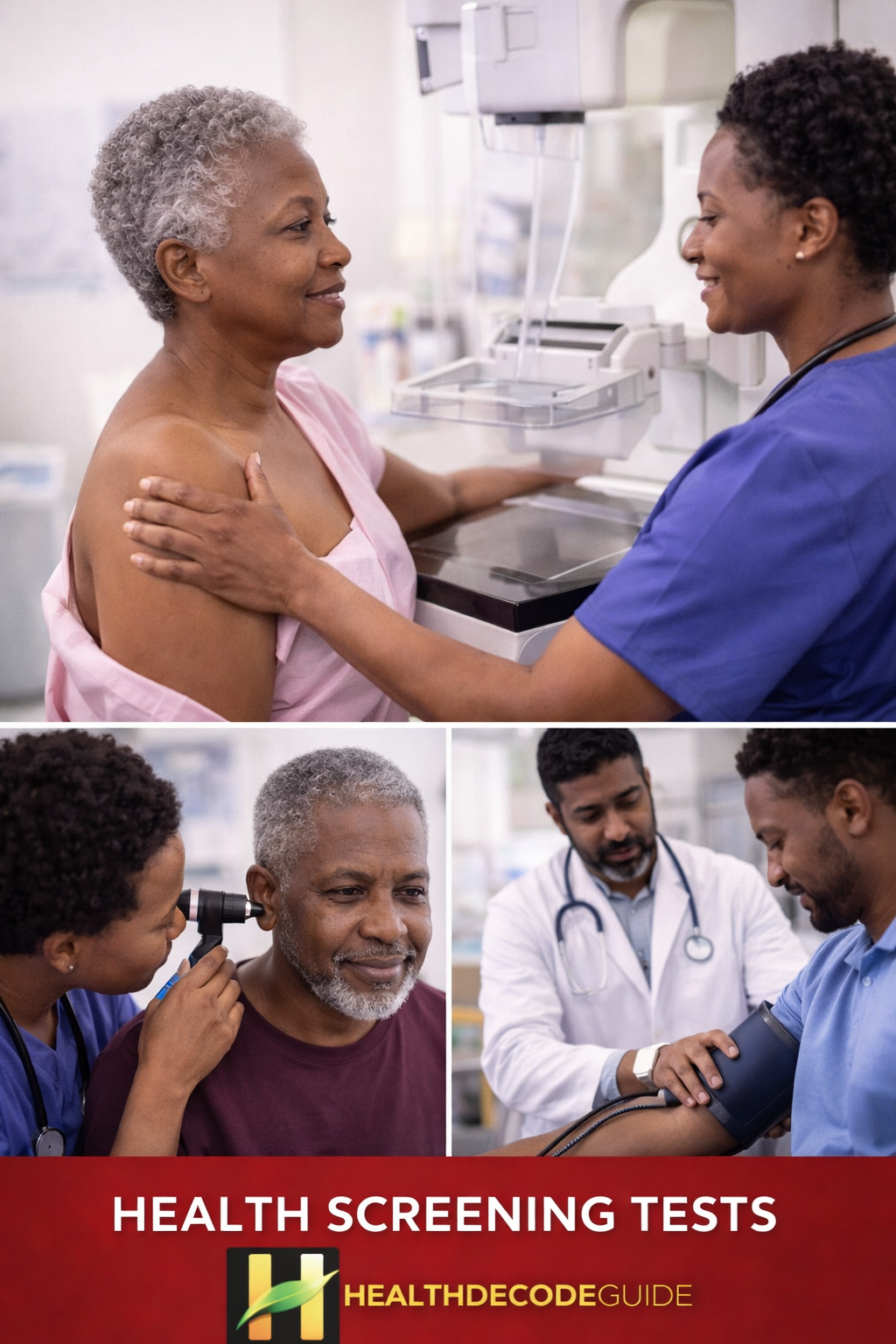
• screening tests detect early disease
• symptom awareness prompts early evaluation
👉 It combines regular checks with paying attention to your body.
3️⃣ Types
• Screening-based detection
- tests done without symptoms
- e.g. blood pressure, cancer screening
• Symptom-based early detection
- recognizing subtle changes early
- seeking care promptly
👉 Both approaches are important.
4️⃣ Common conditions detected early
• chronic diseases
• serious conditions
- cancers
- heart disease
5️⃣ Symptom explanation
• often no symptoms early
• may feel completely normal
👉 This is why proactive checks are essential.
6️⃣ Associated benefits
• better treatment success
• fewer complications
• lower healthcare burden
• improved quality of life
👉 Early action often means simpler treatment.
7️⃣🩺When it becomes critical 🚨
• ignoring early warning signs
• delaying medical evaluation
• high-risk individuals without screening
👉 These may lead to:
• late diagnosis
• more complex disease
8️⃣ How to support early detection
• attend regular health screenings
• know your personal risk factors
• seek care for unusual symptoms
9️⃣ Monitoring and follow-up
• keep track of test results
• follow medical advice
• repeat screening as recommended
👉 Consistency is key to effective detection.
🟢 Important message
Early detection saves lives.
👉 Checking early gives you more options and better outcomes.
FAQ
• Do I need tests if I feel fine?
Yes—many diseases are silent early.
• Can diseases develop without symptoms?
Yes. Many conditions may not cause symptoms until they become more advanced.
• Should I ignore mild symptoms?
No. Symptoms that are persistent, worsening, or unusual should be assessed by a healthcare professional.
• Can regular check-ups help?
Yes. Routine health checks may detect some conditions early, before symptoms develop.
• When should I seek urgent medical attention?
Immediately if you develop severe chest pain, difficulty breathing, sudden weakness, severe bleeding, or other emergency symptoms.
• Does a normal test mean I'm healthy forever?
No. Your health can change over time, so follow your healthcare professional's advice about future check-ups and screening.
• Can a healthy lifestyle reduce my risk of disease?
Yes. Healthy eating, regular exercise, good sleep, avoiding tobacco, limiting alcohol, and keeping vaccinations up to date can help reduce the risk of many diseases.
🔗 Related Health Topics
• Health screening tests
• Diabetes prevention
• Healthy Diet Basics
• Exercise and Health
• Heart disease prevention
📚 Medical References
• National Health Service (NHS). NHS screening.
• World Health Organization (WHO). Screening and early diagnosis.
• U.S. Preventive Services Task Force (USPSTF). A and B Recommendations.
• Canadian Task Force on Preventive Health Care. Information on Screening.
• Centers for Disease Control and Prevention (CDC). Screening for Health Conditions.
⚠️ Medical Disclaimer
This article is for educational purposes only and does not replace professional medical advice.
Consult a healthcare professional for personalized advice.