

Read in: English | Pidgin English
🩺 Medically reviewed by the Health Decoded Guide Editorial Team · Last reviewed: July 2026
🔍 Quick Summary
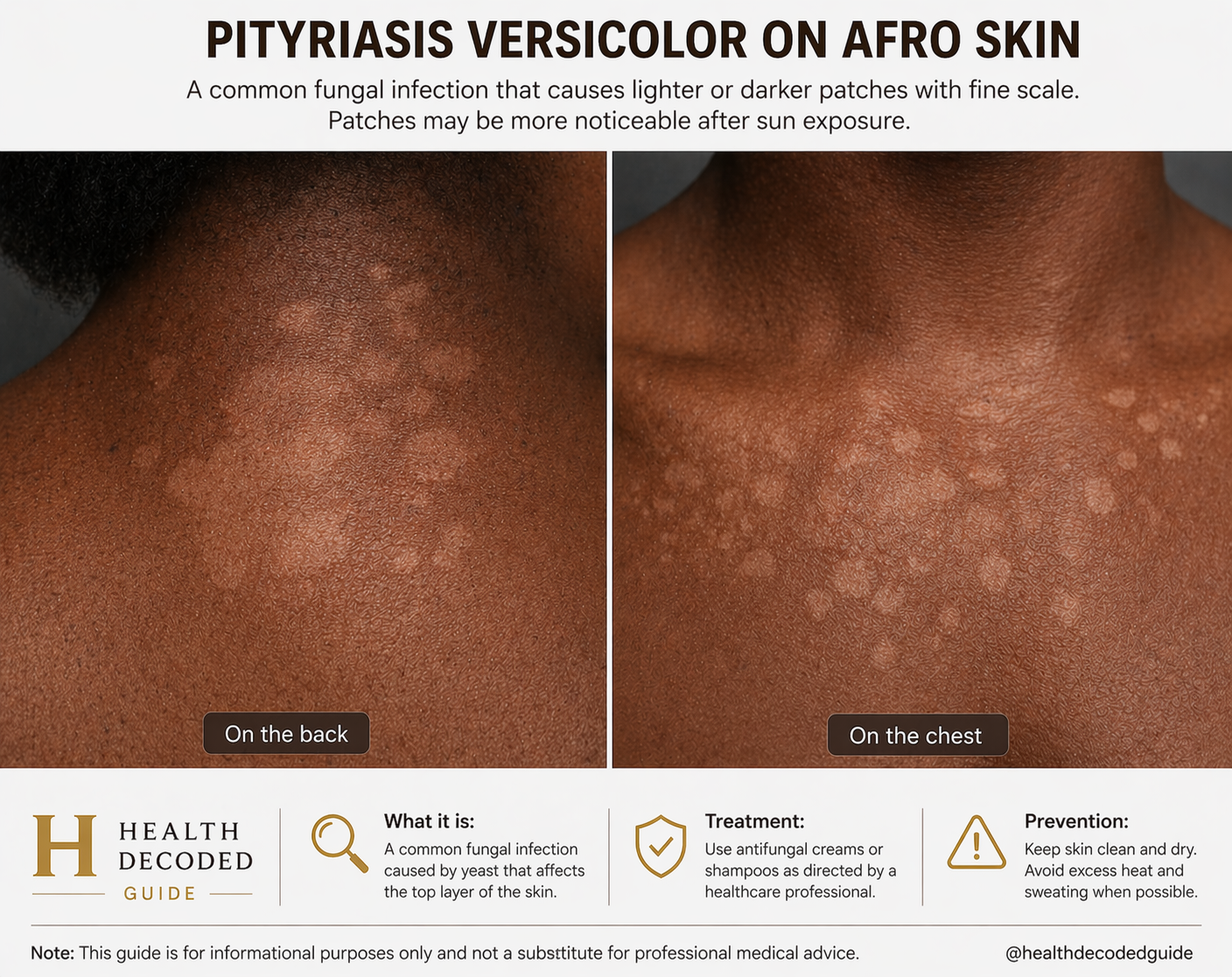
Pityriasis versicolor is a common fungal skin condition that causes light or dark patches.
It is harmless but can affect appearance—and is treatable.
1️⃣ Introduction
Pityriasis versicolor is a superficial fungal infection of the skin.
• caused by yeast naturally present on the skin
• leads to uneven skin color (patches)
• not dangerous but can be persistent
👉 It affects pigmentation—not deeper skin layers.
2️⃣ How it happens
The yeast on the skin grows excessively.
• disrupts normal pigment production
• causes lighter or darker patches
• more noticeable after sun exposure
👉 The fungus interferes with how the skin produces color.
3️⃣ Types
• Hypopigmented patches
- lighter than surrounding skin
- common in darker skin tones
• Hyperpigmented patches
- darker or slightly pink/brown
- may vary with skin type
👉 Appearance depends on individual skin tone.
4️⃣ Common causes
• Overgrowth of yeast (Malassezia)
• Contributing factors
- hot, humid weather
- oily skin
- sweating
5️⃣ Symptom explanation
• patches on chest, back, neck, or arms
• color changes (lighter or darker)
• mild scaling
👉 These occur due to disrupted pigment and surface fungal growth.
6️⃣ Associated symptoms
• mild itching (sometimes)
• fine dry scaling
• patches more visible after sun exposure
• gradual spread
👉 Often more noticeable than physically uncomfortable.
7️⃣🩺 When it becomes concerning 🚨
• widespread patches
• no improvement with treatment
• uncertainty about diagnosis
👉 These may indicate:
• need for medical confirmation
• alternative skin condition
8️⃣ Management / treatment
• antifungal creams or shampoos
• oral antifungal medication (if extensive)
• maintaining skin hygiene
9️⃣ Diagnosis
• clinical examination
• skin scraping (if needed)
• characteristic appearance
👉 Diagnosis is usually straightforward.
🟢 Important message
Pityriasis versicolor is harmless but may recur.
👉 Treatment is effective, but skin color may take time to normalize.
FAQ
- Is pityriasis versicolor contagious?
No. It is not spread from person to person. - Will my skin return to its normal colour?
Yes, but it may take weeks to months for the skin colour to even out, even after the infection has been treated. - Can it come back?
Yes. Pityriasis versicolor often recurs, especially in warm, humid weather or in people who sweat a lot. - Why did I get it again?
The yeast that causes pityriasis versicolor normally lives on the skin. In some people, it can overgrow again and cause recurrent patches. - Can I prevent it from coming back?
Keeping the skin dry, avoiding excessive heat when possible, and using preventive antifungal shampoos or creams if recommended by a healthcare professional may help reduce recurrences.
🔗 Related Health Topics
• Skin infections
• Eczema
• Dry Skin
• Keratosis Pilaris
📚 Medical References
• National Health Service (NHS). Pityriasis versicolor.
• Mayo Clinic. Tinea versicolor.
• National Institute for Health and Care Excellence (NICE). Fungal skin infection - body and groin.
• American Academy of Dermatology (AAD). Tinea versicolor: Overview.
• DermNet NZ. Pityriasis versicolor.
• MedlinePlus. Tinea Infections.
⚠️ Medical Disclaimer
This article is for educational purposes only and does not replace professional medical advice.
If skin changes persist or worsen, consult a healthcare professional.