

Read in: English | Pidgin English
🩺 Medically reviewed by the Health Decoded Guide Editorial Team · Last reviewed: July 2026
🔍 Quick Summary
Impetigo is a common, contagious skin infection—especially in children.
It causes sores and crusts on the skin but is usually easy to treat.
1️⃣ Introduction
Impetigo is a bacterial skin infection.
• often affects children
• spreads easily through contact
• usually mild but contagious
👉 Early treatment helps prevent spread.
2️⃣ How it happens
Bacteria enter through broken or irritated skin.
• small cuts, insect bites, or eczema
• bacteria multiply on the skin surface
• infection spreads locally
👉 Skin does not need to be badly damaged—small breaks are enough.
3️⃣ Types
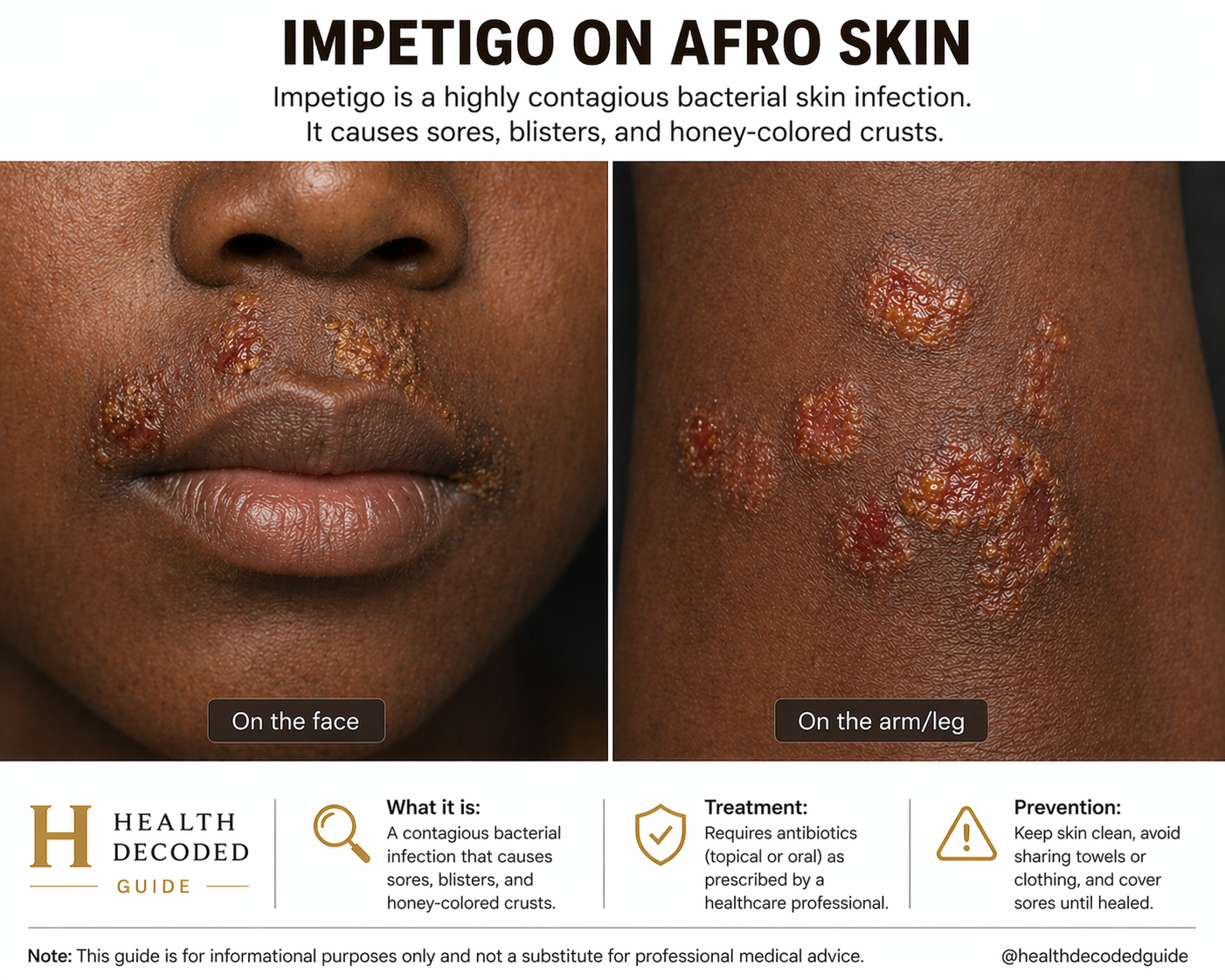
• Non-bullous impetigo (most common)
- small red sores
- yellow “honey-colored” crust
• Bullous impetigo
- fluid-filled blisters
- more common in infants
👉 Both types are contagious but treatable.
4️⃣ Common causes
• Bacteria
- Staphylococcus aureus
- Streptococcus pyogenes
• Risk factors
- close contact
- poor hygiene or crowded settings
5️⃣ Symptoms
• red sores or blisters
• oozing fluid
• crust formation (yellow/golden)
👉 These occur due to bacterial infection of the skin.
6️⃣ Associated symptoms
• itching
• mild discomfort
• spread to nearby areas
• swollen lymph nodes (rare)
👉 Scratching can worsen and spread the infection.
7️⃣🩺 When it becomes dangerous 🚨
• rapid spreading lesions
• fever or systemic symptoms
• swelling or pain increasing
👉 These may indicate:
• deeper infection
• need for medical treatment
8️⃣ Management / treatment
• topical antibiotic creams
• oral antibiotics if widespread
• good hygiene (washing hands, keeping area clean)
9️⃣ Diagnosis
• clinical examination
• rarely requires tests
• based on typical appearance
👉 Appearance is usually enough for diagnosis.
🟢 Important message
Impetigo is common and treatable.
👉 Early care prevents spread and speeds recovery.
FAQ
• Is impetigo contagious?
Yes—it spreads through direct contact.
• How long does it last?
With treatment, it improves within a few days.
🔗 Related Health Topics
• Skin infections
• Eczema
• Common Childhood Rashes
• Dry Skin
• Skin Rash in children
📚 Medical References
• National Health Service (NHS). Impetigo.
• Centers for Disease Control and Prevention (CDC). About Group A Strep: Impetigo.
• Mayo Clinic. Impetigo.
• National Institute for Health and Care Excellence (NICE). Impetigo.
• American Academy of Dermatology (AAD). Impetigo: Diagnosis and treatment.
⚠️ Medical Disclaimer
This article is for educational purposes only and does not replace professional medical advice.
If symptoms worsen or spread, consult a healthcare professional.