

Read in: English | Pidgin English
🩺 Medically reviewed by the Health Decoded Guide Editorial Team · Last reviewed: July 2026.
🔍 Quick Summary
Dry skin is very common and can affect people of all ages.
It may feel rough, tight, or itchy—and is often worse in cold or dry weather.
👉 Most cases are mild and improve with simple skin care
1️⃣ What is dry skin?
Dry skin occurs when the skin does not retain enough moisture.
• the skin barrier becomes weaker
• water is lost from the skin surface
• the skin becomes rough and less flexible
👉 This can lead to irritation and discomfort
2️⃣ Why does it happen?
Dry skin can be caused by:
• cold or dry weather
• frequent washing or hot showers
• harsh soaps or detergents
• aging (skin holds less moisture over time)
👉 Environmental and lifestyle factors play a major role
3️⃣ Who is more likely to have it?
• older adults
• people with eczema or sensitive skin
• those living in cold or dry climates
• people who wash their hands frequently
👉 It can happen to anyone, but some are more prone
4️⃣ What does it look and feel like?
Dry skin may appear as:
• rough or flaky patches
• tight or stretched feeling
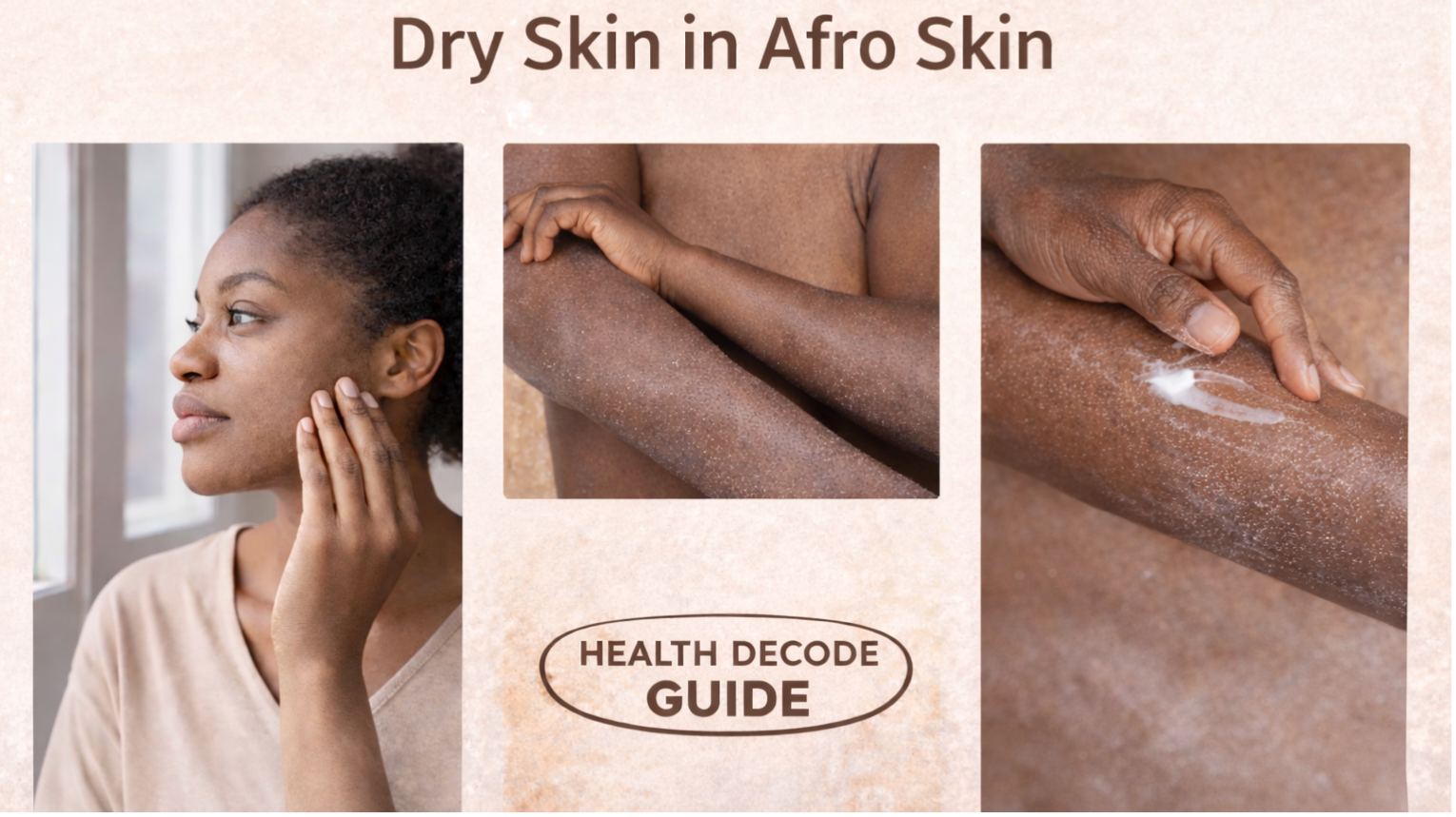
• dull or ashy appearance
• cracks in more severe cases
👉 On darker skin tones, dryness may look grey or “ashy”
5️⃣ Common symptoms
• itching
• irritation
• mild redness
• sensitivity
👉 Scratching can worsen the condition
6️⃣ When is it NOT a problem?
• mild dryness without discomfort
• seasonal dryness
• skin improves with moisturizing
👉 Many cases are temporary and manageable
7️⃣ When to pay attention 🚨
• severe itching
• painful cracks or bleeding
• skin becomes inflamed or infected
• dryness not improving with care
👉 Persistent symptoms may need medical advice
8️⃣ What you can do
• Moisturize regularly
apply thick creams or ointments daily
👉 Best applied after bathing
• Use gentle cleansers
avoid harsh soaps and fragrances
• Limit hot water
use lukewarm water instead
• Protect your skin
wear gloves in cold weather
avoid irritants
• Seek medical care if needed
prescription creams may help in severe cases
👉 Consistency is key for improvement
9️⃣ Diagnosis / assessment
Diagnosis is usually based on:
• skin appearance
• symptoms
• medical history
👉 Further tests are rarely needed
🔟 Important message
Dry skin is common and manageable.
👉 With the right care, the skin barrier can improve
👉 Simple daily habits can make a big difference
FAQ
• Is dry skin the same as eczema?
No, but dry skin can be part of eczema.
• Can drinking water fix dry skin?
Hydration helps, but external care is still needed.
• Is dry skin dangerous?
Usually no, but severe cases may lead to complications.
• Why is my skin worse in winter?
Cold air and low humidity reduce skin moisture.
• When should I see a doctor?
If dryness is severe, painful, or not improving.
🔗 Related Health Topics
• Eczema
• Keratosis pilaris
• Skin care basics
• Allergies
📚 Medical References
• American Academy of Dermatology (AAD). Dry skin: Diagnosis and treatment.
• Mayo Clinic. Dry skin – Symptoms and causes.
• Cleveland Clinic. Dry Skin (Xeroderma): Symptoms, Causes, Treatment & Prevention.
• American Osteopathic College of Dermatology (AOCD). Dry Skin (Xerosis).
• • British Association of Dermatologists (BAD). Emollient use in skin conditions.
⚠️ Medical Disclaimer
This article is for educational purposes only and is not a substitute for professional medical advice. Always consult a qualified healthcare professional regarding your skin concerns.