

Read in: English | Pidgin English
🩺 Medically reviewed by the Health Decoded Guide Editorial Team · Last reviewed: July 2026.
🔍 Quick Summary
Roseola is a common viral infection in young children.
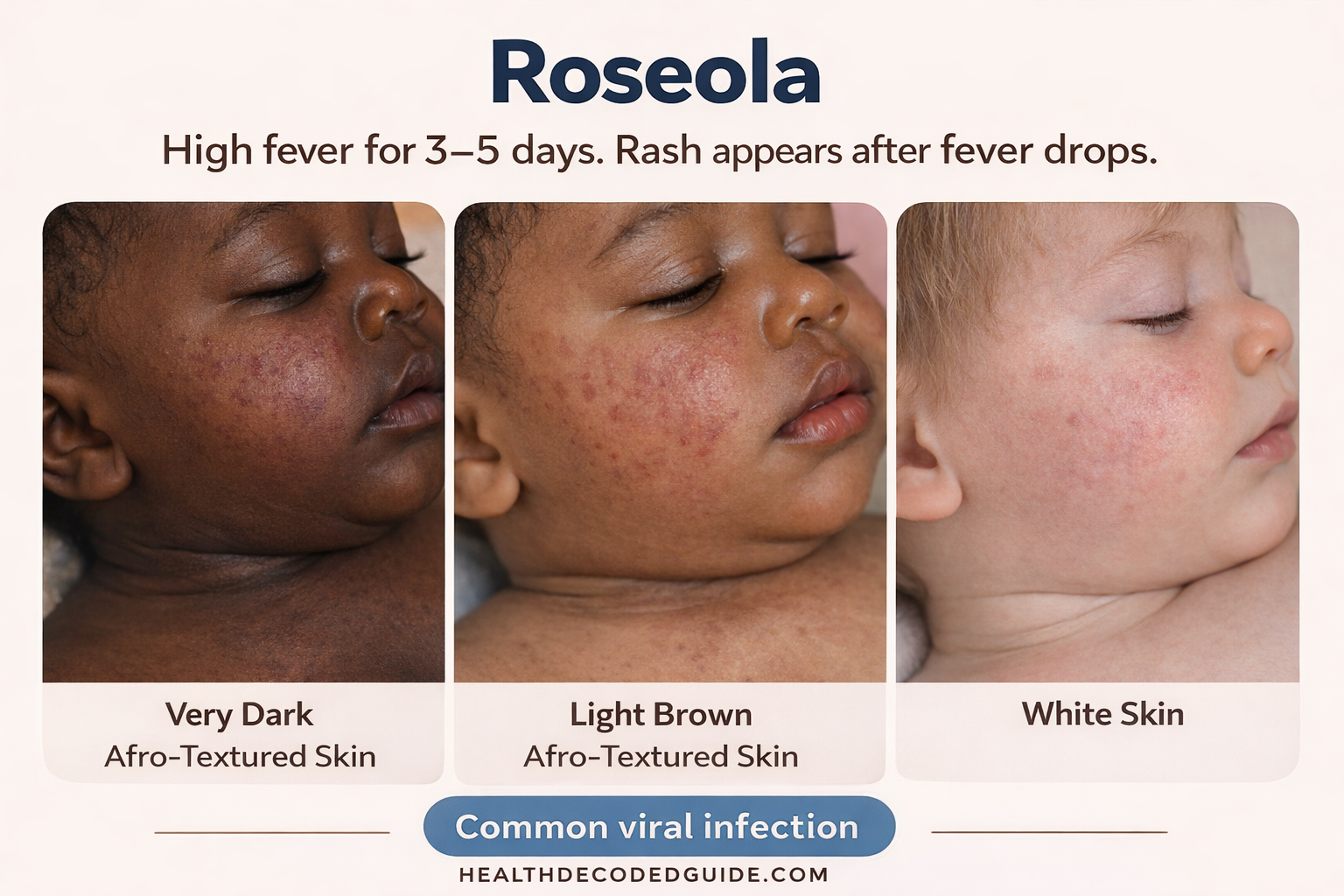
It typically causes a high fever followed by a rash once the fever settles.
👉 The rash often appears when the child is already improving
1️⃣ What is roseola?
Roseola is a viral illness that mainly affects infants and toddlers.
• caused by human herpesvirus (HHV-6 or HHV-7)
• common between 6 months and 2 years
👉 Most children recover without complications
2️⃣ Why does it happen?
• virus enters the body
• causes a sudden high fever
• rash appears as the fever resolves
👉 The timing (fever → then rash) is a key clue
3️⃣ Who is more likely to get it?
• infants and toddlers
• children in daycare
👉 Many children get it at least once
4️⃣ What does it look like?
• high fever (3–5 days)
• rash appears after fever drops
• pink/red spots on chest and back
👉 The child often looks and feels better when the rash appears
5️⃣ Common symptoms
• high fever
• mild cough or runny nose
• irritability
👉 Rash is usually not itchy
6️⃣ When is it NOT a problem?
• child becomes active after fever
• rash is mild
• feeding improves
👉 This is typical for roseola
7️⃣ When to worry 🚨
• seizures with fever (febrile seizures)
• persistent high fever
• child very lethargic
👉 Seek care if symptoms are severe
8️⃣ What you should do
• keep child hydrated
• manage fever
• allow rest
👉 No specific treatment needed in most cases
🟢 Important message
Roseola can look alarming—but is usually mild.
👉 The rash often appears when the worst is over
FAQ
• Is roseola dangerous?
Usually no.
• Does the rash itch?
No, typically not.
• Can it spread?
Yes, through saliva or respiratory droplets.
• Can adults get roseola?
Rarely. Roseola mainly affects infants and young children.
• Can a child get roseola more than once?
Usually no. Most children develop long-lasting immunity after the infection.
🔗 Related Health Topics
• Fever in children
• Skin rashes in children
• Common Childhood Rashes
• Hand, Foot and Mouth Disease
• Chickenpox
👉 Keep exploring to better understand your child’s symptoms
📚 Medical References
• National Health Service (NHS). Roseola.
• Mayo Clinic. Roseola – Symptoms & causes.
• American Academy of Pediatrics (HealthyChildren.org). Roseola in Babies and Toddlers: Symptoms, Causes & When to Call the Doctor.
• Merck Manual Consumer Version. Roseola Infantum.
• HealthLink BC. Roseola.
⚠️ Medical Disclaimer
This article is for educational purposes only and is not a substitute for professional medical advice.