

Read in: English | Pidgin English
🩺 Medically reviewed by the Health Decoded Guide Editorial Team · Last reviewed: July 2026
🔍 Quick Summary
Hand, foot and mouth disease is a common viral infection in children.
It causes mouth sores and a rash on the hands and feet.
👉 It spreads easily but is usually mild and clears on its own
1️⃣ What is hand, foot and mouth disease?
Hand, Foot and Mouth Disease is a viral infection caused by enteroviruses.
• most common in babies and young children
• spreads through close contact
• often seen in daycare settings
👉 It is not related to “foot-and-mouth disease” in animals
2️⃣ Why does it happen?
• caused by viruses (commonly Coxsackievirus)
• spreads through saliva, droplets, or stool
• children touch surfaces and then their mouth
👉 It spreads easily among children
3️⃣ Who is more likely to get it?
• children under 5 years
• daycare or school children
• close contact with infected child
👉 Adults can get it—but less common
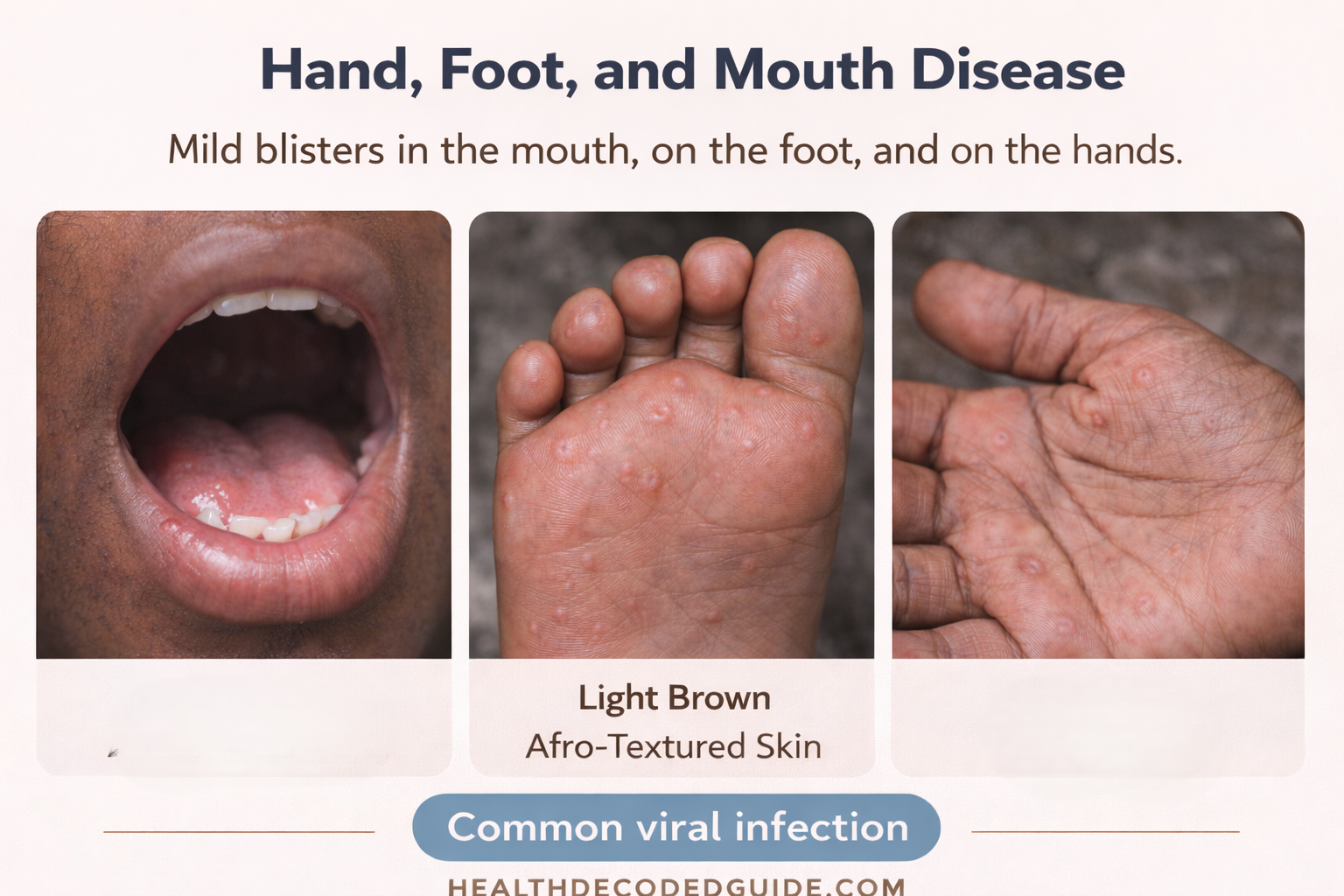
4️⃣ What does it look like?
HFMD has a very characteristic pattern:
• small blisters or red spots
• rash on hands and feet
• painful sores inside the mouth
👉 The mouth sores often cause the most discomfort
5️⃣ Common symptoms
• fever (often first sign)
• sore throat
• nausea and reduced appetite
• irritability
• mouth pain
👉 Children may refuse food due to pain
6️⃣ When is it NOT a problem?
• mild fever
• child still drinking fluids
• rash is limited
👉 Most cases resolve within 7–10 days
7️⃣ When to worry 🚨
• child cannot drink fluids
• signs of dehydration (dry mouth, reduced urine)
• persistent high fever
• child becomes very weak
👉 Dehydration is the main concern
8️⃣ What you should do
• encourage fluids (very important)
• offer soft foods
• manage fever and pain
• allow rest
👉 Hydration matters more than food during illness
🟢 Important message
HFMD can look uncomfortable—but is usually mild.
👉 The illness improves on its own
👉 Focus on comfort and hydration
FAQ
• Is HFMD serious?
Usually no, but dehydration can be a concern.
• Is it contagious?
Yes, it spreads easily among children.
• How long does it last?
Typically 7–10 days.
• Can adults get it?
Yes, but symptoms are often milder.
• When should I see a doctor?
If your child cannot drink or seems very unwell.
🔗 Related Health Topics
• Common Childhood Rashes
• Skin rash in children
• Skin infections
• Roseola
👉 Keep exploring to understand your child’s health better
📚 Medical References
• National Health Service (NHS). Hand, foot and mouth disease.
• Mayo Clinic. Hand-foot-and-mouth disease — Symptoms & causes.
• National Institute for Health and Care Excellence (NICE). Hand, foot, and mouth disease.
• American Academy of Pediatrics (HealthyChildren.org). Hand, Foot & Mouth Disease: Symptoms, Treatment & Prevention.
• Merck Manual Consumer Version. Hand-Foot-and-Mouth Disease.
⚠️ Medical Disclaimer
This article is for educational purposes only and does not replace professional medical advice, diagnosis, or treatment.
Always consult a qualified healthcare professional regarding your child’s health.
If your child cannot drink fluids, appears very weak, or symptoms worsen, seek medical care promptly.