🌍 English
Published on March 23, 2026
🩺 Medically reviewed by Priscilla Afiakurue, MD, Family Medicine Physician | Founder & Lead Medical Editor] · Last reviewed: September 2026
🔍 Quick Summary
Chickenpox is a highly contagious infection caused by the varicella-zoster virus.
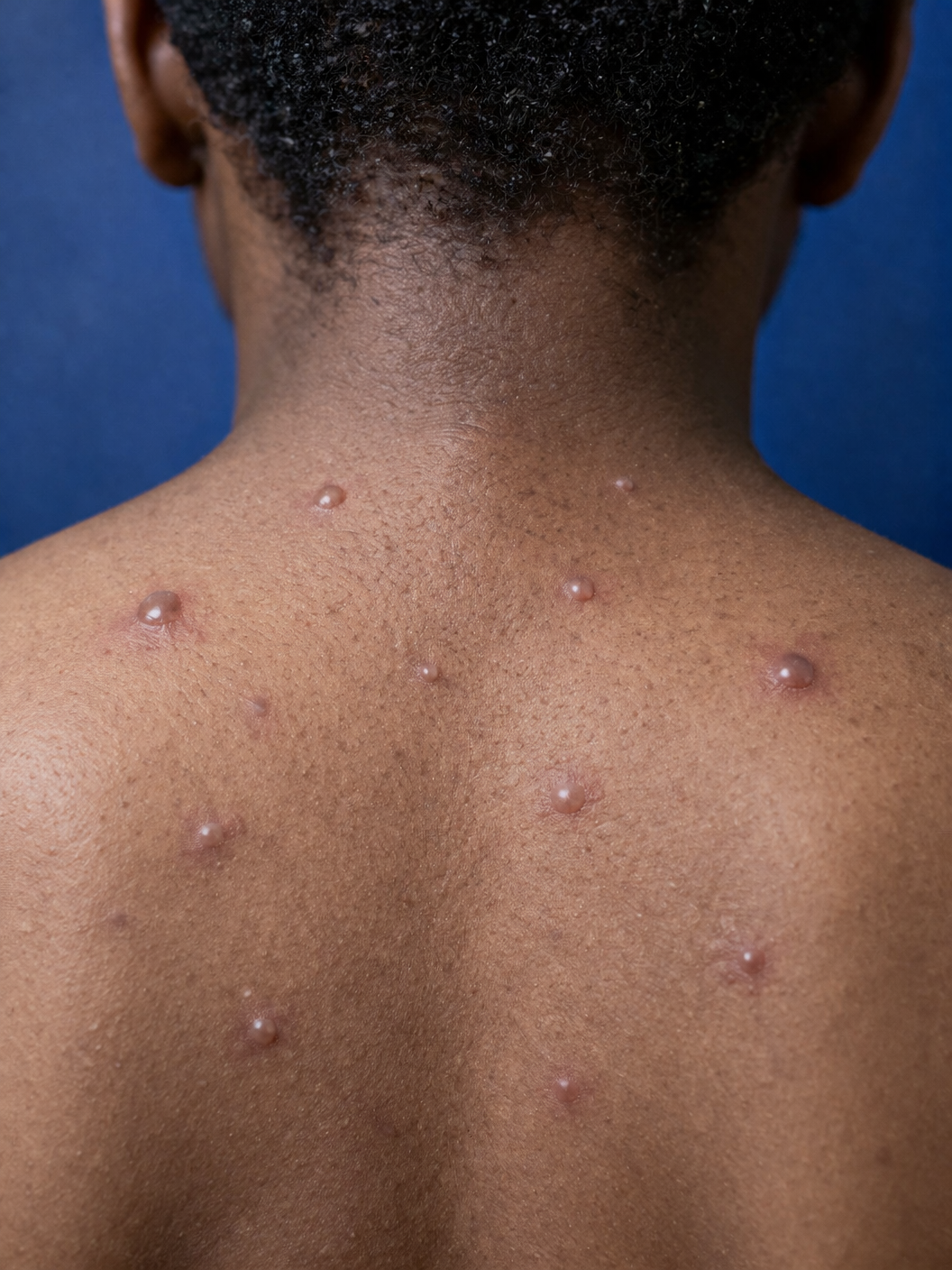
It usually causes an itchy rash that develops into fluid-filled blisters and then scabs.
It is often mild in healthy children, but adults, pregnant people, babies and people with weakened immune systems have a greater risk of complications.
👉 A person can spread chickenpox before the rash appears and remains contagious until all the blisters have crusted over.
1️⃣ What does chickenpox look like?
The rash often begins on the chest, back or face before spreading to other areas.
The spots usually:
• begin as red or raised bumps
• become very itchy fluid-filled blisters
• break or dry out
• form scabs
Because new spots appear over several days, you may see new bumps, blisters and scabs at the same time.
Other symptoms may include fever, tiredness, headache and reduced appetite.
2️⃣ Why does chickenpox happen?
Chickenpox happens when the varicella-zoster virus enters the body and multiplies, triggering an immune response and the characteristic skin rash.
The virus spreads easily through close contact and through respiratory particles from an infected person. It can also spread through direct contact with fluid from the blisters.
A person is generally contagious from 1–2 days before the rash appears until all lesions have crusted over.
👉 This is why chickenpox can spread before someone realises they have it.
3️⃣ What can help?
Most healthy children recover with supportive care.
Helpful measures include:
• plenty of fluids
• keeping fingernails short to reduce skin damage from scratching
• cool baths or other measures to soothe itching
• suitable medicines for fever or discomfort when needed
Do not give aspirin to children or teenagers with chickenpox because of the risk of Reye's syndrome. The CDC also advises avoiding ibuprofen in children with chickenpox if possible because it has been associated with serious bacterial skin infections.
Antiviral medicine may be recommended for people at higher risk of severe disease and works best when started early.
4️⃣ Possible complications
Most healthy children recover without serious problems, but complications can include:
• bacterial infection of the skin
• dehydration
• pneumonia
• inflammation of the brain
• bloodstream infection in severe cases
Adults and people with weakened immunity have a higher risk of serious illness.
5️⃣ 🩺 When should you seek medical help? 🚨
Contact a healthcare professional if chickenpox develops in:
• a pregnant person
• a baby, especially a newborn
• an adult or teenager with significant symptoms
• someone with a weakened immune system
Also seek medical advice if the rash becomes very red, hot, swollen or painful, fever persists or returns, or the person is becoming increasingly unwell.
Seek urgent medical help for severe difficulty breathing, confusion, extreme drowsiness, difficulty waking, severe dehydration, seizures or other rapidly worsening symptoms.
👉 Tell the clinic that you suspect chickenpox before arriving so they can reduce exposure to other patients.
6️⃣ How can chickenpox be prevented?
Vaccination is the best way to prevent chickenpox and significantly reduces the risk of severe disease. Vaccination schedules vary by country.
Someone with chickenpox should avoid close contact with people at higher risk — particularly pregnant people without immunity, newborn babies and people with weakened immune systems — until all spots have crusted.
🟢 Important Message
Chickenpox is usually mild, particularly in healthy children, but it should not always be treated as a harmless childhood illness.
👉 Watch the person's overall condition, not just the rash — worsening illness, breathing problems or symptoms in someone at higher risk deserve medical attention.
FAQ
• How long does chickenpox last?
Symptoms usually improve within about a week, although scabs may take longer to disappear.
• Can you get chickenpox twice?
It is uncommon, although it can happen.
• Can vaccinated people still get chickenpox?
Yes, but breakthrough chickenpox is usually milder, with fewer spots and little or no fever.
• When can someone with chickenpox return to school or childcare?
Generally when all the chickenpox spots have crusted over, following local public-health or school guidance.
• Can chickenpox later cause shingles?
Yes. The virus remains in the body after chickenpox and can reactivate later in life as shingles.
🧠 Why We Delay
Because chickenpox is often described as a routine childhood illness, people may assume every case will stay mild.
Most do — but worsening symptoms or chickenpox in someone at higher risk deserve more attention.
👉 Knowing who is at higher risk helps you recognise when home care is enough and when medical advice matters.
🔗 Related Health Topics
• Fever in Children
• Skin Rash Pikin
• Dehydrationin Children
• Skin Infection
• Childhood Infections
📚 Medical References
• CDC — Chickenpox Symptoms and Complications
• CDC — How to Treat Chickenpox
• CDC — Chickenpox Vaccination
• Mayo Clinic — Chickenpox: Symptoms and Causes
⚠️ Medical Disclaimer
This article is for educational purposes only and does not replace professional medical advice.