Read in: English | Pidgin
🔎 Quick Summary
Measles is a highly contagious viral infection that causes fever, cough, red eyes, and a spreading rash, and can lead to serious complications if not managed early.
1️⃣ Introduction
Measles is a highly contagious viral infection that mainly affects children but can occur at any age.
It spreads easily through the air and can affect many parts of the body.
Although many cases recover, measles can sometimes lead to serious complications, especially in unvaccinated individuals.
2️⃣ How the condition develops
Measles is caused by a virus that spreads through:
• coughing
• sneezing
• close contact
After entering the body:
• the virus infects the respiratory tract
• spreads through the bloodstream
• reaches the skin and other organs
👉 This is why symptoms affect multiple parts of the body.
3️⃣ Early symptoms
Before the rash appears, symptoms may include:
• high fever
• cough
• runny nose
• red, watery eyes
👉 These symptoms usually start several days before the rash.
4️⃣ Symptom explanation
One of the early signs is:
• small white spots inside the mouth (Koplik spots)
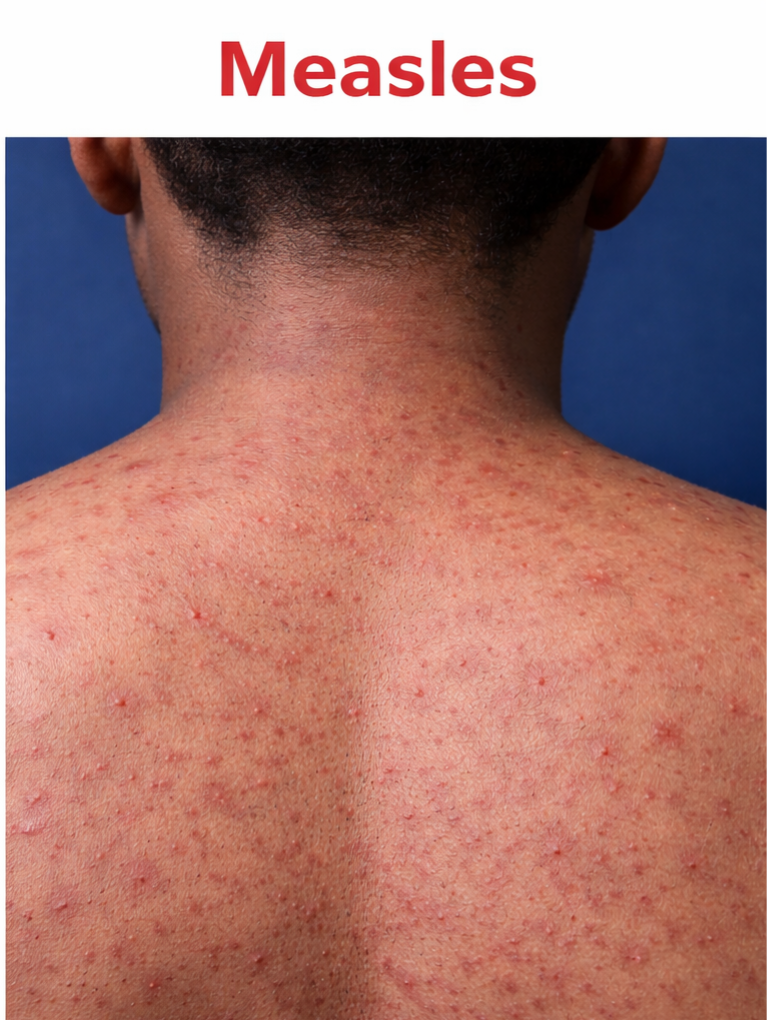
Then the rash appears:
• starts on the face
• spreads down to the body
👉 The rash spreads gradually, unlike some other infections.
5️⃣ Comparison note
Measles can be confused with:
• chickenpox
• rubella
• allergic rash
👉 Measles is more likely to cause cough, red eyes, and a spreading rash without blisters.
6️⃣ When it becomes dangerous
🚨 Seek urgent medical care if:
• difficulty breathing
• persistent high fever
• confusion
• seizures
• severe weakness
⚠️ Complications can include pneumonia and brain inflammation.
7️⃣ Prevention / management
🔹 Prevention
• vaccination (MMR vaccine)
👉 highly effective
🔹 Management
• rest 👌
• fluids 💧
• fever control
👉 There is no specific cure, but supportive care helps recovery.
👉 Management should be guided by a healthcare professional.
8️⃣ Diagnosis / testing
Diagnosis is based on:
• symptoms
• rash pattern
👉 Laboratory testing may be used if needed.
9️⃣ Important message
Measles is preventable through vaccination but can be serious.
Early recognition and proper care reduce complications.
🔟 FAQ
🔹 How does measles spread?
Through air droplets from coughing or sneezing.
🔹 Is measles dangerous?
It can be, especially in children and unvaccinated individuals.
🔹 Can adults get measles?
Yes.
🔹 Is there a cure?
No specific cure, but supportive treatment helps.
🔹 Can it be prevented?
Yes, through vaccination.
Related Health Topics
🔹 Chickenpox – Symptoms and Causes
🔹 Fever – Causes and Treatment
🔹 Skin rash in children – Causes
🔹 Dehydration – Warning Signs
🔹 Chickenpox vs Measles – Difference
Medical References
• World Health Organization
• Centers for Disease Control and Prevention
• National Health Service
• Mayo Clinic
• National Institute for Health and Care Excellence
Medical Disclaimer
This article is for educational purposes only and does not replace professional medical advice, diagnosis, or treatment.
If symptoms worsen or you are concerned, seek medical care promptly.