Read in: English | Pidgin
🔎 Quick Summary
Chickenpox causes itchy fluid-filled blisters, while measles causes a flat spreading rash with cough and red eyes.
1️⃣ Introduction
Chickenpox and measles are both viral infections that can cause fever and rash.
Because they may look similar at first, many people confuse them.
However, they have important differences in how they develop, how the rash appears, and how serious they can be.
2️⃣ How the conditions develop
Chickenpox
• caused by the varicella-zoster virus
• spreads through contact and droplets
• mainly affects the skin
Measles
• caused by the measles virus
• spreads easily through the air
• affects the respiratory system and then the whole body
👉 This difference explains why measles often has stronger general symptoms.
3️⃣ Early symptoms
Before rash appears:
Chickenpox
• mild fever
• tiredness
• reduced appetite
Measles
• high fever
• cough
• runny nose
• red eyes
👉 Measles usually starts with more noticeable respiratory symptoms.
4️⃣ Rash explanation
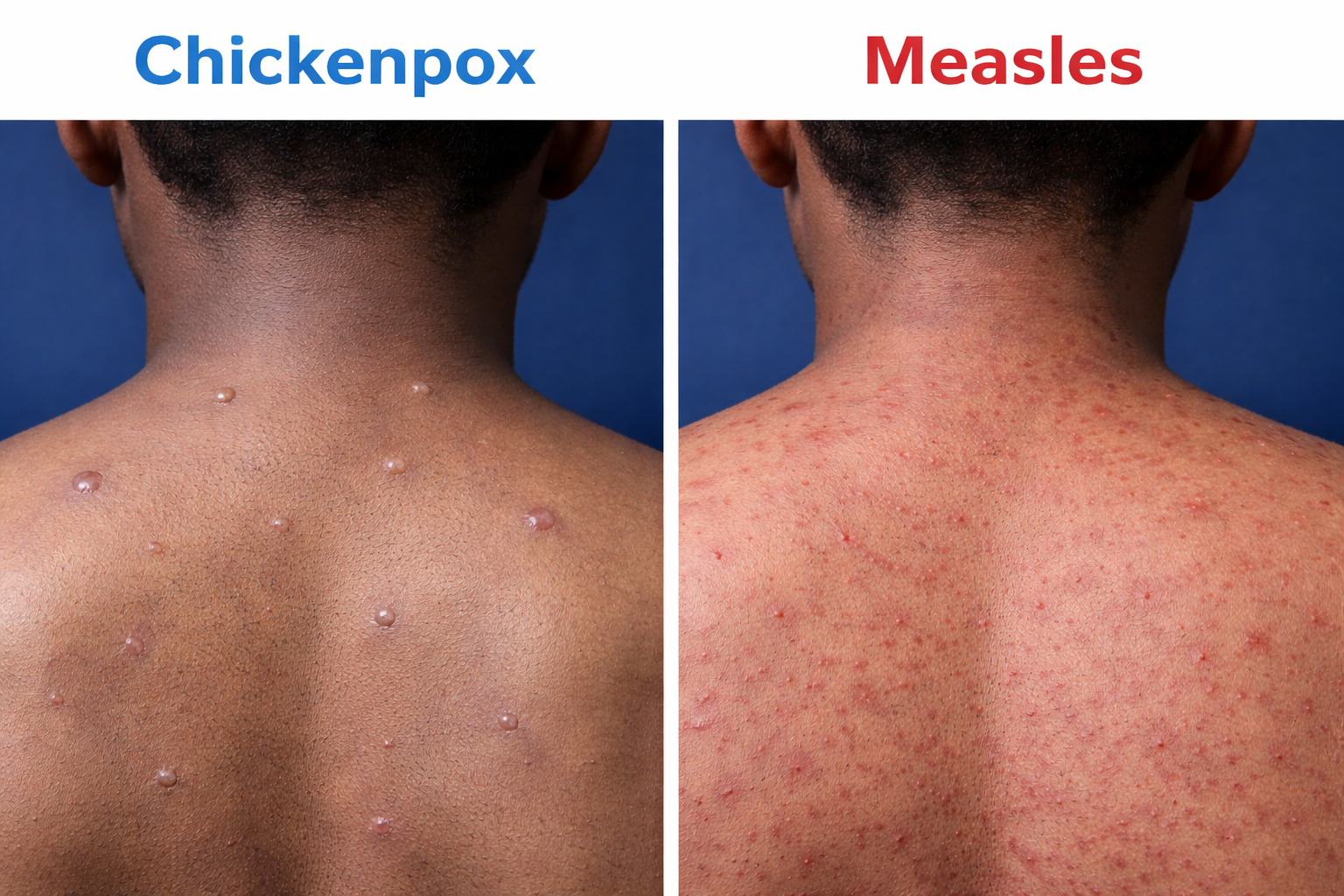
This is the most important difference:
🔹 Chickenpox rash
• starts as red spots
• becomes fluid-filled blisters
• then forms scabs
👉 different stages appear at the same time
👉 very itchy
🔹 Measles rash
• flat red rash
• starts on the face
• spreads downward
👉 same stage across areas
👉 not blistering
5️⃣ Key differences (easy comparison)
Type of rash
• Chickenpox → blisters
• Measles → flat rash
Itching
• Chickenpox → very itchy
• Measles → less itchy
Spread pattern
• Chickenpox → scattered
• Measles → starts face → spreads down
Other symptoms
• Chickenpox → mainly skin symptoms
• Measles → cough, red eyes, more systemic symptoms
6️⃣ When it becomes dangerous
🚨 Seek medical care if:
• difficulty breathing
• persistent high fever
• confusion
• seizures
• signs of dehydration
⚠️ Measles is more likely to cause serious complications such as pneumonia.
⚠️ Chickenpox can become serious in adults or people with weak immunity.
7️⃣ Prevention / management
🔹 Prevention
• vaccination for both conditions
• avoid contact with infected individuals
🔹 Management
• rest 👌
• fluids 💧
• fever control
👉 Treatment is mainly supportive and guided by a healthcare professional.
8️⃣ Diagnosis / testing
Doctors use:
• symptoms
• rash pattern
👉 Tests may be used in uncertain cases.
9️⃣ Important message
Although chickenpox and measles may look similar at first, their rash patterns and symptoms are different.
Recognizing these differences helps guide proper care and reduces complications.
🔟 FAQ
🔹 Which is more dangerous?
Measles is generally more serious.
🔹 Can they look similar at first?
Yes, especially early stages.
🔹 Should I isolate?
Yes, both are contagious.
🔹 Can adults get them?
Yes, and symptoms may be more severe.
🔹 Can they be prevented?
Yes, through vaccination.
Related Health Topics
🔹 Chickenpox – Symptoms and Causes
🔹 Measles – Symptoms and Rash
🔹 Fever – Causes and Treatment
🔹 Skin rash in children – Causes
🔹 Fever in Children – When to Worry
Medical References
• World Health Organization
• Centers for Disease Control and Prevention
• National Health Service
• Mayo Clinic
• National Institute for Health and Care Excellence
Medical Disclaimer
This article is for educational purposes only and does not replace professional medical advice, diagnosis, or treatment.
Seek medical care if symptoms worsen or you are concerned.