

Read in: English | Pidgin English
🩺 Medically reviewed by the Health Decoded Guide Editorial Team· Last reviewed: August 2026
🔍 Quick Summary
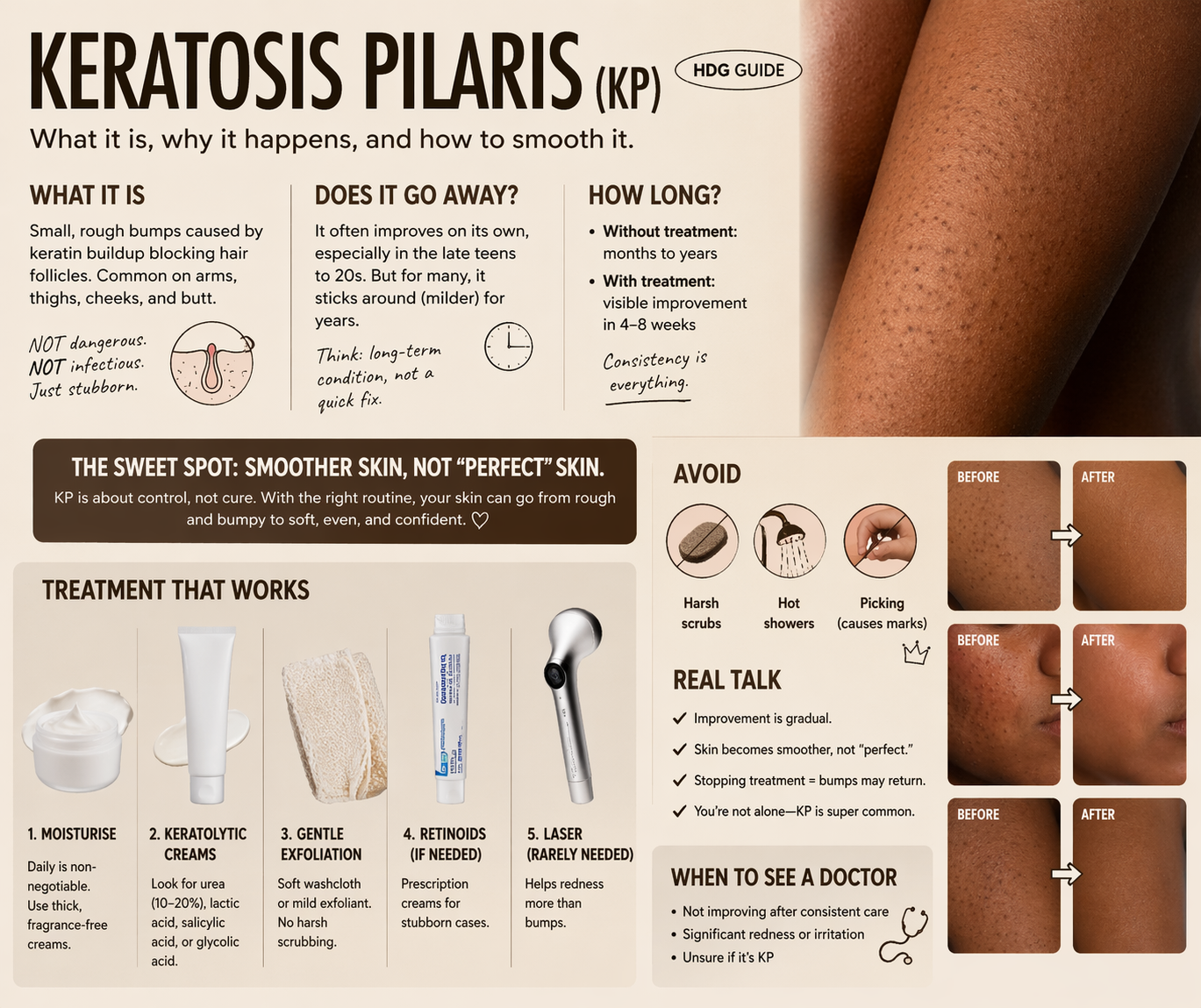
Keratosis pilaris is a common skin condition that causes small, rough bumps—often on the arms or thighs.
It is harmless, but can affect how the skin looks and feels.
👉 It is a skin texture issue—not a dangerous condition
1️⃣ Introduction
Keratosis pilaris (KP) is a very common skin condition.
• it causes small, raised bumps on the skin
• the surface may feel rough or uneven
• it often appears on the upper arms, thighs, or cheeks or even the neck area
👉 Many people describe it as “goosebumps that don’t go away”
2️⃣Why does it happen?
KP develops when keratin (a natural skin protein) builds up and blocks hair follicles.
• dead skin cells accumulate
• hair openings become plugged
• small bumps form on the surface
👉 It is not caused by infection
3️⃣ Who is more likely to have it?
• children and teenagers
• people with dry skin or sensitive skin
• those with eczema
• people with a family history
👉 It is very common and often under-recognized
4️⃣ What does it look and feel like?
KP typically appears as:
• small, rough bumps
• skin that feels uneven or “sandpaper-like”
• red, pink, or darker spots depending on skin tone
👉 It commonly affects the upper arms, thighs, and sometimes cheeks
5️⃣ Common symptoms
• rough skin texture
• mild redness
• occasional dryness
👉 It usually does not cause pain
6️⃣ Does it go away on its own?
KP often improves with time.
• common in childhood and teenage years
• may reduce as the skin matures
• can persist mildly in adulthood
👉 It may not disappear completely—but it often becomes less noticeable
7️⃣ How can it be managed?
1. Moisturize consistently
• use thick creams daily
👉 This is the most important step
2. Use targeted treatments
Look for products containing:
• urea
• lactic acid
• salicylic acid (ask at your local pharmacy)
👉 These help smooth the skin over time
3. Be gentle with your skin
• avoid harsh scrubbing
• limit hot showers
👉 Over-irritation can worsen the condition
4. Medical treatment if needed
• prescription creams may be recommended
8️⃣ Diagnosis / assessment
Diagnosis is usually based on:
• appearance of the skin
• location of the bumps
• medical history
👉 No special tests are usually needed
🟢Important message
Keratosis pilaris is a harmless skin condition.
It does not affect your health or spread to others.
👉 The goal is not perfect skin—but smoother, more comfortable skin
FAQ
• Is keratosis pilaris an infection?
No, it is not caused by bacteria or viruses.
• Can I scrub it away?
No—harsh scrubbing can make it worse.
• Does it go away completely?
Sometimes it improves with age, but it may not fully disappear.
• Can creams really help?
Yes—especially those with urea, lactic acid, or salicylic acid.
• When should I see a doctor?
If you are unsure of the diagnosis or if the skin becomes irritated.
🔗 Related Health Topics
• Eczema
• Dry skin
• Skin Infections
• Skin rash in Children
• Common Childhood rashes
• Skin care basics
👉 Keep exploring to understand your skin better
📚 MEDICAL REFERENCES
• American Academy of Dermatology (AAD). Keratosis pilaris: Overview.
• Mayo Clinic. Keratosis pilaris – Symptoms and causes.
• Cleveland Clinic. Keratosis Pilaris: What It Is, Causes, Symptoms & Treatment.
• American Osteopathic College of Dermatology (AOCD). Keratosis Pilaris.
• Merck Manual Consumer Version. Keratosis Pilaris.
⚠️ MEDICAL DISCLAIMER
This article is for educational purposes only and is not a substitute for professional medical advice. Always consult a qualified healthcare professional regarding your skin concerns.