

Read in: English | Pidgin English
🩺 Medically reviewed by the Health Decoded Guide Editorial Team · Last reviewed: July 2026
🔍 Quick Summary
Liver cirrhosis is long-term damage to the liver causing scarring and reduced function.
It develops gradually but can become serious if not managed early.
1️⃣ Introduction
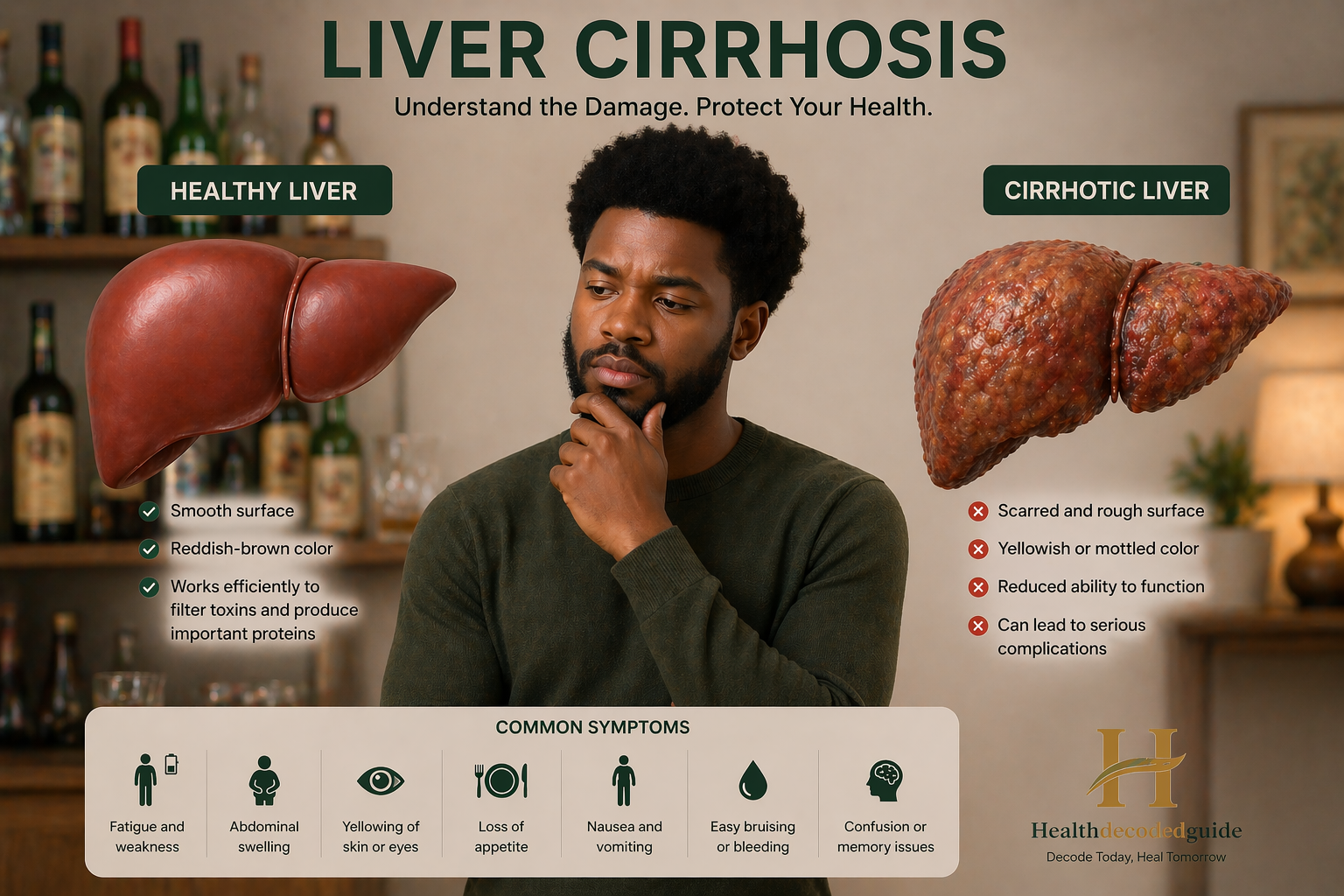
Liver cirrhosis is a chronic condition where healthy liver tissue is replaced by scar tissue.
• affects how the liver works
• develops over years
• often linked to ongoing liver damage
👉 The liver can compensate for a long time—so symptoms may appear late.
2️⃣ How it happens
Repeated injury to the liver leads to scarring.
• inflammation damages liver cells
• scar tissue replaces normal tissue
• blood flow through the liver is reduced
👉 Over time, the liver cannot function properly.
3️⃣ Classification
• Compensated cirrhosis
- liver still performs basic functions
- few or no symptoms
• Decompensated cirrhosis
- liver function significantly reduced
- complications develop
👉 Early stages may be silent.
4️⃣ Common causes
• Chronic alcohol use
- long-term liver damage
• Viral infections
- hepatitis B and C
• Metabolic causes
5️⃣ Symptoms
• fatigue
• weakness
• loss of appetite
👉 These occur due to reduced liver function.
6️⃣ Associated symptoms
• yellowing of skin/eyes (jaundice)
• abdominal swelling (ascites)
• leg swelling
• easy bruising
👉 These suggest more advanced disease.
7️⃣🩺When it becomes dangerous 🚨
• confusion
• drowsiness
• vomiting blood
• severe abdominal swelling
• significant weakness
👉 These may indicate:
• liver failure
• complications like bleeding or encephalopathy
8️⃣ Management / treatment
• treat underlying cause (e.g. stop alcohol, manage hepatitis)
• medications for complications
• dietary adjustments
9️⃣ Diagnosis
• blood tests (liver function)
• imaging (ultrasound, CT scan)
• sometimes liver biopsy
👉 Diagnosis involves assessing liver structure and function.
🟢 Important message
Cirrhosis is serious but manageable—especially if detected early.
👉 Early intervention can slow progression and improve outcomes.
FAQ
• Can cirrhosis be reversed?
Advanced scarring is usually permanent, but progression can be slowed.
• Is alcohol always the cause?
No—viral infections and metabolic conditions are also common causes.
🧠 Why We Delay
Why many people don't realise the dangers of liver cirrhosis
Liver cirrhosis often develops gradually over many years, so people may not notice any symptoms until the liver has already been significantly damaged. Others believe cirrhosis only affects people who drink large amounts of alcohol, not realising that long-term hepatitis, fatty liver disease (MASLD), and other liver conditions can also lead to cirrhosis.
Because early cirrhosis may cause few or no symptoms, it's easy to delay medical care or ignore the underlying liver disease. However, untreated cirrhosis can eventually lead to liver failure, internal bleeding, fluid build-up, liver cancer, and other life-threatening complications.
The good news is that although existing scarring cannot usually be reversed, early diagnosis and treatment can slow or stop further liver damage, reduce complications, and help people live longer, healthier lives.
🔗 Related Health Topics
• Hepatitis
• Fatty liver disease
• Alcohol misuse
• Depression
• Anxiety
• Heart disease
• Chronic Kidney Disease
📚 Medical References
• National Health Service (NHS). Cirrhosis.
• Mayo Clinic. Cirrhosis.
• MedlinePlus. Cirrhosis.
• National Institute for Health and Care Excellence (NICE). Cirrhosis in over 16s: assessment and management.
• American Association for the Study of Liver Diseases (AASLD). Practice Guidance on Prevention, Diagnosis, and Treatment of Cirrhosis.
⚠️ Medical Disclaimer
This article is for educational purposes only and does not replace professional medical advice.
If you have symptoms or risk factors, consult a healthcare professional.