

Read in: English | Pidgin English
🩺 Medically reviewed by the Health Decoded Guide Editorial Team · Last reviewed: July 2026
🔍 Quick Summary
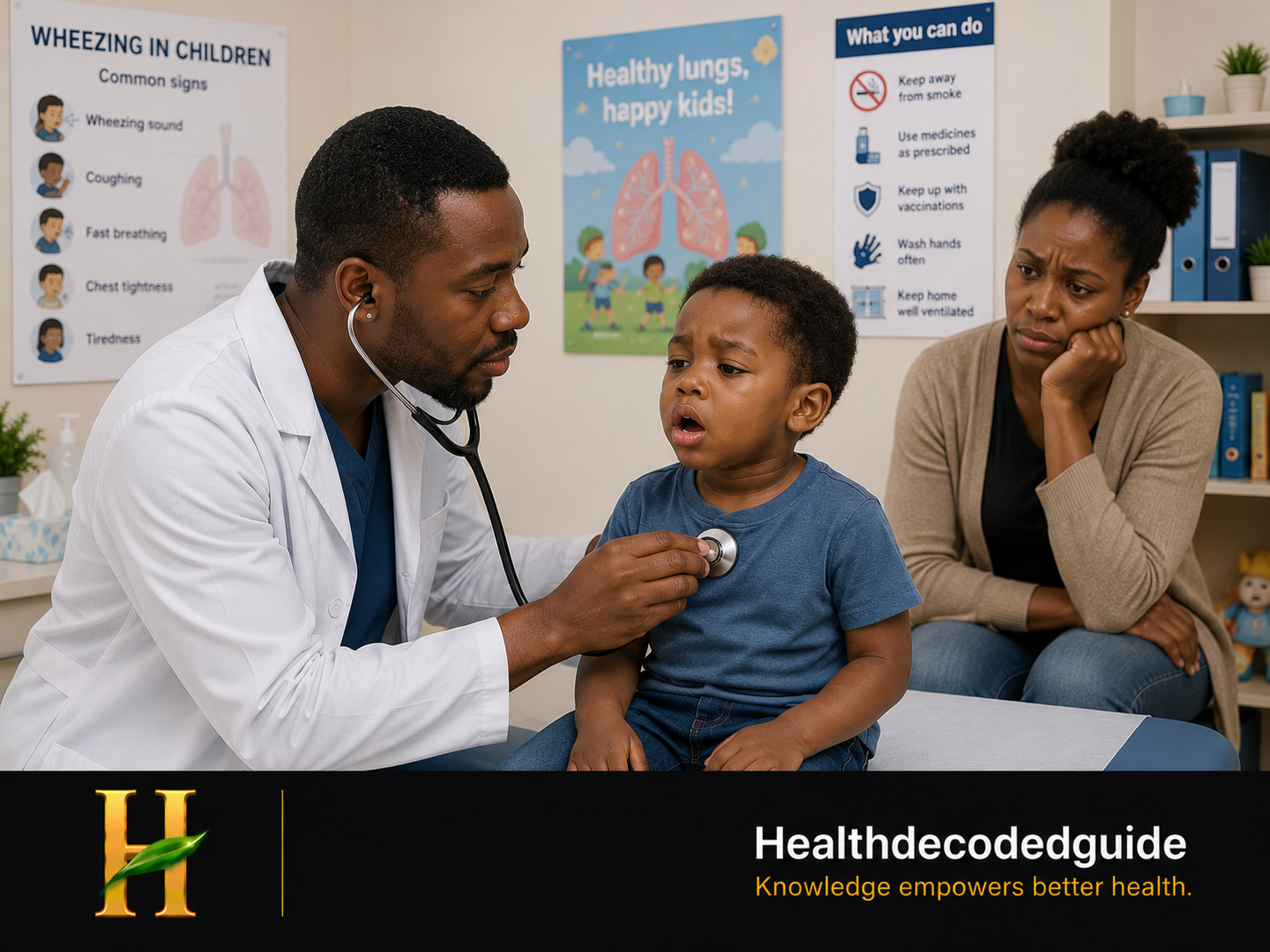
Wheezing is a high-pitched whistling sound that usually occurs when a child breathes out. It happens because the airways become narrowed or partially blocked.
Many children wheeze during viral infections, while others may have asthma or another underlying condition.
🎧 Not sure what wheezing sounds like? Listen to real breathing sounds in our Sound Library to help you understand the difference.
1️⃣ Introduction
Wheezing is a symptom—not a disease.
It tells us that air is having difficulty moving through the lungs because the airways have become narrower than normal.
• common in babies and young children
• often occurs during chest infections
• sometimes linked to asthma or allergies
👉 One episode of wheezing does not automatically mean a child has asthma.
2️⃣ How it happens
Air normally flows freely through the airways.
When the airways become swollen, filled with mucus, or tighten around the muscles, the opening becomes smaller.
As air passes through the narrowed airway, it produces a whistling sound called wheezing.
• airway swelling
• excess mucus
• tightening of airway muscles
👉 Younger children develop wheezing more easily because their airways are naturally much smaller than those of older children and adults.
3️⃣ Common causes
• Viral infections
- viral wheeze
- bronchiolitis
• Asthma
- repeated wheezing episodes
- symptoms triggered by exercise, allergies, or cold air
• Allergies
- pollen
- dust mites
- pet dander
• Other causes
- inhaled foreign object
- pneumonia
- exposure to cigarette smoke
👉 Viral infections are one of the most common causes of wheezing in young children.
4️⃣ Common symptoms
• whistling sound during breathing
• cough
• fast breathing
• chest tightness
• difficulty breathing
👉 Wheezing may be louder when the child breathes out.
5️⃣ Conditions that may cause wheezing
Wheezing can occur in several childhood illnesses.
• Viral wheeze
- usually occurs during viral infections
- common in preschool children
• Asthma
- repeated episodes
- may occur between infections
• Bronchiolitis
- common in babies under 2 years
- often caused by RSV
👉 The child's age and symptoms help doctors identify the likely cause.
6️⃣ Associated symptoms
• runny nose
• fever
• reduced feeding in babies
• tiredness
• disturbed sleep due to coughing
👉 These symptoms often provide clues about what is causing the wheezing.
7️⃣ When it becomes dangerous 🚨
Seek urgent medical care if a child:
• struggles to breathe
• lips or face become blue
• cannot speak or cry properly because of breathing difficulty
• becomes unusually sleepy or difficult to wake
• stops feeding because of breathing problems
👉 These may indicate:
• severe asthma attack
• severe bronchiolitis
• pneumonia
• airway blockage
8️⃣ Management / treatment
Treatment depends on the underlying cause.
• keep the child well hydrated
• treat fever if needed
• inhalers or nebulisers may be prescribed
• follow your healthcare provider's advice
👉 Antibiotics are not needed for most viral causes of wheezing.
9️⃣ Diagnosis
Doctors may diagnose the cause by:
• asking about symptoms
• examining the child's breathing
• checking oxygen levels
• chest X-ray or other tests in selected cases
👉 Identifying the cause is important because different conditions require different treatments.
🟢 Important message
Wheezing is common in children, especially during viral illnesses.
Although many cases improve with appropriate care, severe breathing difficulty should always be treated as a medical emergency.
👉 If your child's wheezing is severe, keeps returning, or is accompanied by breathing difficulty, seek medical assessment promptly.
FAQ
• Does wheezing always mean asthma?
No. Viral infections are one of the most common causes of wheezing in young children.
• Can a cold cause wheezing?
Yes. Many viral infections can temporarily narrow the airways.
• Should I take my child to hospital for wheezing?
Yes, if your child is struggling to breathe, becoming blue, unusually sleepy, or unable to feed.
• Can children outgrow wheezing?
Yes. Many preschool children stop wheezing as their airways grow larger.
• Is wheezing contagious?
No. Wheezing itself is not contagious, but viral infections that cause wheezing can spread to others.
🔗 Related Health Topics
• Asthma attack in Children
• Asthma in Children
• Bronchiolitis
• Allergic Asthma in Children
• Common Cold
• Persistent Coughing in Children
📚 Medical References
• World Health Organization (WHO). WHO consolidated guidelines for the management of common childhood illness: Management of asthma in children and adolescents and bronchiolitis in infants and young children.
• National Health Service (NHS). Bronchiolitis.
• Centers for Disease Control and Prevention (CDC). RSV in Infants and Young Children.
• Mayo Clinic. Wheezing – When to see a doctor.
• National Institute for Health and Care Excellence (NICE). Bronchiolitis in children: diagnosis and management (NG9).
• American Academy of Pediatrics (AAP). Bronchiolitis in Babies: Symptoms, Treatment & Prevention.
⚠️ Medical Disclaimer
This article is for educational purposes only and does not replace professional medical advice.
If your child has symptoms or concerns, please consult a qualified healthcare professional.