English
🩺 Medically reviewed by the Health Decoded Guide Editorial Team · Last reviewed: August 2026
🔍 Quick Summary
Cancer develops because of changes in DNA that affect how cells grow, divide and survive. These changes may occur naturally, develop after certain exposures or sometimes be inherited.
There is rarely one single reason why a particular person develops cancer. Usually, several factors interact over time.
👉 Having a cancer risk factor does not mean you will definitely develop cancer.
1️⃣ Introduction
People often ask, “Why did this person get cancer?” The answer is not always straightforward.
Cancer can develop from a combination of:
• lifestyle factors
• environmental exposures
• certain infections
• inherited genetic changes
• ageing and random DNA errors
👉 Cancer is usually caused by a combination of genetic changes and other influences—not one single event.
2️⃣ How cancer-causing factors affect cells
Many cancer risk factors work by damaging DNA or affecting the systems that normally control cell growth.
• DNA damage can accumulate over time
• some damaged cells escape normal repair
• further changes may allow abnormal cells to survive and multiply
👉 Our bodies repair DNA damage every day. Cancer may develop when important changes accumulate and normal safeguards fail.
3️⃣ Types of cancer risk factors
Modifiable risk factors
These are factors that may sometimes be reduced or avoided.
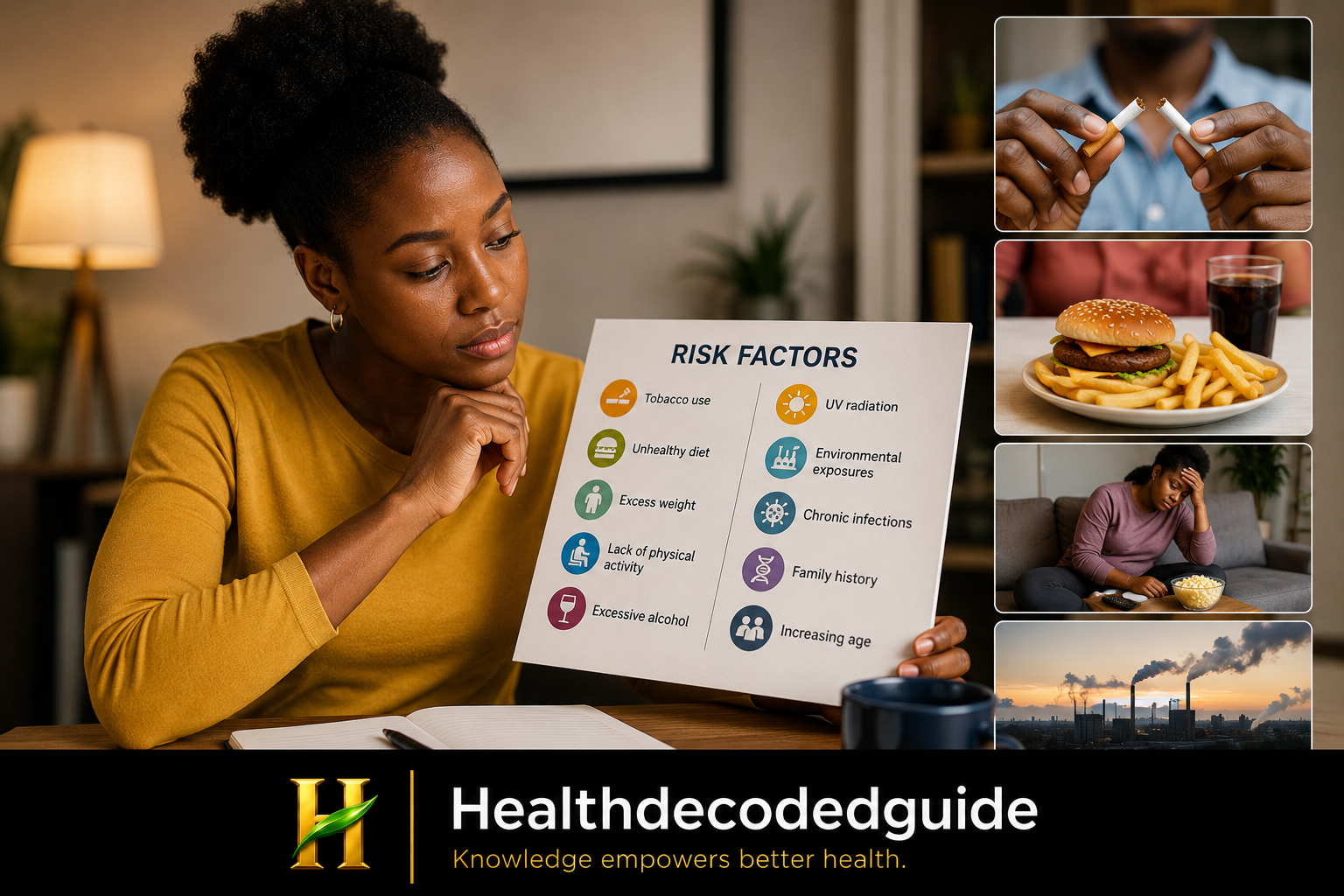
• tobacco
• alcohol
• excessive ultraviolet (UV) exposure
• some occupational or environmental exposures
Non-modifiable risk factors
These cannot simply be changed.
• age
• inherited genetic variants
• family history
👉 Cancer prevention focuses mainly on reducing risks that can realistically be changed.
4️⃣ Common causes and risk factors
Tobacco
• smoking causes several types of cancer
• second-hand tobacco smoke also increases risk
Alcohol
• increases the risk of several cancers
• risk generally increases with greater consumption
Radiation
• ultraviolet radiation from sunlight can cause skin cancer
• high levels of ionising radiation can increase cancer risk
Infections
• human papillomavirus (HPV)
• hepatitis B and C
• Helicobacter pylori
• some other infections
👉 Some cancer-causing infections can be prevented or treated.
5️⃣ Lifestyle and environmental factors
Cancer risk may also be influenced by:
• excess body weight
• low levels of physical activity
• certain dietary patterns
• air pollution
• exposure to certain workplace chemicals
👉 Risk does not mean certainty. Many people with risk factors never develop cancer.
6️⃣ Genetics, family history and ageing
Some cancer-related DNA changes are inherited from parents.
• inherited variants can increase susceptibility to certain cancers
• examples include some BRCA1 and BRCA2 variants
• most cancers are not directly caused by an inherited cancer syndrome
Age also matters because DNA changes accumulate throughout life.
👉 Having cancer in your family does not automatically mean you will develop it.
7️⃣ 🩺 When should you discuss your cancer risk? 🚨
Speak with a healthcare professional if you have:
• several close relatives with the same or related cancers
• cancer occurring unusually young in your family
• a known inherited cancer-related genetic variant
• significant exposure to a known cancer-causing substance
• persistent unexplained symptoms
👉 These may indicate:
• increased cancer risk requiring individual assessment
• need for screening, monitoring or genetic counselling in selected cases
8️⃣ How can cancer risk be reduced?
Not every cancer can be prevented, but many risks can be lowered.
• do not use tobacco
• limit alcohol
• maintain a healthy weight and remain physically active
• protect your skin from excessive UV exposure
• receive recommended HPV and hepatitis B vaccinations
• reduce harmful workplace exposures
• participate in recommended cancer screening
👉 Cancer prevention is about reducing risk—not achieving zero risk.
9️⃣ How is individual cancer risk assessed?
Healthcare professionals may consider:
• age and medical history
• lifestyle and environmental exposures
• family history
• recommended screening results
• genetic counselling or testing when appropriate
👉 Cancer risk is personal, which is why screening recommendations may differ between individuals.
🟢 Important Message
Cancer is not always caused by something a person did wrong.
Some risks can be reduced, while others—such as ageing, inherited genes and random DNA changes—cannot be controlled.
👉 Focus on the cancer risks you can realistically reduce rather than blaming yourself or others.
FAQ
• Does smoking cause cancer?
Yes. Tobacco is one of the most important preventable causes of cancer and is linked to many cancer types.
• Can infections cause cancer?
Some can. HPV, hepatitis B and C, and H. pylori are examples of infections associated with certain cancers.
• Is cancer always inherited?
No. Only a minority of cancers are strongly linked to inherited genetic changes.
• Can completely healthy people develop cancer?
Yes. Cancer can occur even when someone has no obvious risk factors because ageing and random DNA changes also contribute.
🧠 Why We Delay
People sometimes believe cancer only happens to smokers, older people or those with a strong family history. Someone who exercises, eats well and feels healthy may therefore assume cancer screening or persistent symptoms are not relevant to them.
Healthy choices can reduce cancer risk, but they cannot eliminate it completely. Recommended screening and assessment of persistent unexplained symptoms remain important regardless of lifestyle.
👉 Healthy living lowers risk—it does not make anyone completely immune to cancer.
🔗 Related Health Topics
• What Is Cancer?
• How Cancer Develops
• Benign vs Malignant Tumours
• How Cancer Spreads
• Cancer Prevention (coming soon)
📚 Medical References
• World Health Organization (WHO). Cancer.
• National Cancer Institute (NCI). Causes and Prevention.
• American Cancer Society. Cancer Causes and Risk Factors.
• Cancer Research UK. Causes of cancer and reducing your risk.
• Centers for Disease Control and Prevention (CDC). Cancer and Your Health.
⚠️ Medical Disclaimer
This article is for educational purposes only and does not replace professional medical advice.
If you have concerning symptoms, risk factors or abnormal test results, consult a healthcare professional.