When memory and thinking begin change — Dementia
Read in: English | Pidgin English
Published on April 06/2026 at 4:43 PM
🩺 Medically reviewed by the Health Decoded Guide Editorial Team · Last reviewed: August 2026
🔍 Quick Breakdown
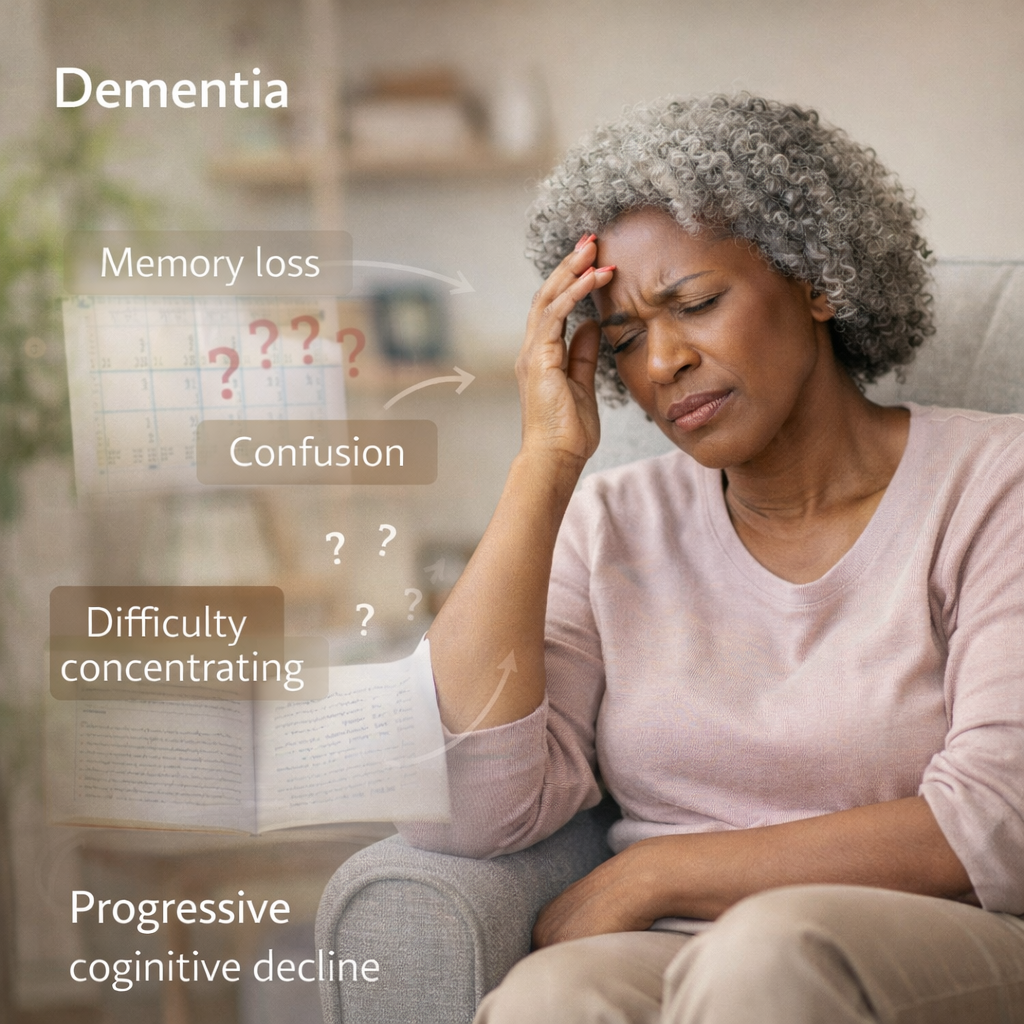
Dementia na general name for different conditions wey gradually dey affect memory, thinking, communication and d ability to manage everyday life.
Small-small forgetfulness no automatically mean dementia o.
But when memory or thinking changes begin affect normal daily life, e deserve proper medical check up.
Dementia no be normal part of ageing, even though d chance of developing am dey increase as person dey grow older.
🟧 Wetin be dementia and how e different from ordinary forgetfulness?
Everybody fit forget something sometimes.
You fit forget where you put your key, person name fit temporarily escape you, or you fit enter room and forget wetin carry you go there.
Dementia different because d changes become more persistent and begin interfere with everyday life.
Person fit:
• always dey forget recent conversations or events
• struggle with familiar tasks (thing wey e fit do normally before fit dey hard, like how to brush teeth)
• find am difficult to plan or make decisions
• become confused about time or place
• struggle to find d correct words
D important thing no be one forgotten name—d pattern and d effect on everyday life na wetin matter.
🟧 Wetin dey happen for d brain?
Different types of dementia affect d brain in different ways.
Over time:
• brain cells fit become damaged
• communication between some brain cells fit reduce
• areas responsible for memory, language or reasoning fit become affected
• everyday tasks fit gradually become more difficult
D exact changes depend on d type of dementia.
Dementia no be one single disease—na several conditions fit cause dis pattern of brain changes.
🟧 D different types of Dementia
• Alzheimer's disease
→ abnormal proteins gradually build up for d brain and damage brain cells. Memory problems often show early, before other thinking and daily activities begin become more difficult.
• Vascular dementia
→ e dey happen when problems with blood supply damage parts of d brain, sometimes after strokes or because of small blood-vessel disease.
• Lewy body dementia
→ abnormal protein deposits affect d brain and fit cause changes in thinking, movement, sleep and sometimes make person see things wey no dey there (visual hallucinations).
• Frontotemporal dementia
→ e mainly affect parts of d brain wey control behaviour, personality and language. Memory problem no always be d first sign.
Some people fit get more than one type of dementia together. Doctors dey call this mixed dementia.
E important make doctor sabi which type of dementia person get because d different types fit affect people differently
and treatment no always be d same.
🟧 How you go know say e fit pass ordinary ageing?
Early changes fit dey subtle, e no easy to notice d signs and symptoms.
Family members fit notice say d person:
• dey ask d same question repeatedly
• don dey to forget recent events
• dey struggle to manage money or medicines
• dey lose direction even for road wey e sabi before
• e hard to plan or organize something
• dey struggle to follow conversation
• personality or behaviour begin change
But memory problems no always mean dementia.
Depression, medicines, thyroid problems, vitamin deficiencies, infection and other medical conditions fit sometimes cause similar symptoms.
👉🏾 No conclude say na dementia from symptoms alone—proper assessment important because some causes of memory problems dey treatable.
🟧 Wetin family fit do?
• talk to d person calmly and respectfully
→ dementia no mean say d person no deserve to take part for conversations and decisions about their own life
• write down examples of d changes you notice
→ e fit help doctor understand wetin don change and how long e don dey happen, for better treatment plan
• encourage medical assessment
→ no assume say every memory problem na dementia; other health problems fit cause similar changes
• help dem organise medicines and appointments if necessary
→ you fit use reminders, pill boxes or family support group fit help
• try maintain familiar routine if possible
→ example: regular time for meals, sleep and daily activities fit reduce unnecessary confusion and stress
• check whether d home still dey safe
→ for example, check whether dem dey forget cooker on, dey fall often, wander comot go outside,
mix up their medicines or struggle with things wey fit put dem for danger
• allow d person continue doing things wey dem still fit safely do
→ things like dressing, helping with simple housework, walking, hobbies or spending time with family fit help dem remain active and independent
• Try not to dey quarrel with d person over every small thing wey dem forget.
→ Dem no dey deliberately forget or try frustrate you—sometimes na d changes for their brain dey make things difficult.
👉🏽 Supporting person with dementia no mean say family suppose immediately do everything for dem or stop dem from making every decision.
Give help where dem need am, but allow dem continue doing wetin dem still fit safely do.
D aim na to protect their safety while helping dem maintain dignity, confidence and as much independence as possible.
Mr Udofia family first notice say e dey forget small small things.
Sometimes e go call one of him children another pikin name, and everybody go laugh:
“Papa don dey old abeg.”
One afternoon, him daughter come visit am, na so e dey look her for some seconds before e ask:
“Sorry, you be who again?”
Later e remember her, so everybody try brush am aside.
Another day, Mr Udofia go buy something from one nearby shop wey e don dey go before—but e no remember d road back home.
Luckily, one neighbour recognise am as e dey waka around and bring am back.
D family begin worry.
Because dem no really understand wetin dey happen, dem tell Mr Udofia:
“Papa, abeg go see doctor make dem check you.”
Mr Udofia agree, but e forget d appointment.
Dem book another one, but e forget that one too.
Na then him daughter realise say e no make sense to am to handle problem by himself when forgetting things na part of d problem.
So she arrange another appointment and this time, she go with am.
Doctor listen to both Mr Udofia and him daughter, review him medicines and medical history, examine am and arrange further assessment.
After further evaluation, dem diagnose Mr Udofia with dementia and explain to d family wetin d condition mean.
As d family begin understand why Mr Udofia dey behave differently.
Dem start to help with appointments and medicines, make d house safer and allow am continue doing d things wey e still fit safely do and enjoy.
Most importantly, dem begin plan future care with Mr Udofia, while e still fit express wetin e want.
👉🏽 Support fit mean recognising when “just remind am” no longer dey enough and to sabi when to step in to help.
🟧 🩺 When you suppose go hospital 🚨
Sudden confusion no be d usual way dementia dey start o.
Abeg seek urgent medical help if person:
• suddenly become confused within hours or days
• suddenly no fit talk properly
• develop weakness or numbness for one side
• suddenly collapse or become difficult to wake
• get severe headache with confusion
Sudden confusion fit come from stroke, infection, low blood sugar, medicine problem or another emergency. No simply assume say na dementia.
🟢 Final Reassurance
Dementia fit gradually change how person dey think and manage everyday life,
but diagnosis no mean say the person's independence disappear immediately.
Treatment and support fit help to manage symptoms, maintain quality of life and give families opportunity to plan ahead.
👉🏾 If memory or thinking changes dey affect everyday life,
early assessment fit help you understand wetin dey happen and which kind support dey available.
📚 Reference
For full medical references, see the English version of this article.
⚠️ Disclaimer
This article na for education only. E no replace doctor advice.
If you notice persistent changes for memory, thinking, behaviour or ability to manage everyday activities, abeg see healthcare professional.
🔗 Related Health Topics
• Memory problems
• Confusion
• Stroke
👉🏾 If you still get questions or prefer full medical detail? Read English version