Read in: English | Pidgin English
Published on April 06/2026 at 4:43 PM
🩺 Medically reviewed by the Health Decoded Guide Editorial Team · Last reviewed: August 2026
🔍 Quick Summary
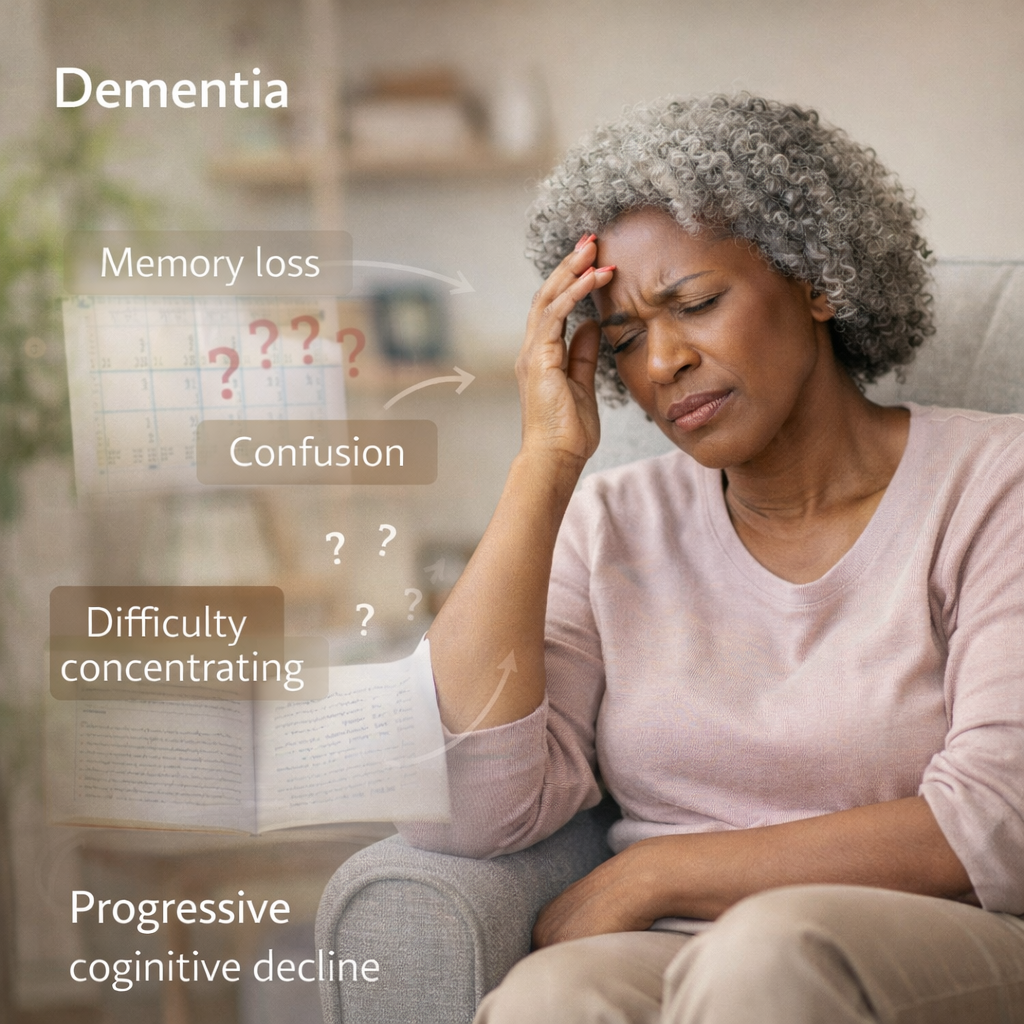
Dementia is a condition that affects memory, thinking, and daily functioning. It develops gradually and mainly affects older adults.
1️⃣ Introduction
Dementia is a group of symptoms affecting cognitive function.
• impacts memory, thinking, and behavior
• usually develops slowly over time
• most common in older adults
Dementia is not a normal part of aging—but risk increases with age.
2️⃣ How it happens
Dementia occurs due to damage to brain cells.
• brain cells lose function or die
• connections between brain areas weaken
• information processing becomes impaired
Different causes affect different parts of the brain.
3️⃣ Common types of dementia
• Alzheimer’s disease
- most common type
- gradual memory loss and confusion
• Vascular dementia
- related to reduced blood flow in the brain
- may occur after strokes
• Lewy body dementia
- can cause confusion, hallucinations, and movement problems
- symptoms may fluctuate
• Frontotemporal dementia
- affects behavior, personality, or language early
- memory may be less affected at first
👉 Different types may have different patterns and progression, but all can affect daily functioning over time.
4️⃣ Common causes
• Neurodegenerative causes
- Alzheimer’s disease
- other degenerative brain conditions
• Vascular and other causes
- stroke or poor blood supply
- long-term health conditions
5️⃣ Early changes you may notice
Dementia can affect more than memory. Early changes may include:
• forgetting recent conversations or events
• repeatedly asking the same questions
• difficulty finding the right words
• becoming confused about dates, time or familiar places
• struggling with tasks that were previously easy
These changes happen because dementia affects areas of the brain involved in memory, thinking, language and everyday functioning.
6️⃣ Changes that may develop over time
As dementia progresses, a person may also develop:
• changes in mood, behaviour or personality
• poorer judgment or decision-making
• difficulty managing money, medicines or daily activities
• becoming withdrawn from family or social activities
• increasing difficulty recognising people or places
Dementia usually develops gradually. What matters is a persistent decline from the person's previous abilities that begins to interfere with everyday life.
7️⃣ When to seek urgent medical help 🚨
A person with dementia needs urgent assessment if they:
• suddenly become much more confused than usual
• develop new weakness, facial drooping or difficulty speaking
• have a fall or head injury
• become very drowsy or difficult to wake
• develop confusion that creates an immediate safety risk
👉 A sudden change is especially important.
Dementia usually worsens gradually, so sudden confusion or rapid deterioration may be caused by another problem such as infection, medication effects, dehydration or stroke—and should not automatically be blamed on dementia.
8️⃣ Management / treatment
• medications to slow progression (in some types)
• cognitive support and routine
• support for daily living and caregivers
9️⃣ Diagnosis
• medical history and cognitive testing
• blood tests to rule out other causes
• brain imaging (CT or MRI)
👉 Early diagnosis helps plan care and support.
🟢 Important message
Dementia is a progressive condition—but support and care can improve quality of life.
👉 Early recognition allows better planning and support.
FAQ
• Is dementia the same as Alzheimer’s?
No, Alzheimer’s is one type of dementia.
• Can dementia be prevented?
Risk can be reduced with healthy lifestyle, but not fully prevented.
• Is forgetfulness always a sign of dementia?
No. Occasional forgetfulness is common, but persistent changes that affect daily life should be assessed.
• Can younger people develop dementia?
Yes. Dementia is more common in older adults, but younger people can also develop it.
• Is there treatment for dementia?
Yes. Some treatments can help manage symptoms, and support can help maintain independence and quality of life.
🔗 Related Health Topics
• Memory problems
• Confusion
• Stroke
• High Blood pressure
• Balance problems
📚 Medical References
• World Health Organization (WHO). Dementia.
• National Health Service (NHS). Dementia.
• Centers for Disease Control and Prevention (CDC). About Dementia.
• Mayo Clinic. Dementia - Symptoms and causes.
• National Institute for Health and Care Excellence (NICE). Dementia: assessment, management and support for people living with dementia and their carers (NG97).
• Alzheimer's Association. Alzheimer's Help & Support.
⚠️ Medical Disclaimer
This article is for educational purposes only and does not replace professional medical advice.
If you have symptoms or concerns, please consult a qualified healthcare professional.