Read in: English | Pidgin English
Published on April 06/2026 at 4:35 PM
🩺 Medically reviewed by the Health Decoded Guide Editorial Team · Last reviewed: August 2026
🔍 Quick Summary
Sweating is a normal body function that helps regulate temperature. Excessive or unusual sweating may signal an underlying condition.
1️⃣ Introduction
Sweating is the body’s way of cooling itself.
• occurs with heat, exercise, or stress
• can vary between individuals
• becomes a concern when excessive or unexplained
Not all sweating is abnormal—but patterns matter.
2️⃣ How it happens
Sweat glands are controlled by the nervous system.
• body temperature rises → sweat glands activated
• sweat evaporates → cools the body
• nerves regulate the amount of sweating
Overactivity of this system can lead to excessive sweating.
3️⃣ Types
• Primary (focal) sweating
- affects specific areas (hands, feet, armpits)
- often starts early in life
• Secondary (generalized) sweating
- affects the whole body
- may be due to medical conditions
Generalized sweating is more likely to need evaluation.
4️⃣ Common causes
• Normal or lifestyle factors
• Medical causes
- infections or fever
- hormonal conditions (e.g. thyroid issues, menopause)
5️⃣ What excessive sweating may look like
Excessive sweating can affect different people differently.
• sweating much more than expected for the temperature or activity
• sweating even when resting or in a cool environment
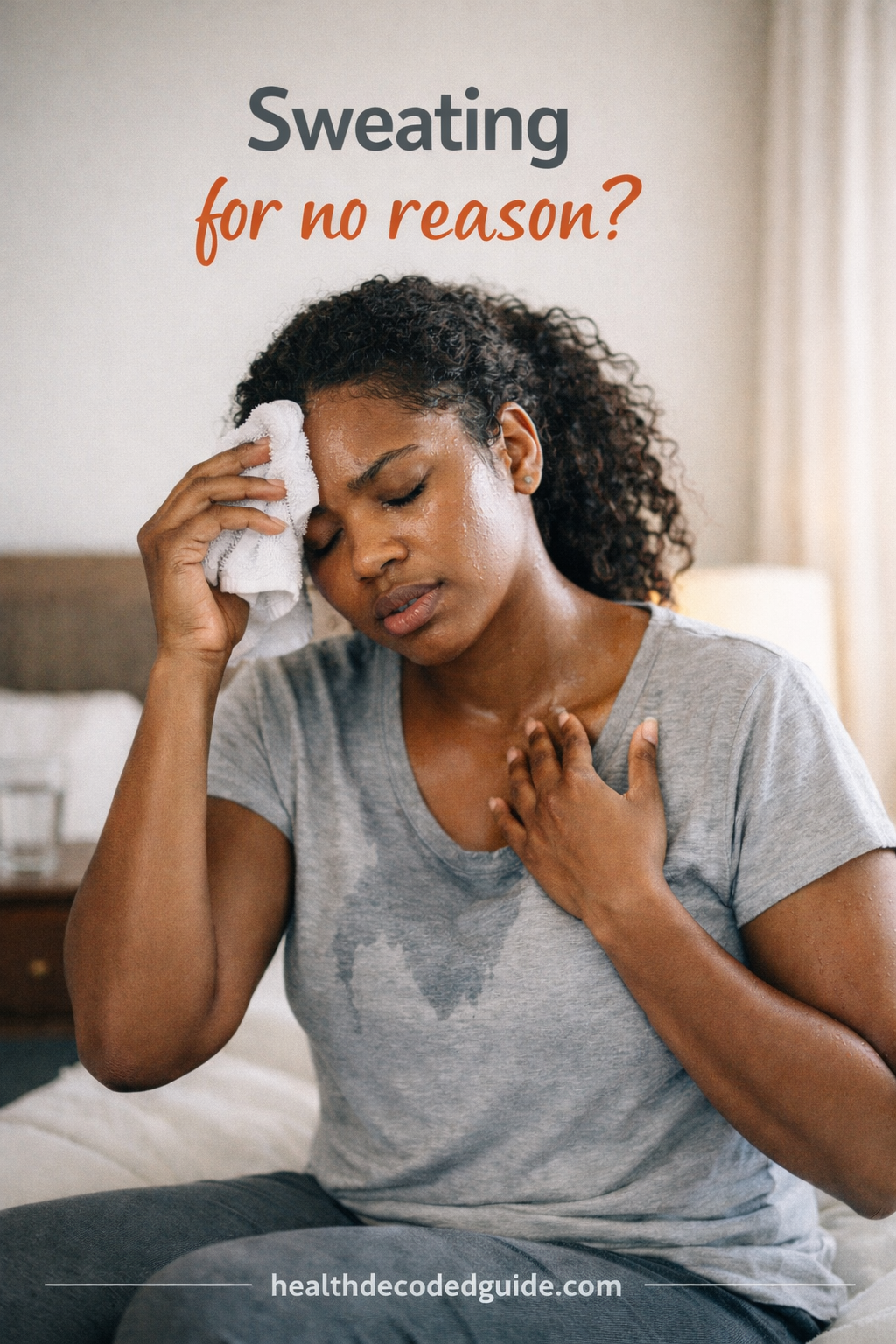
• clothes becoming noticeably soaked with sweat
• frequent sweating of the palms, feet, face or underarms
• heavy sweating during sleep (night sweats)
What matters is whether the sweating seems unusual for the situation or is significantly affecting your daily life.
6️⃣ Other symptoms that may occur with excessive sweating
Depending on the cause, sweating may occur with:
• fever
• unexplained weight loss
• palpitations
• fatigue
Associated symptoms may point to infection, hormonal, or systemic causes.
7️⃣ When it becomes dangerous 🚨
• night sweats with weight loss
• sweating with chest pain or palpitations
• unexplained persistent sweating
👉 These may indicate:
• infection, cancer, or hormonal disorder
• need for medical evaluation
8️⃣ Management / treatment
• antiperspirants or topical treatments
• lifestyle adjustments (cool environment, loose clothing)
• treat underlying cause if present
9️⃣ Diagnosis
• medical history and pattern assessment
• blood tests (e.g. thyroid, infection markers)
• further tests if needed
👉 Identifying the pattern helps determine the cause.
🟢 Important message
Sweating is normal—but unusual patterns should not be ignored.
Persistent or unexplained sweating deserves evaluation.
FAQ
• Is sweating always a sign of illness?
No, it is often normal—but unusual patterns may need checking.
• What are night sweats?
Sweating that occurs during sleep, sometimes linked to medical conditions.
• Can stress or anxiety cause excessive sweating?
Yes. Stress and anxiety can trigger or worsen sweating.
• Can excessive sweating be treated?
Yes. Treatment depends on the cause and may include antiperspirants, medicines or other treatments.
🔗 Related Health Topics
• Fever
• Anxiety
• Food poisoning
• Unexpected Weight Loss
• Thyroid Diseases
📚 Medical References
• National Health Service (NHS). Excessive sweating (hyperhidrosis).
• Mayo Clinic. Hyperhidrosis – Symptoms and causes.
• American Academy of Dermatology (AAD). Hyperhidrosis: FAQs.
• National Institute for Health and Care Excellence (NICE). What is excessive sweating?
• International Hyperhidrosis Society. Condition Overview.
⚠️ Medical Disclaimer
This article is for educational purposes only and does not replace professional medical advice.
If you have symptoms or concerns, please consult a qualified healthcare professional.