When hair begin thin for men—make you understand am
Read in: English | Pidgin English
Published on April/06/2026 3:59 AM
🩺 Medically reviewed by the Health Decoded Guide Editorial Team · Last reviewed: August 2026
🔍 Quick Breakdown
Male pattern baldness na common type of hair loss wey dey happen for men, usually because of genes and how d hair follicles respond to certain male hormones.
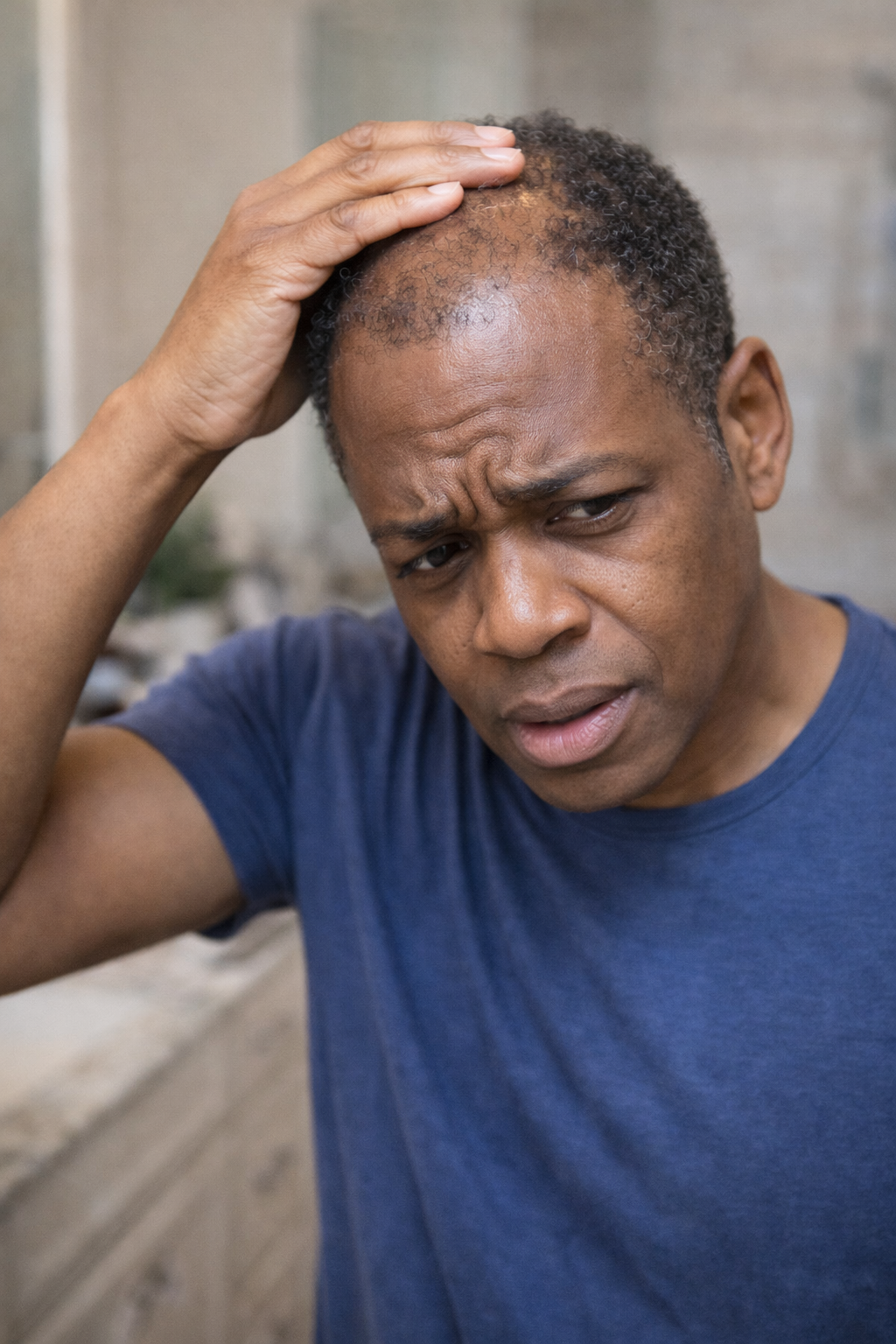
D hair fit gradually begin thin for d front, temples or top of d head, and d hairline fit begin shift backwards.
E usually dey happen small small over time, and e no mean say person sick.
👉🏽 Male pattern baldness dey common, but if your hair suddenly begin fall plenty, leave patches, or your scalp get other changes, another cause fit dey and e good make healthcare professional check am.
🟧 Wetin dey happen?
Male pattern baldness na when man hair begin thin or fall gradually.
• e fit start from d front (hairline)
• or sometimes from middle (crown area)
👉 Na very common thing—and many men go experience am.
🟧 Why e dey happen?
• genetics
→ if d men for d family get am, chance dey high
• hormone Dihydrotestosterone (DHT)
→ this na hormone dey affect the hair root (medical name na hair follicle)
(hair follicle — na d small part inside the skin where hair dey grow from)
→ no be say your body get too much DHT
→ na say your hair follicles dey sensitive to the hormone
- DHT go attach to d hair root (follicle)
- e make the hair gradually become thin and weak
- over time, the hair fit stop dey grow
- 👉🏽 Na this sensitivity (many times, genetic) dey cause male pattern baldness.
💡 Think am like this:
👉 Two people fit get the same DHT level, but one go lose hair, the other no go lose hair
Why?
👉 Their hair follicles dey react differently
• follicle shrink
→ hair root dey produce weaker hair over time
👉 Na natural process—but e vary from person to person.
🟧 How you go know say e no dey normal?
• hair dey fall suddenly
→ no be gradual pattern
• scalp dey itch or pain
→ e fit be infection (eg fungal infection)
• patches of hair loss
→ not the usual pattern
👉 These ones need proper check—not typical male baldness.
🟧 Wetin you fit do by yourself or for house
• use approved treatments early
→ e go help to slow d progression
• maintain scalp care
→ keep scalp healthy
• accept natural changes
→ balance treatment with self-confidence🧑🏽🦲
👉 D choice na your own—Any one wey person choose dey ok treatment or acceptance.
🟧 Real life example
Chinedu first notice say him hairline for d two sides of him forehead dey gradually shift backwards.
At first, e blame him barber:
“This guy don dey push my hairline back every time.”
So e change barber.
But after some months, Chinedu notice say d hairline still dey move backwards, and d hair for d top of him head begin thin too.
Him friends begin recommend different oils and creams, but nothing really change.
One day, Chinedu look old family pictures and notice say him papa and two of him uncles get almost d same pattern of hair loss.
E decide discuss am with healthcare professional, who examine him scalp and explain say d pattern fit with male pattern baldness.
Dem discuss available treatment options and also explain say treatment fit help slow further hair loss for some men, but results differ and treatment usually need to continue to maintain the benefit.
👉🏽 Male pattern baldness usually happen gradually and family history fit play important role. If you notice sudden hair loss, bald patches, itching, scaling or other scalp changes, no just assume say na male pattern baldness—make healthcare professional check am.
🟧 When you gats go hospital 🚨
• sudden hair loss
• scalp symptoms (pain, rash)
• unusual pattern
👉 These signs fit mean another condition.
🟢Final reassurance
Male pattern baldness no be sickness—it na natural change.
👉 Whether you treat am or accept am, your health still intact.
📚 Reference
For full medical references, see English version of this article.
⚠️ Disclaimer
This article na for education only.
E no replace advice from doctor.
If symptoms serious or no go, abeg see healthcare professional.
🔗Related Health Topics
• Hormonal changes
• Low Testosterone
• Male Hormonal imbalance
• Stress and Burnout
👉 If you still get questions or prefer full medical detail? Read English version