

🌍 English
Published on February 23, 2026
🩺 Medically reviewed by Priscilla Afiakurue, MD, Family Medicine Physician | Founder & Lead Medical Editor · Last reviewed: October 2026
🔍 Quick Summary
A seizure happens when sudden abnormal electrical activity in the brain temporarily changes a child's movement, awareness, behaviour or sensations. Some children shake and become unresponsive, while others may stare or behave unusually.
Fever can trigger seizures in some young children, but not every childhood seizure is a febrile seizure or means the child has epilepsy.
👉 What you do during the seizure — especially keeping the child safe and timing it — matters.
🚨 Quick Action
Call emergency services if:
• the seizure lasts more than 5 minutes
• another seizure starts before the child recovers
• the child has difficulty breathing or waking afterwards
• the seizure happens in water or causes serious injury
• this is the child's first seizure, particularly if they have not recovered normally
Do not hold the child down and never put anything inside their mouth.
1️⃣ What can a seizure look like?
Not every seizure causes dramatic shaking.
A child may:
• suddenly stiffen or develop jerking movements
• become unresponsive or lose awareness
• stare and stop responding briefly
• roll their eyes or make unusual movements
• appear confused or very sleepy afterwards
The pattern depends on which parts of the brain are involved.
2️⃣ Why does a seizure happen?
The brain normally uses organised electrical signals to control movement, awareness and behaviour.
During a seizure, a burst of abnormal electrical activity temporarily disrupts this normal signalling.
Depending on where the activity begins and how far it spreads, the child may shake, stare, stiffen or lose awareness.
Possible triggers or causes include:
• fever in susceptible young children
• epilepsy
• infections affecting the brain
• head injury
• low blood sugar or other metabolic disturbances
• some neurological or genetic conditions
Sometimes a first seizure has no immediately obvious cause.
A seizure is an event — finding out what caused it determines what happens next.
3️⃣ Febrile seizures
Febrile seizures can occur when a young child has a fever, most commonly between about 6 months and 5 years of age.
They usually occur during an illness with fever and most are brief.
A typical febrile seizure may involve stiffening, shaking and temporary loss of responsiveness.
Most brief febrile seizures do not cause brain damage and are not the same as epilepsy.
Fever medicines such as acetaminophen/paracetamol or ibuprofen may make a child more comfortable, but they do not reliably prevent febrile seizures.
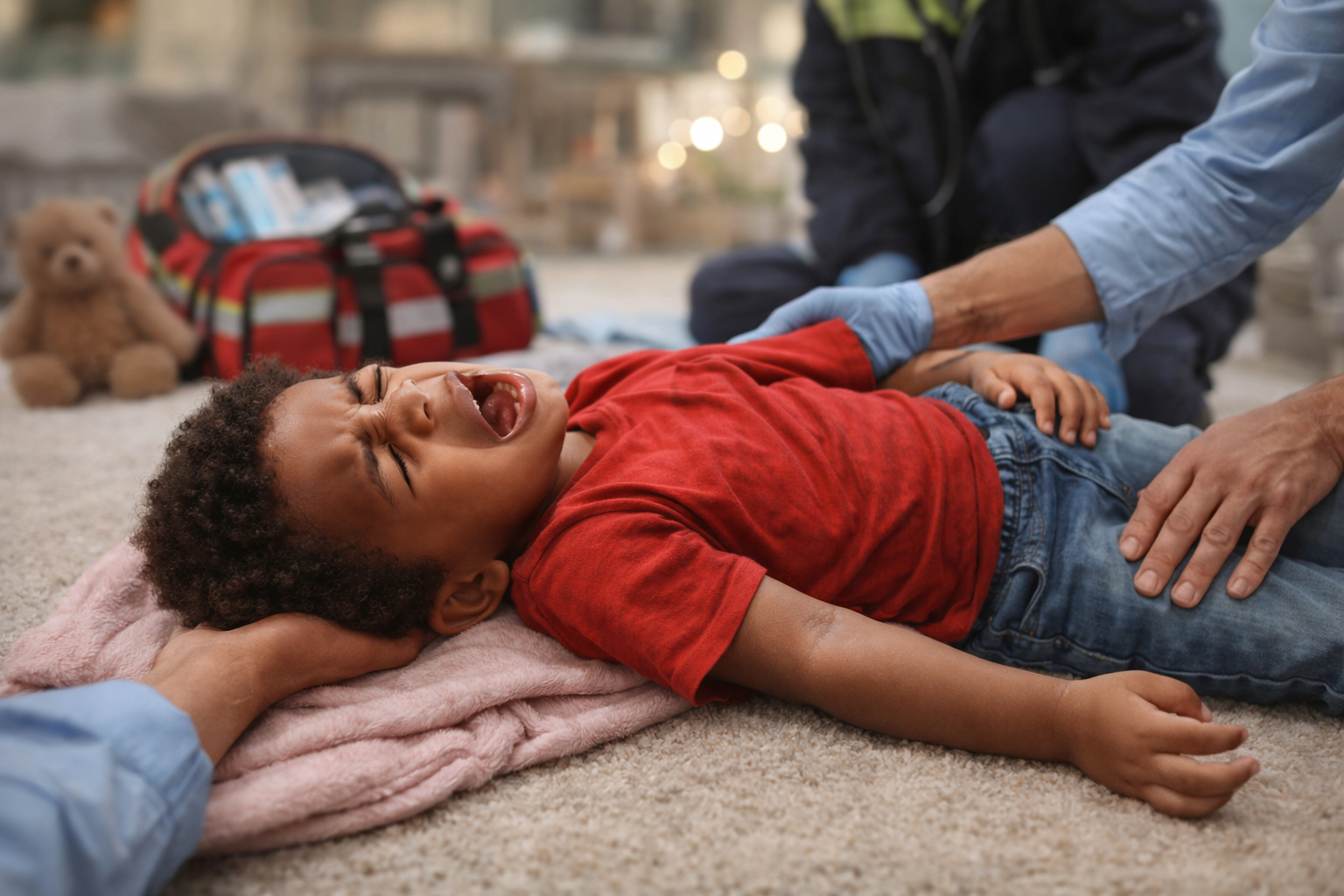
4️⃣ What should you do during a seizure?
• Time the seizure from when it starts
• Move hard or sharp objects away
• Protect the child's head with something soft
• If safe, turn them onto their side so saliva or vomit can drain
• Stay with them until they recover
Do not:
• restrain the child's movements
• put fingers, spoons or any other object in their mouth
• give food, drink or medicine until they are fully alert
• try to stop the seizure by shaking the child or pouring water on them
👉 A child cannot swallow their tongue during a seizure. Putting something in the mouth can cause injury or choking.
5️⃣ What happens after a seizure?
It is common for a child to be sleepy, confused or irritable for a short period after some seizures.
Stay with them and monitor their breathing and recovery.
Seek urgent help if the child:
• remains unusually difficult to wake
• does not recover as expected
• develops another seizure
• has weakness affecting one side of the body
• becomes increasingly unwell
With febrile seizures, unusual sleepiness lasting more than about an hour is a reason for urgent assessment.
6️⃣ How is a first seizure assessed?
A healthcare professional will usually ask what happened before, during and after the event.
Assessment may include:
• examination of the child
• description or video of the event if safely available
• blood or urine tests when needed
• EEG or brain imaging in selected cases
Not every child needs every test.
👉 A clear description of what you saw — including how long it lasted — can be extremely useful.
🟢 Important Message
Seeing a child have a seizure is frightening, but many childhood seizures are brief and children recover well.
The priority is simple: protect the child from injury, time the seizure, do not put anything in their mouth and know when to call for emergency help.
A first seizure deserves medical assessment even if the child seems completely well afterwards.
FAQ
• Does one seizure mean my child has epilepsy?
No. Epilepsy involves a tendency to have recurrent unprovoked seizures; one seizure can have many other causes.
• Can fever cause seizures?
Yes. Febrile seizures occur in some young children during illnesses with fever.
• Should I put something in the child's mouth?
No. Never put anything in the mouth during a seizure.
• When does a seizure become an emergency?
A seizure lasting more than 5 minutes, repeated seizures without recovery, breathing difficulty or poor recovery needs emergency help.
• Can fever medicine prevent another febrile seizure?
Not reliably. Fever medicines may improve comfort but do not reliably prevent febrile seizures.
🧠 Why We Delay
A short seizure may stop before a parent has time to react, and once the child looks normal again it can be tempting to assume nothing more needs to be done. Others may confuse seizures with fainting, fever chills or unusual behaviour.
👉 If you think your child has had a first seizure, get medical assessment rather than waiting for another episode.
🔗 Related Health Topics
• Fever in children
• Vomiting in children
• Diarrhea in children
• Ear infection in Children
• Severe Dehydration in Children
📚 Medical References
● World Health Organization (WHO). Epilepsy.
● Centers for Disease Control and Prevention (CDC). First Aid for Seizures.
● National Health Service (NHS). What to do if someone has a seizure (fit).
● Mayo Clinic. Seizures - Symptoms and causes.
● American Academy of Pediatrics (AAP). Febrile Seizures in Children.
● International League Against Epilepsy (ILAE). Updated classification of epileptic seizures (2025).
⚠️ Medical Disclaimer
This article is for educational purposes only and does not replace professional medical advice.