

Read in: English | Pidgin English
🩺 Medically reviewed by the Health Decoded Guide Editorial Team · Last reviewed: July 2026
🔍 Quick Summary
Severe dehydration in children happens when the body loses too much fluid.
It is a medical emergency that requires urgent treatment.
1️⃣ Introduction
Dehydration occurs when fluid loss exceeds fluid intake.
• more common in infants and young children
• often due to vomiting or diarrhea
• can develop quickly
👉 Children can deteriorate faster than adults.
2️⃣ How it happens
Fluid is essential for normal body function.
• loss of water and electrolytes disrupts balance
• reduced blood volume affects circulation
• organs receive less oxygen and nutrients
👉 Severe dehydration affects the whole body—not just thirst.
3️⃣ Types
• Mild to moderate dehydration
- thirsty
- dry mouth
- reduced urine output
- still alert and able to drink
• Severe dehydration
- very little or no urine
- very sleepy, difficult to wake or unresponsive
- signs of shock may appear
👉 Children can progress from mild to severe dehydration quickly, especially infants and young children.
4️⃣ Common causes
• Fluid loss
- vomiting and diarrhea (gastroenteritis)
- fever with excessive sweating
• Reduced fluid intake
- poor feeding
- refusing to drink
- difficulty drinking because of illness
👉 Young children become dehydrated more easily because they have smaller fluid reserves than adults.
5️⃣ Symptom
• dry mouth and lips
• sunken eyes
• fewer wet diapers or reduced urine
• no tears when crying (in infants and young children)
👉 These signs happen because the body loses more fluid than it takes in, reducing blood volume and circulation.
6️⃣ Associated symptoms
• lethargy or unresponsiveness
• fast heartbeat
• Irritability
• cool or mottled skin
• dizziness (in older children)
👉 These signs suggest the dehydration is becoming more severe and the body's organs are receiving less fluid.
7️⃣ When it becomes dangerous 🚨
• child very weak or difficult to wake
• no urine for several hours
• rapid breathing or fast pulse
👉 These may indicate:
• severe dehydration or shock
• need for emergency medical care
8️⃣ Management / treatment
Treatment depends on how severe the dehydration is.
- give oral rehydration solution (ORS) for mild dehydration
- continue breastfeeding or regular feeds if possible
- seek urgent medical assessment for moderate to severe dehydration
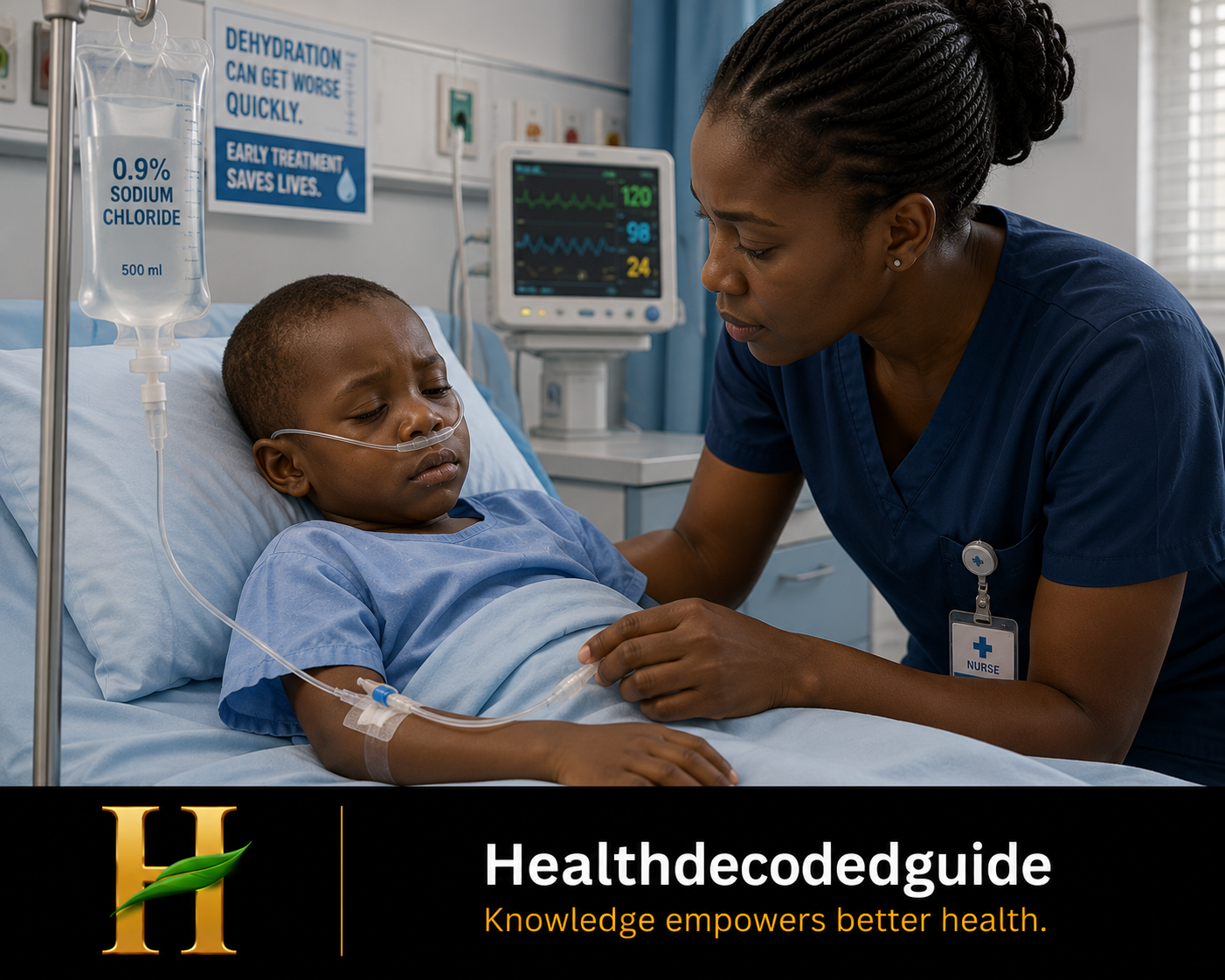
- intravenous (IV) fluids may be needed in hospital for severe dehydration
👉Early treatment can usually prevent serious complications and help children recover quickly.
9️⃣ Diagnosis
• clinical assessment
• history of fluid loss
• blood tests if severe
👉 Diagnosis is based on clinical signs.
🟢Important message
Severe dehydration is preventable and treatable.
👉 Early recognition can save a child’s life.
FAQ
• How fast can dehydration develop in children?
Very quickly—especially in infants.
• Can I treat severe dehydration at home?
No, severe cases require urgent hospital care.
• Can my child drink milk during gastroenteritis?
Yes. Breastfeeding should continue, and most children can continue their usual milk unless advised otherwise by a healthcare professional.
• Should I give my child medicine to stop diarrhea?
Not usually. Anti-diarrheal medicines are generally not recommended for young children unless prescribed by a doctor.
• When can my child return to school or daycare?
Your child should stay home until the vomiting and diarrhea have stopped and they are feeling well enough to return.
🔗 Related Health Topics
• Childhood Gastroenteritis
• Vomiting in Children
• Diarrhea
• Dehydration
• Food poisoning
• Cholera
• Thyphoid
📚 Medical References
• World Health Organization (WHO). Diarrhoeal disease.
• National Health Service (NHS). Dehydration.
• Mayo Clinic. Dehydration.
• National Institute for Health and Care Excellence (NICE). Diarrhoea and vomiting caused by gastroenteritis in under 5s: diagnosis and management (CG84).
• American Academy of Family Physicians (AAFP). Diagnosis and Management of Dehydration in Children.
⚠️ Medical Disclaimer
This article is for educational purposes only and does not replace professional medical advice.
If your child shows signs of dehydration, seek medical care immediately.