Read in: English | Pidgin
🔎 Quick Summary
Obesity is a condition of excess body fat that can affect health, but focusing on sustainable lifestyle habits is key to long-term improvement.
1️⃣ Introduction
Obesity is a medical condition characterized by excess body fat.
It is increasingly common worldwide and is linked to several health conditions.
However, obesity is not just about weight — it is influenced by:
• lifestyle
• environment
• hormones
• genetics
👉 Understanding this helps reduce stigma and improve outcomes.
2️⃣ How it happens
Weight gain occurs when:
• energy intake exceeds energy use over time
But in reality, it is influenced by:
• metabolism
• hormones
• stress
• sleep
• food environment
👉 This is why weight is not simply about “willpower”.
3️⃣ How obesity is measured
🔹 Body Mass Index (BMI)
BMI is commonly used:
• BMI ≥ 30 → obesity
🔹 Other important measures
• waist circumference
• fat distribution
👉 These help assess health risk more accurately.
4️⃣ Health risks
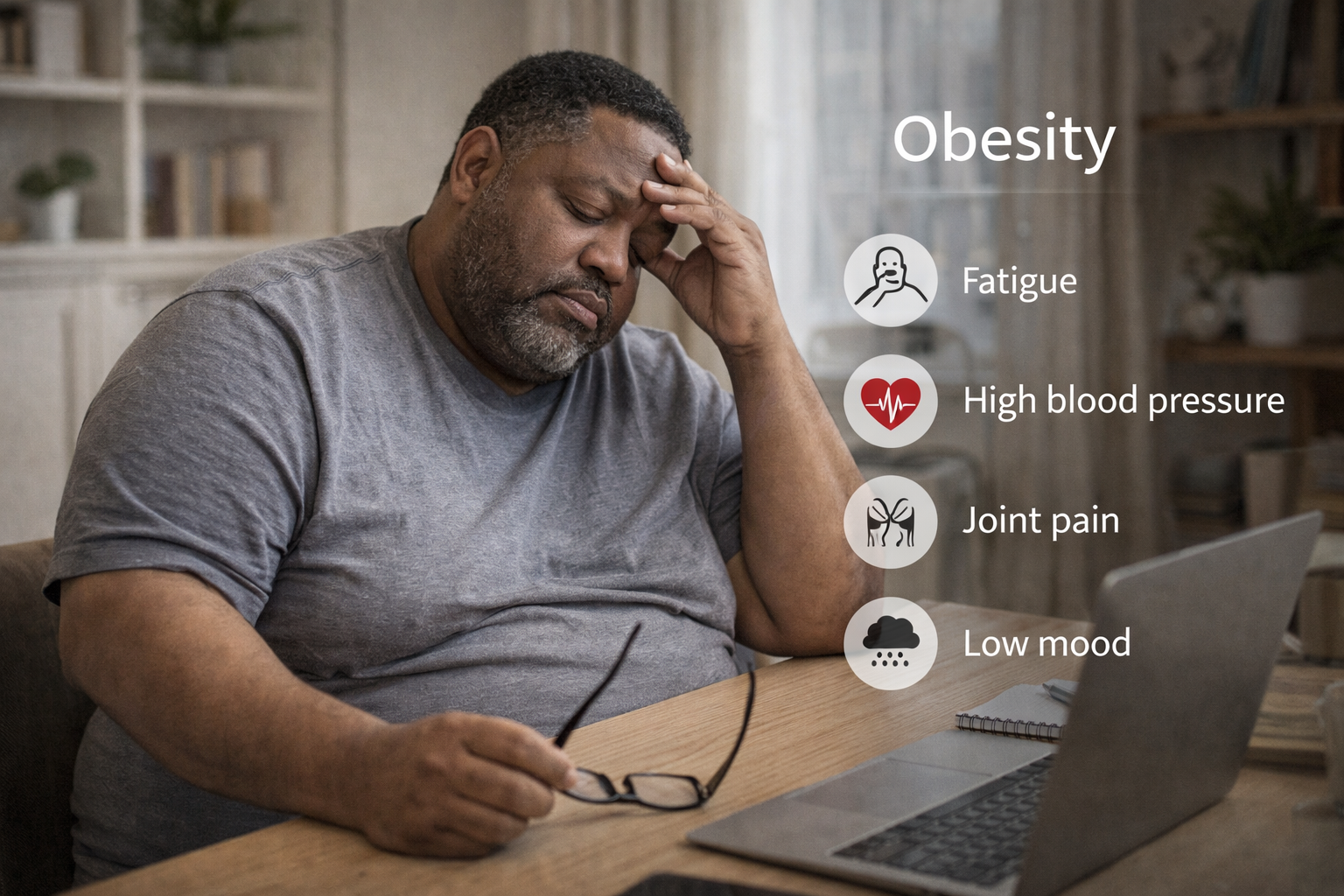
Obesity is associated with:
• type 2 diabetes
• high blood pressure
• heart disease
• joint problems
• sleep apnea
👉 Risk depends on overall health, not just weight alone.
5️⃣ Symptom explanation
Obesity affects the body by:
• increasing inflammation
• affecting hormone balance
• placing strain on organs
👉 This contributes to long-term health risks.
6️⃣ Important perspective
👉 Health is not defined by weight alone
Two people with similar weight can have very different health profiles.
👉 Focus should be on:
• habits
• nutrition
• physical activity
• metabolic health
7️⃣ Practical lifestyle tips (KEY VALUE)
🔹 Focus on protein
• helps with satiety
• supports muscle
• stabilizes appetite
🔹 Portion awareness
• large portions can increase calorie intake
• mindful eating is important
🔹 Build sustainable habits
• regular meals
• consistent routine
• avoid extreme dieting
🔹 Movement
• daily activity matters
• does not have to be intense
👉 Small consistent changes are more effective than extreme ones.
8️⃣ Medical treatment options
In some cases, additional support may be needed:
🔹 Medications
• e.g. GLP-1 receptor agonists such as Tirzepatide (Mounjaro)
👉 These can help regulate appetite and metabolism.
🔹 Other options
• structured weight programs
• specialist care
👉 Treatment should always be guided by a healthcare professional.
9️⃣ When to seek help
🚨 Consider seeking help if:
• weight affects health
• difficulty losing weight despite effort
• related conditions develop
👉 Support can improve long-term outcomes.
🔟 Important message
Obesity is complex and manageable.
👉 The goal is not perfection — but sustainable health.
👉 Small changes over time can lead to meaningful improvement.
🔹 FAQ
🔹 Is obesity just about eating too much?
No, many factors are involved.
🔹 Is BMI enough?
No, it is only one measure.
🔹 Can it be treated?
Yes.
🔹 Are medications helpful?
In some cases.
🔹 What is most important?
Sustainable lifestyle habits.
Related Health Topics
🔹 Diabetes – Symptoms
🔹 High Blood Pressure
🔹 Fatigue – Causes
🔹 Hormonal Imbalance
🔹 Healthy Lifestyle and Weight Management
Medical References
• World Health Organization
• Centers for Disease Control and Prevention
• National Health Service
• Mayo Clinic
• National Institute for Health and Care Excellence
Medical Disclaimer
This article is for educational purposes only and does not replace professional medical advice.
If you have concerns about weight or related health conditions, seek medical guidance.