

Read in: English | Pidgin English
🩺 Medically reviewed by the Health Decoded Guide Editorial Team · Last reviewed: July 2026
🔍 Quick Summary
Seeing flashes of light or shadows can be harmless—but sometimes indicates a serious eye problem.
Sudden changes should always be checked urgently.
1️⃣ Introduction
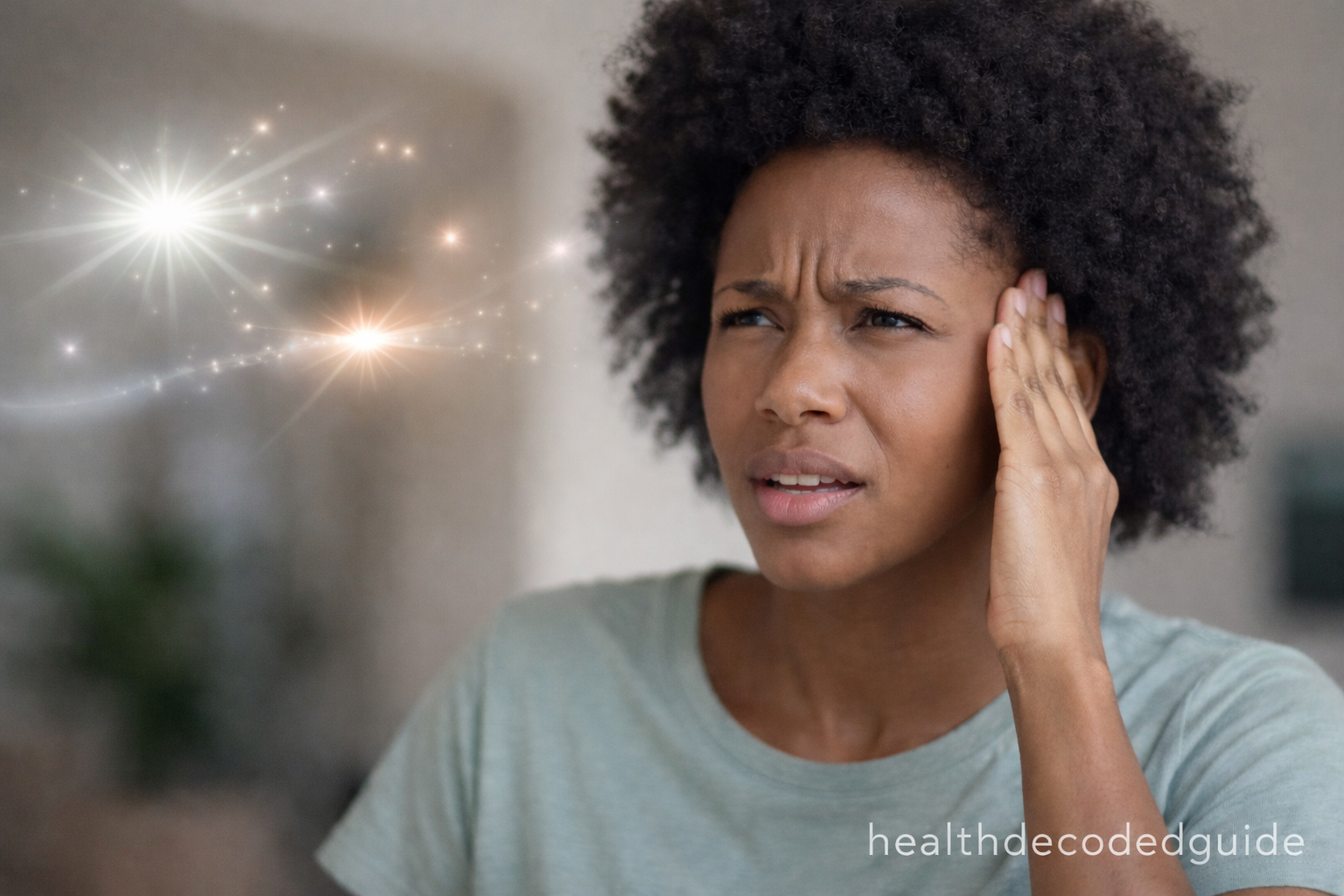
Seeing flashes or shadows in vision refers to visual disturbances such as light streaks, flickers, floaters, or dark areas.
• flashes may look like sparks or lightning
• shadows may appear as dark patches or a curtain
• can affect one or both eyes
👉 These symptoms often involve the retina or inner eye structures.
2️⃣ How it happens
The inside of your eye contains a clear jelly called the vitreous, which sits in front of the retina (the light-sensitive tissue at the back of the eye).
As the vitreous changes with age or certain eye conditions:
• it may pull on the retina
→ this can make you see flashes of light
• tiny clumps or strands may form in the vitreous
→ these cast shadows on the retina, making you see floaters
• if part of the retina becomes damaged or detaches
→ a dark shadow or "curtain" may appear in your vision
👉🏽 The retina is very sensitive to light. Even small changes in the vitreous or retina can cause noticeable visual symptoms.
3️⃣ What you may see
• Flashes (photopsia)
- brief flickers, sparks or streaks of light
- often more noticeable in the dark or when moving your eyes
• Floaters
- small black or grey spots, threads, cobwebs or squiggly shapes that seem to drift across your vision
- they often move when your eyes move
• Shadow or curtain effect
- a dark shadow or curtain appears over part of your vision
- it may gradually spread and reduce your field of vision
👉🏽 Occasional floaters are common with ageing, but sudden flashes, a large increase in floaters, or a curtain-like shadow need urgent eye assessment because they may be signs of a retinal tear or retinal detachment.
4️⃣ Common causes
• Eye-related causes
- posterior vitreous detachment
- retinal tear or detachment
• Neurological causes
- migraine aura
- visual processing disturbances
5️⃣ Associated symptoms
• blurred or reduced vision
→ may suggest the retina or other parts of the eye are affected
• sudden increase in floaters
→ can occur with a retinal tear or posterior vitreous detachment
• eye discomfort (sometimes)
→ may occur depending on the underlying cause
• headache (if migraine-related)
→ flashes caused by migraine are often followed by a headache
👉🏽 These associated symptoms help identify the underlying cause and whether urgent assessment is needed.
6️⃣ When it becomes dangerous 🚨
• sudden onset flashes with many floaters
• shadow like a curtain over vision
• sudden loss of vision
👉 These may indicate:
• retinal detachment (emergency)
• risk of permanent vision loss
7️⃣ Management / treatment
• urgent eye specialist assessment
• laser or surgery if retinal tear
• monitoring if benign cause
8️⃣ Diagnosis
• detailed eye examination
• retinal imaging
• vision testing
👉 Early diagnosis is critical to preserve vision.
🟢Important message
New flashes or shadows should never be ignored.
👉 Early action can prevent permanent vision loss.
FAQ
• Are flashes always serious?
Not always—but new or sudden flashes need checking.
• What does a curtain over vision mean?
It may indicate retinal detachment and needs urgent care.
• Can eye flashes happen without a retinal detachment?
Yes. Flashes can also occur with age-related changes in the vitreous gel or during a migraine. However, new or worsening flashes should always be assessed.
• Can flashes and floaters go away?
Some floaters become less noticeable over time. Flashes often improve as the vitreous settles, but any sudden increase should be checked promptly.
• When should I see an eye doctor?
Seek urgent medical attention if flashes are sudden, are accompanied by many new floaters, a curtain or shadow over your vision, or any loss of vision. These may be signs of a retinal tear or retinal detachment.
🔗 Related Health Topics
• Blurred vision
• Headache
• Confusion
• Migraine
• Vision Loss
• Vision Problems
📚 Medical References
• World Health Organization (WHO). Blindness and vision impairment.
• National Health Service (NHS). Floaters and flashes in the eyes.
• Mayo Clinic. Eye floaters - Symptoms and causes.
• National Eye Institute (NEI). Floaters.
• American Academy of Ophthalmology (AAO). What Are Floaters and Flashes?
⚠️ Medical Disclaimer
This article is for educational purposes only and does not replace professional medical advice.
If you have symptoms or concerns, please consult a qualified healthcare professional.