

Read in: English | Pidgin English
🩺 Medically reviewed by the Health Decoded Guide Editorial Team · Last reviewed: July 2026
🔍 Quick Summary
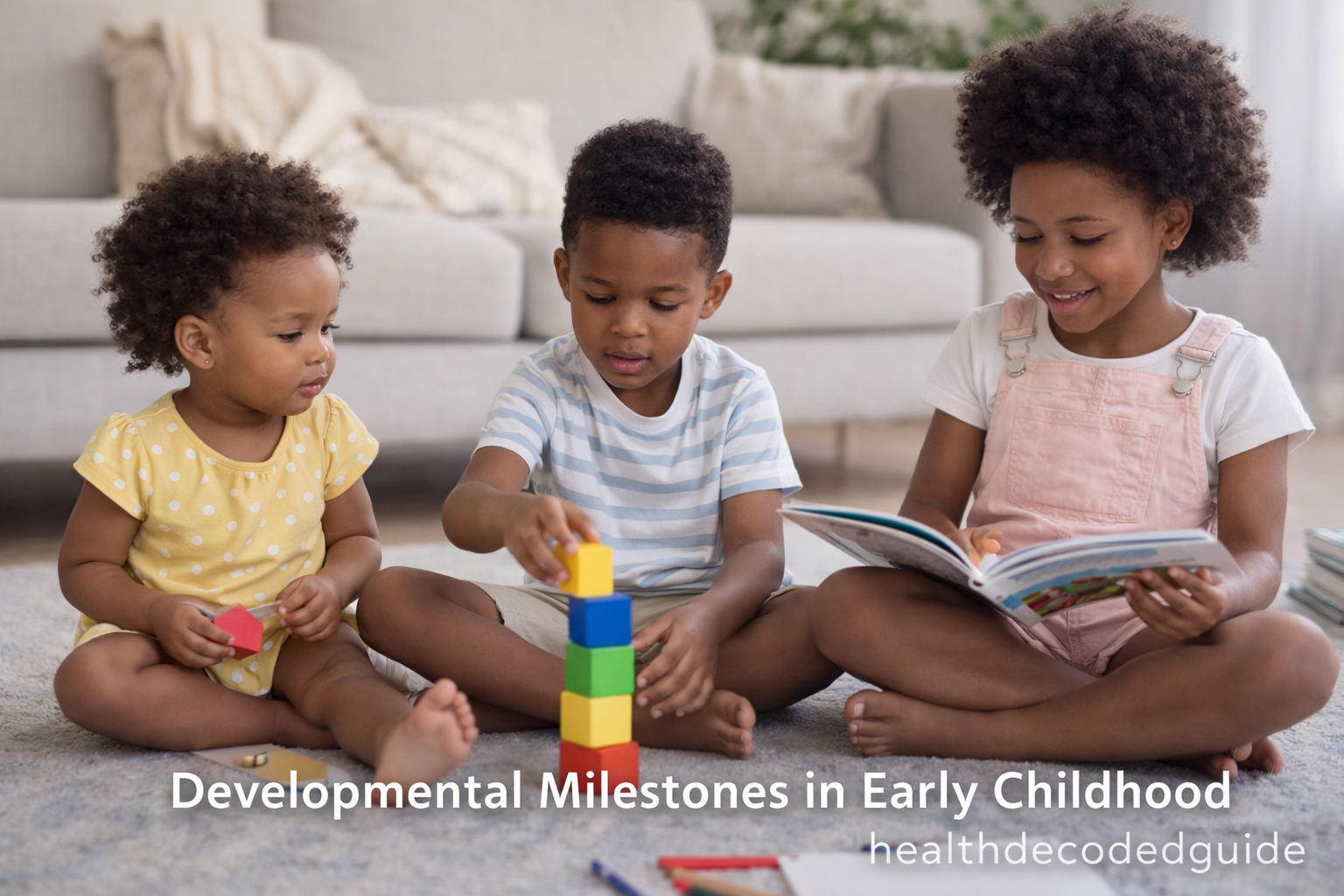
Developmental milestones are skills children usually learn as they grow, such as smiling, sitting, walking, talking and interacting with others.
Every child develops at their own pace, but milestones help parents and healthcare professionals know whether development is progressing as expected.
1️⃣ What are developmental milestones?
Developmental milestones are age-related skills most children achieve as they grow.
They help measure how a child's brain and body are developing over time.
Milestones include:
• movement and coordination
• speech and language
• thinking and learning
• social and emotional skills
👉🏽 Milestones are guides, not strict rules. Some children reach them a little earlier or later than others.
2️⃣ How children develop
A child's development begins before birth and continues throughout childhood.
As the brain grows and forms new connections, children gradually learn new skills through play, movement, communication and interaction with people around them.
Development is influenced by:
• healthy brain growth
• nutrition
• play and stimulation
• hearing and vision
• love, care and interaction
👉🏽 Children learn new skills little by little. Each new milestone builds on earlier ones.
3️⃣ Areas of development
• Physical (motor) development
- rolling
- sitting
- crawling
- walking
- using the hands
• Communication and language
- babbling
- understanding words
- speaking
- following simple instructions
• Social and emotional development
- smiling
- making eye contact
- playing with others
- showing emotions
• Thinking and learning (cognitive development)
- problem-solving
- memory
- attention
- learning through play
👉🏽 Children often develop in all these areas at the same time, although one area may progress faster than another.
📋 Common developmental milestones
| Age | Examples of milestones |
|---|---|
| 2 months | Smiles at people, follows faces with the eyes, begins to coo |
| 6 months | Rolls over, reaches for objects, babbles, responds to familiar voices |
| 9 months | Sits without support, responds to own name, copies sounds, picks up small objects |
| 12 months | Pulls to stand or walks with support, says simple words (e.g. "mama"), waves bye-bye, points to things |
| 18 months | Walks independently, uses several words, points to body parts, enjoys pretend play |
| 2 years | Runs, combines two or more words into simple phrases, follows simple instructions, begins to sort shapes or colours |
| 3 years | Speaks in short sentences, climbs stairs with alternating feet, plays with other children, names familiar objects |
4️⃣ When development may be delayed
Sometimes children reach milestones later than expected.
This may happen because of:
• Temporary or environmental factors
- limited stimulation
- poor nutrition
- premature birth
• Medical causes
- hearing problems
- vision problems
- neurological conditions
- genetic conditions
- autism spectrum disorder
Every child develops at their own pace. Small differences in when milestones are reached are common and often normal.
→ However, if a child is significantly behind, stops gaining new skills, or loses skills they already had, medical assessment is important.
5️⃣ Signs your child may need assessment
• delayed sitting, crawling, walking or talking
• poor eye contact or limited interaction
• difficulty responding to sounds
• difficulty using one side of the body
👉🏽 One delayed milestone does not always mean there is a serious problem, but persistent delays should be assessed.
🚨 Developmental Red Flags by Age
| Age | Consider assessment if your child... |
|---|---|
| 6 months | cannot roll over or shows very poor head control |
| 9 months | cannot sit with support or does not respond to their name |
| 12 months | is not babbling, not pointing or not trying to communicate |
| 18 months | is not walking independently or has no meaningful words |
| 2 years | is not combining two words or has lost previously learned skills |
| Any age | loses skills, stops responding to sounds or people, or shows weakness on one side |
6️⃣ Other signs to watch for
• poor feeding
• abnormal muscle tone (too floppy or too stiff)
• lack of interest in surroundings
• loss of previously learned skills
👉🏽 Losing skills that a child had already learned is never considered a normal part of development and should be assessed urgently.
7️⃣ When it becomes urgent 🚨
• your child loses previously learned skills
• no response to sounds or people
• weakness affecting one side of the body
• seizures
• severe head injury followed by developmental changes
👉🏽 These signs need urgent medical assessment because they may indicate a serious neurological problem.
8️⃣ How developmental delays are managed
Treatment depends on the cause.
It may include:
• developmental assessment
• speech and language therapy
• physiotherapy
• occupational therapy
• hearing or vision assessment
• treating any underlying medical condition
👉🏽 The earlier support begins, the better the chance of helping a child reach their full potential.
9️⃣ How doctors assess development
Healthcare professionals assess development by:
• asking about your child's milestones
• observing how your child plays, moves and communicates
• performing a physical examination
• arranging hearing, vision or specialist assessments if needed
👉🏽 Regular developmental checks help identify concerns early, when treatment and support are most effective.
🟢 Important message
Every child develops at their own pace.
👉 Early recognition of delays allows timely support—not panic.
FAQ
• Is it normal for children to develop at different speeds?
Yes, variation is normal—but patterns still matter.
• When should I worry about delay?
If milestones are significantly delayed or skills are lost.
• Can a child reach milestones at different ages?
Yes. Every child develops at their own pace. Small differences are common, but significant delays or loss of skills should be assessed by a healthcare professional.
• Can premature babies reach milestones later?
Yes. Babies born early may achieve milestones later than babies born at full term. Healthcare professionals often use the baby's corrected age when assessing development.
• What should I do if I think my child is delayed?
Speak with your healthcare professional as early as possible. Early assessment can identify any problems and, if needed, early support can help your child reach their full potential.
🔗 Related Health Topics
• Nutrition and Child Development
• Autism in Children
• ADHD in Children
• Learning disabilities in Children
• Hearing Problems inChildren and Adults
📚 Medical References
• World Health Organization (WHO). Promoting healthy growth and development.
• National Health Service (NHS). Early learning and development.
• Centers for Disease Control and Prevention (CDC). Developmental Milestones.
• Mayo Clinic. Infant development.
• American Academy of Pediatrics (AAP). Developmental Milestones.
⚠️ Medical Disclaimer
This article is for educational purposes only and does not replace professional medical advice.
If you have concerns about your child’s development, consult a qualified healthcare professional.