

How pikin dey grow step by step—wetin or how d normal dey be
Read in: English | Pidgin English
Published on April 12, 2026 at 10:19 PM
🩺 Medically reviewed by the Health Decoded Guide Editorial Team · Last reviewed: July 2026
🔍 Quick Breakdown
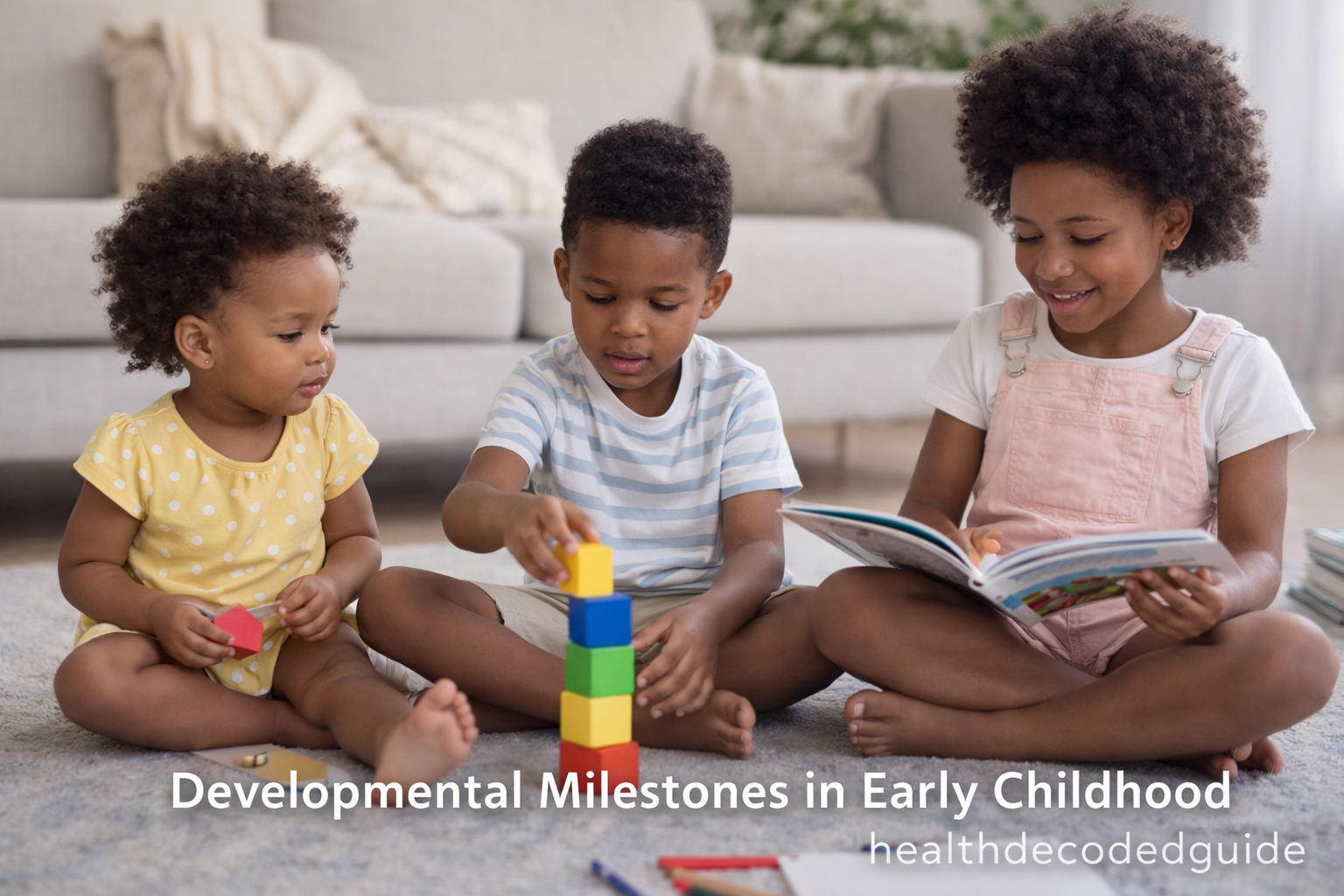
As pikin dey grow, e go dey learn new skills like smiling, sitting, walking and talking.
No two pikin dey develop exactly d same way, but developmental milestones fit help you know whether your pikin dey grow as expected.
👉🏽 Small differences fit dey normal, but big delays or pikin loose skills wey e sabi before need medical assessment o.
🟧 Wetin be developmental milestones?
Developmental milestones na skills wey most children dey learn as dem dey grow.
Dem include how pikin dey:
• move body
• and communicate
• think and learn
• relate with other people
👉🏽 Milestones na guide. Dem no be competition.
🟧 How pikin dey develop?
As pikin dey grow, d brain and body dey work together to learn new things.
• d brain dey form new connections every day
→ na so pikin dey gradually learn new skills
• every time d pikin dey play, move around, hear people talk and interact with others
→ d brain go dey practice those skills and continue to develop
• healthy food and enough sleep
→ go give d brain and body d support dem need to grow well
Development no dey happen once. Every new skill dey build on d one wey pikin learn before
👉🏽 Brain grows → Pikin practice → Brain grows more → New skills develop.
📋 Common developmental milestones by age
| Pikin age | Wetin most pikin fit begin do |
|---|---|
| 2 months | Dey smile, look people face, begin make small sounds (coo) |
| 6 months | Roll over, reach for toys, babble, respond to familiar voice |
| 9 months | Sit without support, respond to own name, pick small things with fingers |
| 12 months | Stand or waka with support, talk simple words like "mama", wave bye-bye, point at things |
| 18 months | Waka by self, talk several words, point to body parts, enjoy pretend play |
| 2 years | Run, join two words together, follow simple instructions, begin identify shapes or colours |
| 3 years | Talk short sentences, climb stairs, play with other children, name common objects |
👉🏽 These ones na common milestones. No two pikin dey develop exactly the same way, so small differences fit still dey normal.
🟧 How you go know say e no dey normal?
• pikin never sit, waka or talk when most children of d same age don begin do am
• pikin no dey make eye contact or respond well to people
• pikin stop to do things wey e fit do before: dis one na wetin doctors dey call regression, and e no suppose happen
👉🏽 One delayed milestone no always mean serious problem, but delay wey no improve or loss of skills no be matter to ignore.
🚨 Developmental red flags by age
| Pikin age | When you suppose arrange medical assessment |
|---|---|
| 6 months | Pikin no fit control d head well or never roll over |
| 9 months | Pikin no fit sit even with support or no dey respond to own name |
| 12 months | Pikin no dey babble, no dey point at things or no dey try communicate |
| 18 months | Pikin never waka by e self or no get meaningful words |
| 2 years | Pikin no fit join two words together or lose skills wey e sabi before |
| Any age | Pikin lose skills, no dey respond to sound or people, get one side weakness or seizures |
🟧 Wetin you fit do by yourself?
• play and interact with your pikin every day
→play dey help pikin learn many new skills
• abeg dey talk, read and sing to your pikin
→e dey help language and brain development
• encourage your pikin make e try things by himself or herself
→ e dey build confidence and problem-solving skills
• give dem balanced food and make sure say dem get enough sleep
→ healthy body support healthy development
• abeg try maintain regular routine for sleep, play and feeding
→when pikin know wetin to expect, e fit help dem feel more secure and gradually learn to control their emotions.
👉🏽 Simple things wey you do every day fit make big difference.
🔶🩺 When you suppose go hospital 🚨
• pikin lose skills wey e fit do before
• pikin no dey hear or respond to sound
• pikin no dey make progress for many areas of development
• pikin get seizures, weakness or serious head injury
👉🏽 Early assessment fit help find the cause and make treatment or support start on time.
🟧 Real-life example
Blessing daughter, Amara, never begin talk like other children wey dey her age.
Family members dey tell d mamma say,
"No worry. Some children just dey talk late."
So she continue to wait.
After some months, she notice say Amara no dey answer when people dey call her name
and she no dey point to things she want, she go just dey cry.
Blessing con decide say make doctor check am.
After assessment, doctor discover say Amara get hearing problem.
→ Because dem find am early, she begin treatment and speech support.
With time, her communication begin improve.
Meanwhile, her friend son, David, dey develop normally. E don dey talk small small and dey enjoy playing with everybody.
After some months, dem notice say David stop dey use some of the words wey e sabi before
and e no dey play or interact with other children like before.
Instead of waiting, dem carry am go hospital.
Doctor arrange different assessments to find out wetin dey cause the changes.
After some months, specialists diagnose David with autism spectrum disorder (ASD).
→ Dem begin early support and therapy to help him develop communication, social and everyday skills.
Every pikin develop at his or her own pace, but if your pikin stop to dey make progress or lose skills, no wait. Early assessment fit make big difference.
🟢 Final reassurance
Every pikin get him or her own pace of development.
👉🏽 Small differences fit dey normal, but if you get any concern about your pikin development,
e better make healthcare professional assess am early. Early support fit help many children reach their full potential.
📚References
For full medical references, see English version of this article.
⚠️ Disclaimer
This article na for education only. E no replace advice from doctor.
If you get concern about your pikin, abeg see healthcare professional.
🔗Related Health Topics
• Nutrition and Child Development
• Autism for Pikin
• Learning Difficulty in Children
• ADHD for Pikin
• Hearing problem for Pikin
👉🏽 If you still get questions or prefer full medical detail? Read English version