

Read in: English | Pidgin English
🩺 Medically reviewed by the Health Decoded Guide Editorial Team · Last reviewed: July 2026
🔍 Quick Summary
Hearing problems affect how well sounds are detected or understood.
They can be temporary—or long-term if not addressed early.
1️⃣ Introduction
Hearing problems refer to reduced ability to hear sounds clearly.
• may affect one or both ears
• can be mild or severe
• may occur suddenly or gradually
👉 Early recognition is important to prevent long-term impact.
2️⃣ How it happens
Hearing depends on sound traveling through different parts of the ear.
• outer ear collects sound
• middle ear transmits vibrations
• inner ear converts signals to the brain
👉 Any disruption along this pathway can affect hearing.
3️⃣ Types
• Conductive hearing loss
- problem in outer or middle ear
- often temporary (e.g. wax, infection)
• Sensorineural hearing loss
- damage to inner ear or nerves
- often permanent
👉 Type determines treatment and recovery.
4️⃣ Common causes
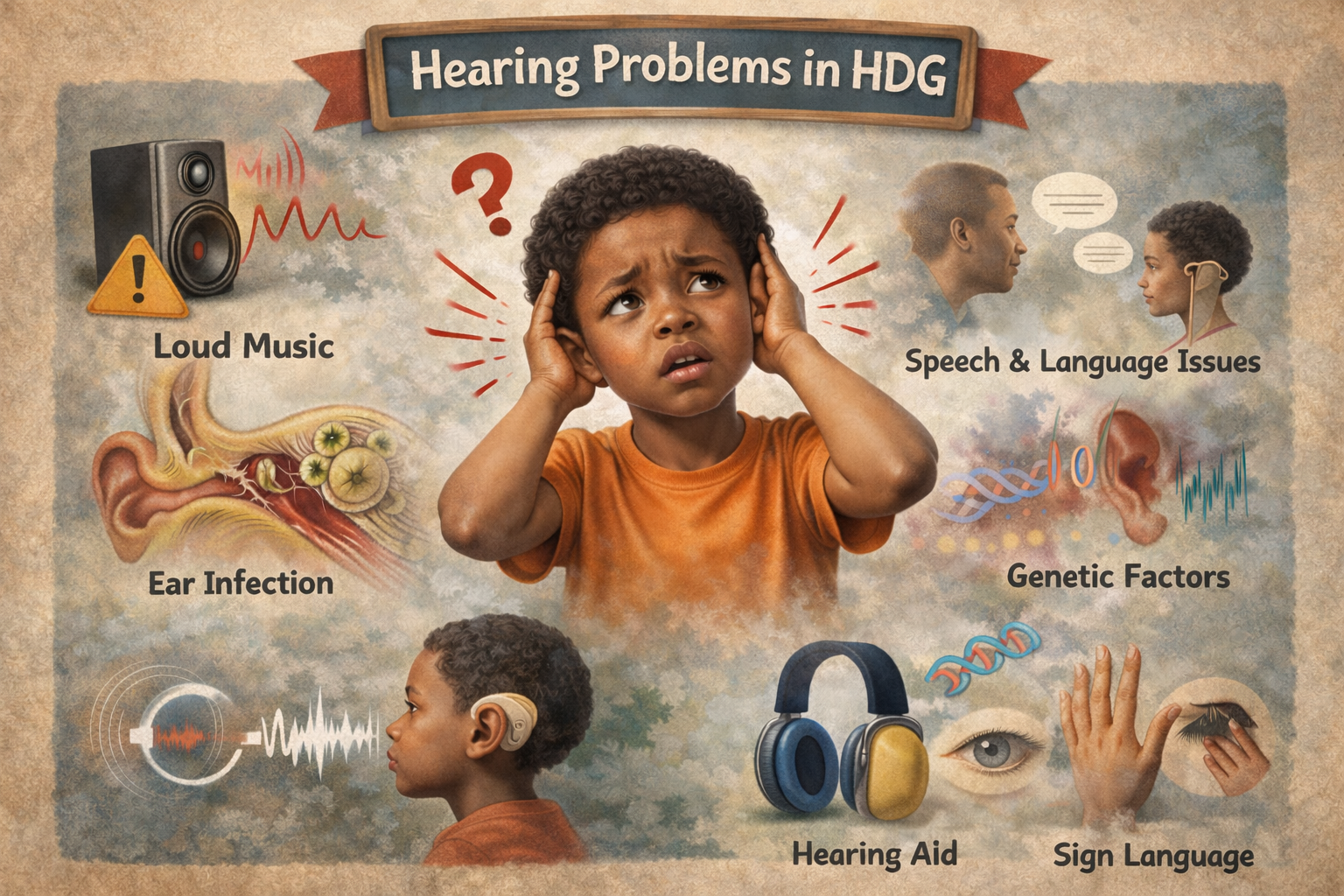
• Ear problems (often reversible)
- earwax blockage
- ear infections
- glue ear (otitis media with effusion)
- foreign object stuck in the ear
• Conditions present from birth
- genetic (inherited) hearing loss
- hearing loss before or during birth
- problems affecting the inner ear or hearing nerve
• Infections
- meningitis
- measles
- mumps
- congenital CMV (cytomegalovirus)
• Other causes
- certain medicines that can damage hearing
- head injury
- exposure to very loud noise (less common in young children)
5️⃣ Symptom explanation
• difficulty hearing conversations
• needing higher volume
• misunderstanding words
👉 These occur when sound signals are reduced or distorted.
6️⃣ Associated symptoms
• ear pain or fullness
• ringing in the ear (tinnitus)
• dizziness
• delayed speech in children
👉 In children, speech delay is a key sign.
7️⃣ When it becomes dangerous 🚨
• sudden hearing loss
• hearing loss with dizziness or severe pain
• hearing problems affecting communication or development
👉 These may indicate:
• inner ear or nerve damage
• need for urgent evaluation
8️⃣ Management / treatment
• remove earwax or treat infections
• hearing aids or assistive devices
• protect ears from loud noise
9️⃣ Diagnosis
• hearing tests (audiometry)
• ear examination
• specialist assessment if needed
👉 Early diagnosis improves outcomes, especially in children.
🟢 Important message
Hearing problems are common—but often manageable.
👉 Early detection helps preserve hearing and communication.
FAQ
• Can hearing problems be temporary?
Yes, especially with infections or earwax.
• When should I worry about a child’s hearing?
If there is delayed speech or poor response to sound.
• Can hearing loss be prevented?
Sometimes. Protecting your ears from loud noise, treating ear infections promptly and avoiding inserting objects into the ear can reduce the risk.
• Can earwax cause hearing problems?
Yes. A build-up of earwax can block the ear canal and cause temporary hearing loss, which usually improves after the wax is safely removed.
• Is hearing loss always permanent?
No. Some causes, such as earwax, ear infections or fluid behind the eardrum, are temporary, while others may be permanent and require ongoing treatment or hearing aids.
🔗 Related Health Topics
• Developmental milestones in Early Childhood
• Learning Difficulty in Children
• Ear infection in Children
• Autism in Children
• ADHD in Children
📚 Medical References
• World Health Organization (WHO). Deafness and hearing loss.
• National Health Service (NHS). Hearing loss.
• Mayo Clinic. Hearing loss - Symptoms and causes.
• National Institute for Health and Care Excellence (NICE). Hearing loss in adults: assessment and management (NG98).
• American Speech-Language-Hearing Association (ASHA). Hearing Loss.
⚠️ Medical Disclaimer
This article is for educational purposes only and does not replace professional medical advice.
If you have concerns about hearing, consult a qualified healthcare professional.