

Read in: English | Pidgin English
🩺 Medically reviewed by the Health Decoded Guide Editorial Team · Last reviewed: July 2026
🔍 Quick Summary
Molluscum contagiosum is a common viral skin infection causing small, painless bumps.
It is contagious but usually harmless and often resolves on its own.
1️⃣ Introduction
Molluscum contagiosum is a viral skin infection.
• caused by a poxvirus
• common in children but can affect adults
• spreads through skin contact
👉 It is usually mild and self-limiting.
2️⃣ How it happens
The virus infects the outer layer of the skin.
• enters through small breaks in the skin
• causes small raised bumps
• can spread to nearby skin
👉 Scratching can spread the infection further.
3️⃣ Classification
• Localized molluscum
- few bumps in one area
- mild
• Widespread molluscum
- multiple bumps across body
- more common in weakened immunity
👉 Extent varies from person to person.
4️⃣ Common causes
• Direct contact
- skin-to-skin contact
• Indirect contact
- sharing towels or clothing
👉 Common in schools, daycare, and sports settings.
5️⃣ Symptom explanation
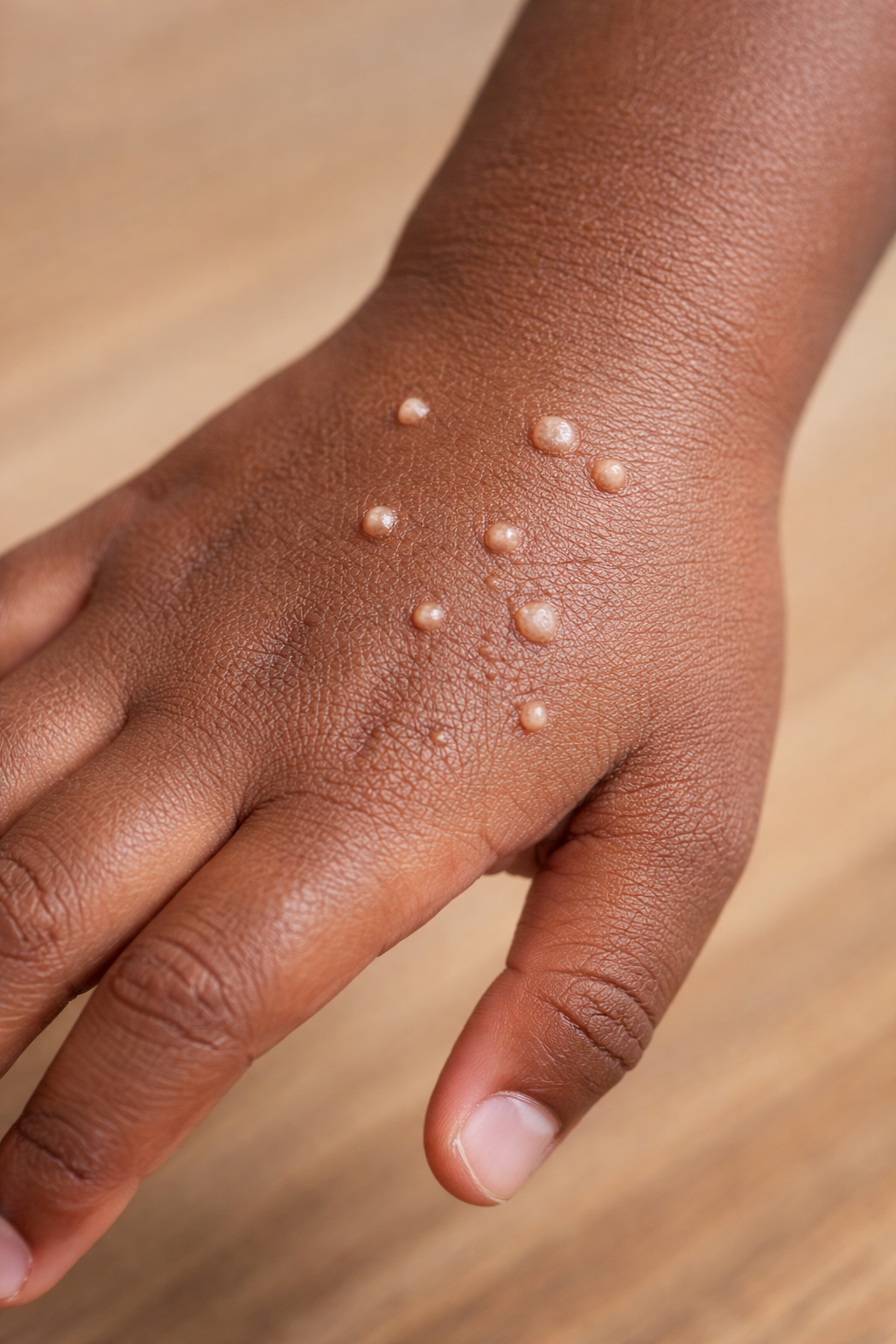
• small, round, firm bumps
• skin-colored or slightly pink
• central dimple (umbilication)
👉 These are caused by viral infection of skin cells.
6️⃣ Associated symptoms
• usually painless
• mild itching
• redness if irritated
• gradual spread
👉 Often more noticeable than uncomfortable.
7️⃣🩺When it becomes concerning 🚨
• rapid spread
• signs of infection (redness, pain, pus)
• involvement of genital area in adults
👉 These may indicate:
• need for medical treatment
• possible complications
8️⃣ Management / treatment
• often no treatment needed (self-resolves)
• topical treatments if needed
• avoid scratching or picking
9️⃣ Diagnosis
• clinical examination
• based on appearance
• rarely needs tests
👉 Characteristic bumps make diagnosis straightforward.
🟢Important message
Molluscum contagiosum is common and usually harmless.
👉 It often clears on its own, but hygiene helps prevent spread.
FAQ
- Is it contagious?
Yes—it spreads through direct skin-to-skin contact or by sharing items such as towels. - How long does it last?
It may last for several months and sometimes longer, but it usually clears on its own without scarring. - Can adults get molluscum contagiosum?
Yes. Although it is more common in children, adults can get it too. - Can it spread to other parts of the body?
Yes. Scratching or picking the bumps can spread the virus to nearby skin. - Should I cover the bumps?
If possible, yes. Keeping the bumps covered can help reduce the risk of spreading the virus to others. - Can it come back?
Yes. New bumps can appear while the infection is active, and some people may become infected again after it has cleared. - When should I see a doctor?
If the bumps become painful, red, infected, affect the eyes or genital area, or if you are unsure of the diagnosis, you should see a healthcare professional.
🔗 Related Health Topics
• Skin infections
• Common Childhood Rashes
• Keratosis Pilaris
• Skin Care Basics
• Dry Skin
• Warts
📚 Medical References
• National Health Service (NHS). Molluscum contagiosum.
• Centers for Disease Control and Prevention (CDC). About Molluscum Contagiosum.
• Mayo Clinic. Molluscum contagiosum.
• National Institute for Health and Care Excellence (NICE). Molluscum contagiosum.
• American Academy of Dermatology (AAD). Molluscum contagiosum: Diagnosis and treatment.
• DermNet NZ. Molluscum contagiosum.
⚠️ Medical Disclaimer
This article is for educational purposes only and does not replace professional medical advice.
If lesions worsen or spread, consult a healthcare professional.