Read in: English | Pidgin English
🩺 Medically reviewed by the Health Decoded Guide Editorial Team · Last reviewed: July 2026
🔍 Quick Summary
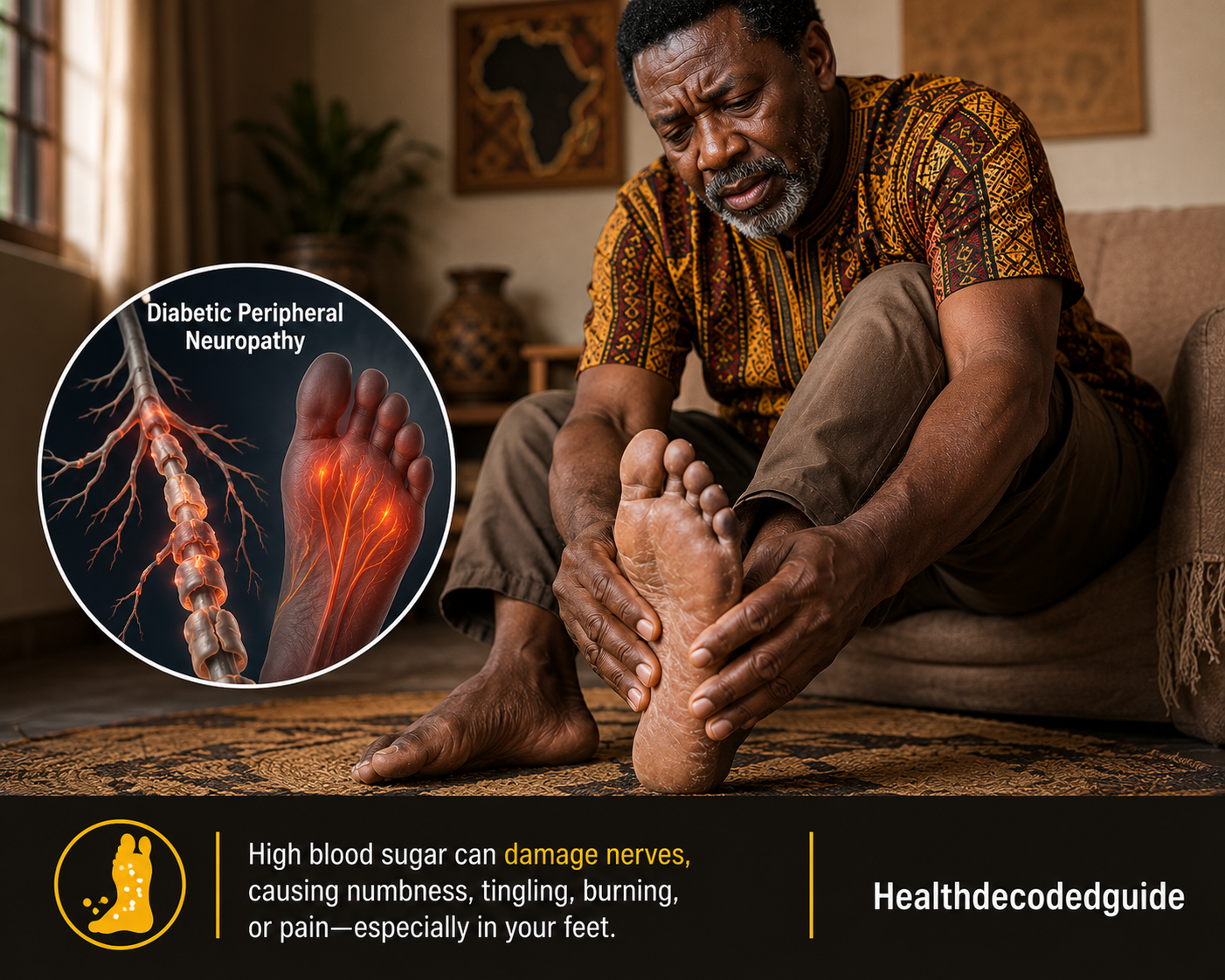
Diabetes-related nerve damage (diabetic neuropathy) occurs when high blood sugar levels damage nerves over time.
It commonly affects the feet and hands, causing tingling, numbness, or burning pain.
Early management of blood sugar can help slow progression and reduce complications.
1️⃣ Introduction
Diabetic neuropathy is a common complication of diabetes.
• it develops gradually over time
• symptoms often start in the feet and move upward
• it can affect sensation, movement, and organ function
👉 Many people may not notice symptoms early until nerve damage has progressed.
2️⃣ How it happens
Nerves rely on healthy blood supply and stable glucose levels.
• high blood sugar damages small blood vessels supplying nerves
• nerve fibers become injured over time
• signal transmission between nerves and brain becomes impaired
👉 Long-term uncontrolled diabetes increases the risk of nerve damage.
3️⃣ Types
• Peripheral neuropathy
- affects feet and hands
- causes tingling, numbness, or pain
• Autonomic neuropathy
- affects internal organs
- may cause digestion, bladder, or heart rate issues
• Proximal neuropathy
- affects thighs, hips, or buttocks
- may cause weakness or pain
• Focal neuropathy
- affects specific nerves
- may cause sudden weakness or pain
👉 Peripheral neuropathy is the most common form.
4️⃣ Common causes
• Chronic high blood sugar
- damages nerves over time
- affects circulation
• Duration of diabetes
- longer duration increases risk
• Lifestyle and health factors
- smoking
- obesity or poor diet
👉 Poor blood sugar control is the main risk factor.
5️⃣ Symptoms
• tingling or “pins and needles”
• numbness, especially in feet
• burning or sharp pain
👉 Symptoms occur because damaged nerves cannot send signals properly.
6️⃣ Associated symptoms
• muscle weakness
• balance problems
• reduced sensation to touch or temperature
• foot injuries without pain
👉 Loss of sensation increases risk of unnoticed injuries.
7️⃣🩺 When it becomes dangerous 🚨
• foot wounds that do not heal
• severe infection or ulcers
• loss of balance leading to falls
👉 These may indicate:
• advanced nerve damage
• serious complications needing urgent medical care
8️⃣ Management / treatment
• control blood sugar levels consistently
• medications to manage nerve pain
• regular foot care and monitoring
Supportive Measures
• wear proper footwear
• inspect feet daily for injuries
• maintain healthy diet and exercise
• stop smoking
👉 Good diabetes control can slow progression and protect nerve function.
9️⃣ Diagnosis
• medical history and symptom assessment
• nerve function tests
• blood tests to assess glucose control
👉 Early screening helps detect nerve damage before complications develop.
🟢 Important message
Diabetic neuropathy is a common but preventable complication of diabetes.
Good blood sugar control and regular monitoring can reduce risk and improve outcomes.
👉 Numbness or tingling in the feet should not be ignored.
FAQ
• What is diabetic neuropathy?
It is nerve damage caused by long-term high blood sugar.
• Where does it usually start?
Most commonly in the feet and lower legs.
• Can nerve damage be reversed?
Some symptoms can improve, but damage may not fully reverse.
• How can I prevent it?
By controlling blood sugar, maintaining healthy lifestyle, and regular check-ups.
• When should medical help be sought?
If there are foot wounds, infections, or worsening numbness.
🔗 Related Health Topics
• Diabetes
• Tingling and Numbness
• Foot Care in Diabetes (coming soon)
• Balance Problems
• Peripheral Artery Disease
• Physiotherapy and Rehabilitation
📚 Medical References
• World Health Organization (WHO). Diabetes.
• National Health Service (NHS). Diabetic neuropathy.
• Mayo Clinic. Diabetic neuropathy.
• American Diabetes Association (ADA). Understanding Neuropathy and Your Diabetes.
• Centers for Disease Control and Prevention (CDC). Nerve Damage.
• National Institute for Health and Care Excellence (NICE). Nerve problems.
⚠️ Medical Disclaimer
This article is for educational purposes only and does not replace professional medical advice.
If you have symptoms or concerns, please consult a qualified healthcare professional.