

Read in: English | Pidgin English
🩺 Medically reviewed by the Health Decoded Guide Editorial Team · Last reviewed: July 2026
🔍 Quick Summary
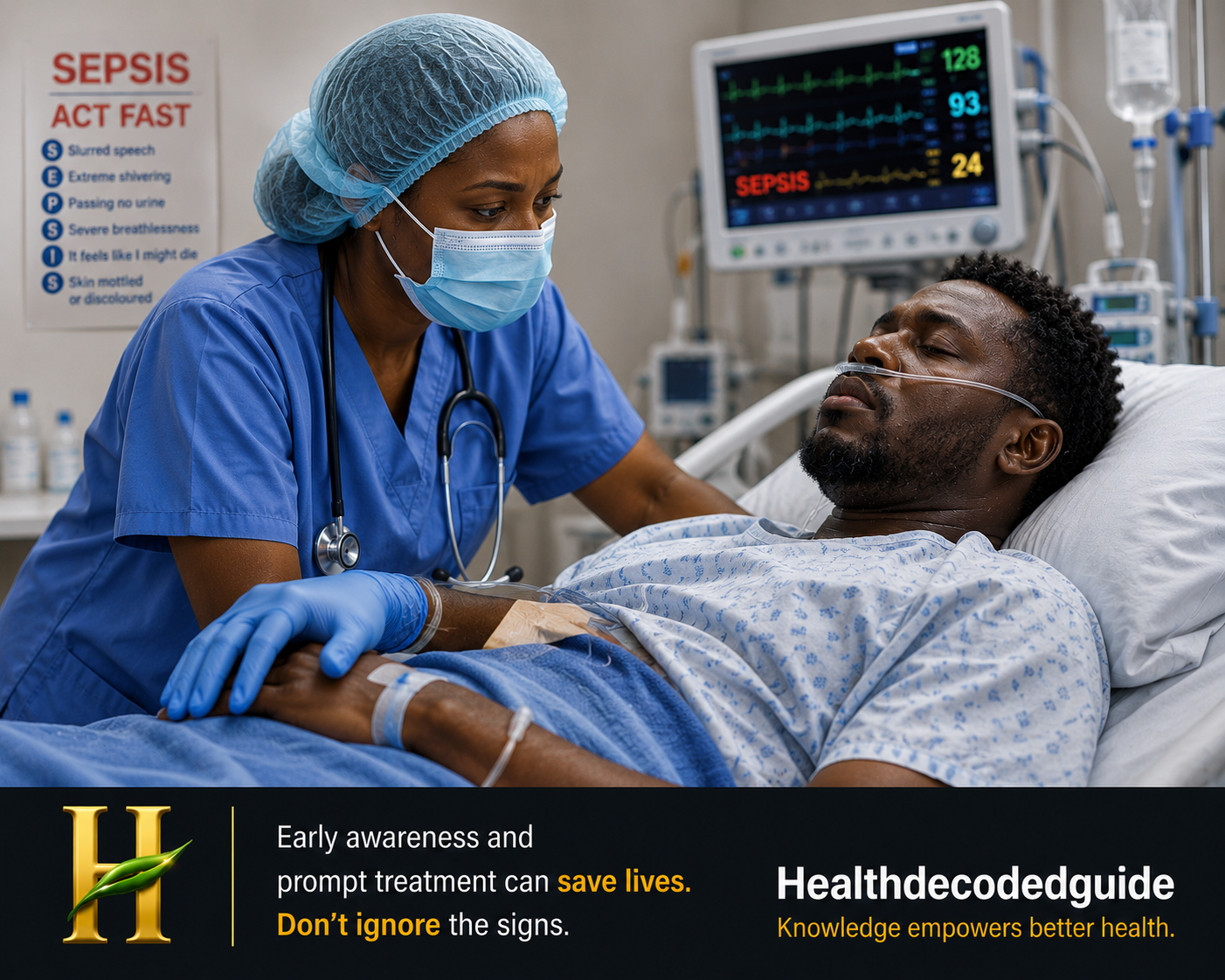
Sepsis is a dangerous medical emergency that happens when the body’s response to infection begins damaging organs and tissues.
It can develop from infections in the lungs, urinary tract, skin, abdomen, or other parts of the body.
Early treatment is extremely important because sepsis can rapidly become life-threatening.
1️⃣ Introduction
The immune system normally helps fight infections.
• in sepsis, the body’s response to infection becomes harmful
• inflammation may spread throughout the body
• blood flow and organ function can become affected
👉 Sepsis is sometimes called “blood poisoning,” although infection is not always directly inside the blood.
2️⃣ How it happens
An infection triggers an excessive immune response.
• inflammatory chemicals spread through the bloodstream
• blood vessels may become leaky or unstable
• organs may receive less oxygen and blood flow
👉 Severe sepsis may affect the lungs, kidneys, brain, heart, and other organs.
3️⃣ Common causes of sepsis
• Lung infections
- pneumonia
- severe respiratory infections
- kidney infections
- untreated urinary infections
• Skin or wound infections
- infected wounds or burns
- severe soft tissue infections
• Abdominal infections
- appendicitis
- bowel or gallbladder infections
👉 Almost any serious infection can potentially lead to sepsis.
4️⃣ People at higher risk
• older adults
• babies and young children
• people with weakened immune systems
• people with chronic diseases such as diabetes or kidney disease
👉 Hospitalized patients and recent surgery patients may also face higher risk.
5️⃣ Common symptoms
• fever or very low body temperature
• fast heartbeat or breathing
• severe weakness or extreme tiredness
• confusion or unusual sleepiness
👉 Symptoms may worsen very quickly within hours.
6️⃣ Associated symptoms
• low blood pressure
• reduced urination
• cold, pale, or mottled skin
• dizziness or fainting
👉 Organ dysfunction may begin as sepsis becomes more severe.
7️⃣🩺 When it becomes dangerous 🚨
• severe breathing difficulty
• confusion or inability to stay awake
• blue lips or severe weakness
• signs of shock or collapse
👉 These may indicate:
• septic shock and organ failure
• life-threatening emergency requiring urgent hospital treatment
8️⃣ Management / treatment
• urgent hospital treatment
• antibiotics and intravenous fluids
• oxygen support and organ monitoring
Supportive Measures
• seek early treatment for serious infections
• monitor worsening symptoms carefully
• complete prescribed antibiotics properly
• maintain vaccination and preventive healthcare when possible
👉 Early recognition and treatment greatly improve survival.
9️⃣ Diagnosis
• blood tests and infection testing
• blood pressure and oxygen monitoring
• imaging studies in some cases
👉 Doctors often urgently investigate both the infection source and organ function.
🟢 Important message
Sepsis is a medical emergency that can become fatal if treatment is delayed.
Recognizing warning signs early may save lives.
👉 Severe infection symptoms with confusion, breathing difficulty, or weakness require urgent medical attention.
FAQ
• What is sepsis?
A dangerous body-wide reaction to infection causing organ dysfunction.
• Can a urinary infection cause sepsis?
Yes. Untreated urinary infections can sometimes become severe.
• Is sepsis an emergency?
Yes. Sepsis requires urgent medical treatment.
• Can sepsis happen without obvious wounds?
Yes. Internal infections such as pneumonia can cause sepsis.
• When should emergency care be sought?
For confusion, breathing difficulty, collapse, or rapidly worsening infection symptoms.
🔗 Related Health Topics
• Fever and Chills
• Pneumonia
• Urinary Tract Infection
• Dehydration
• Ebola Virus Disease
• Gastroenteritis
📚 Medical References
• World Health Organization (WHO) Sepsis guidance
• Centers for Disease Control and Prevention (CDC) Sepsis information
• Mayo Clinic Sepsis overview
• National Health Service (NHS) Sepsis symptoms and treatment
• Sepsis Alliance educational resources
• National Institute for Health and Care Excellence (NICE) Sepsis guidelines
⚠️ Medical Disclaimer
This article is for educational purposes only and does not replace professional medical advice.
If you have symptoms or concerns, please consult a qualified healthcare professional.