How To Use AED Machine When Person Suddenly Collapse
🌍 Pidgin English
Published on September 20, 2026
🩺 Medically reviewed by the Health Decoded Guide Editorial Team · Last reviewed: September 2026
🔍 Quick Breakdown
AED (automated external defibrillator) na machine wey fit help when person heart stop suddenly — dem suddenly collapse, no dey respond and no dey breathe normally.
The machine go check d heart rhythm by itself and tell you whether shock dey needed.
Call emergency help, start CPR (Cardiopulmonary Resuscitation )and use AED as soon as e available.
You no need be doctor or nurse to use AED o — abeg switch am on and follow wetin d machine tell you to do.
🚨 Quick Action
If person suddenly collapse, no dey respond and no dey breathe normally:
• Call emergency number for where you dey and send person to bring AED
• Start CPR immediately
• Once AED arrive, switch am on and follow d instructions
Abeg no wait to see whether d person go wake up by themselves. Cardiac arrest na emergency.
🟧 Wetin really be AED?
AED na portable machine wey dey check d electrical rhythm of d heart.
During some cardiac arrests, d heart develop dangerous rhythm. AED fit recognise this rhythm and give electrical shock if shock fit help.
If shock no dey needed, d machine no go just shock d person anyhow — e go tell you to continue CPR.
🟧 How you go use AED?
Once AED reach:
• Switch am on and listen to d voice instructions
• Open d person's chest and quickly dry am if e wet
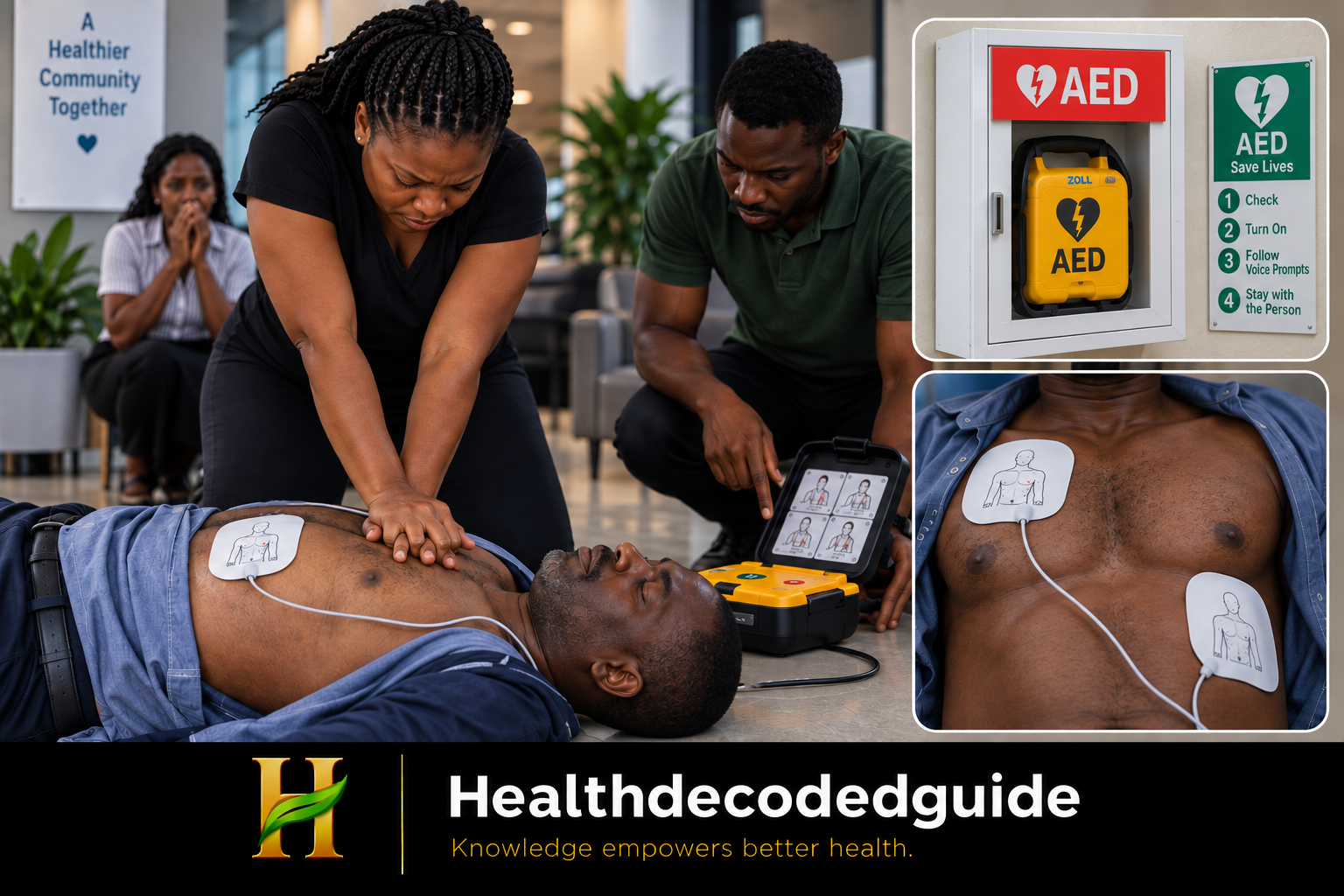
• Put d two pads where the pictures on the pads show
• Make sure nobody touch d person while AED dey check d heart rhythm
• If AED tell you to give shock, make everybody clear before d shock
• Continue CPR immediately after d shock — or if d AED say shock no dey needed
👉🏾 Continue to follow d AED instructions until emergency team take over or d person begin show clear signs of life.
🟧 Where you suppose put the AED pads?
For most adults:
• one pad go dey for D upper right side of d bare chest
• d second pad go dey for d lower left side of d chest, under d armpit area
Follow d picture wey dey on d AED pads.
For small child, use child pads or child setting if e available. If e no available during cardiac arrest,
no delay AED use while you dey search for another machine.
🟧 Wetin you no suppose do?
• No delay CPR because you dey find AED
• No touch the person while AED dey analyse or give shock
• No put the pads on top wet chest — quickly dry the chest first
• No stop CPR longer than the AED tell you
👉🏾 The main thing na to act quickly and follow the machine instructions.
🟧 Real Life Example
Emeka dey for shopping centre when one man suddenly collapse.
•Emeka no sabi d man from before but wen e ask am "Oga, u dey ok"
• d man no answer
• e no dey breathe normally
• somebody call for emergency help
But d owner of d shop wey him dey inside run go bring AED machine
Emeka start CPR. When AED arrive, dem switch am on, open d shirt so them fit see d man chest
Dem follow d pictures to place d pads well.
D AED analyse d heart rhythm and tell everybody to stand clear, make no hand dey for d man body, efter e given am d shock,
E continue to d next instruction. CPR continue immediately afterwards until d emergency team arrive.
👉🏾 You no need to know whether shock dey necessary — the AED go check d heart rhythm come tell you if you need to shock.
🟧 🩺 When you suppose use AED 🚨
Use AED if person:
• suddenly collapse
• no dey respond
• no dey breathe normally or only dey gasp
Call emergency help and start CPR at d same time.
No use AED for person wey dey awake and e dey respond normally.
🟢 Final Reassurance
Many people dey fear say dem fit use AED wrongly. But d machine dey designed to guide ordinary people step by step.
👉🏾 For cardiac arrest: call for help → start CPR → bring AED → follow d instructions. Acting quickly fit save life.
📚 Reference
For full medical references, see the English version of this article.
⚠️ Disclaimer
This article na for education only and e no replace professional medical advice.
🔗 Related Health Topics
• Cardiac Arrest
• CPR for Adult
• Heart Attack
• Fainting
• Choking First Aid Adults