

Blood Disorders: Different Blood Problems Explained
Read in: English | Pidgin English
Published on April 26, 2026 at 7:40 AM
🩺 Medically reviewed by the Health Decoded Guide Editorial Team· Last reviewed: July 2026
🔍 Quick Breakdown
Blood disorder na when something no dey normal with your blood.
E fit affect oxygen, infection control, or clotting.
👉🏽 Blood important—so any issue fit affect whole body.
🟧 Wetin be blood and wetin e dey do?
Blood na liquid wey dey move round your body through blood vessels.
E dey carry important things and help your body function well.
Blood get different parts:
• red blood cells
→ carry oxygen and nutrients go round d body
• white blood cells
→ fight infection and protect d body
• platelets
→ help stop bleeding and repair blood vessels
👉🏽 All these parts must work together to keep d body alive and healthy
🟧 Wetin dey happen?
• blood cells fit reduce
→ body no go get enough oxygen or protection
→ example: anemia, thalassemia
• blood cells fit no work well
→ even if dem plenty, dem no fit do their job properly
→ example: sickle cell disease
• blood cells fit break too fast
→ body no fit replace dem quickly
→ example: hemolytic anemia, severe thalassemia
• platelets fit reduce or no work well
→ bleeding fit no stop easily
→ example: thrombocytopenia (fit happen because of other diseases or infections)
👉🏽 This fit lead to low oxygen, weak immunity, or bleeding problems
🟧 Common types of blood problems
• anemia
→ low red blood cells
• sickle cell disease
→ red blood cells change shape and no dey work well
• clotting problems
→ blood no clot well or clot too much
👉🏽 Each type affect body in different ways
🟧 How you go know say u get this problem?
• tiredness
• low energy
• pale skin
• dizziness
• lightheadedness
• shortness of breath
👉🏽 These na common early signs—but symptoms fit differ depending on the type of blood problem
🟧 Other signs
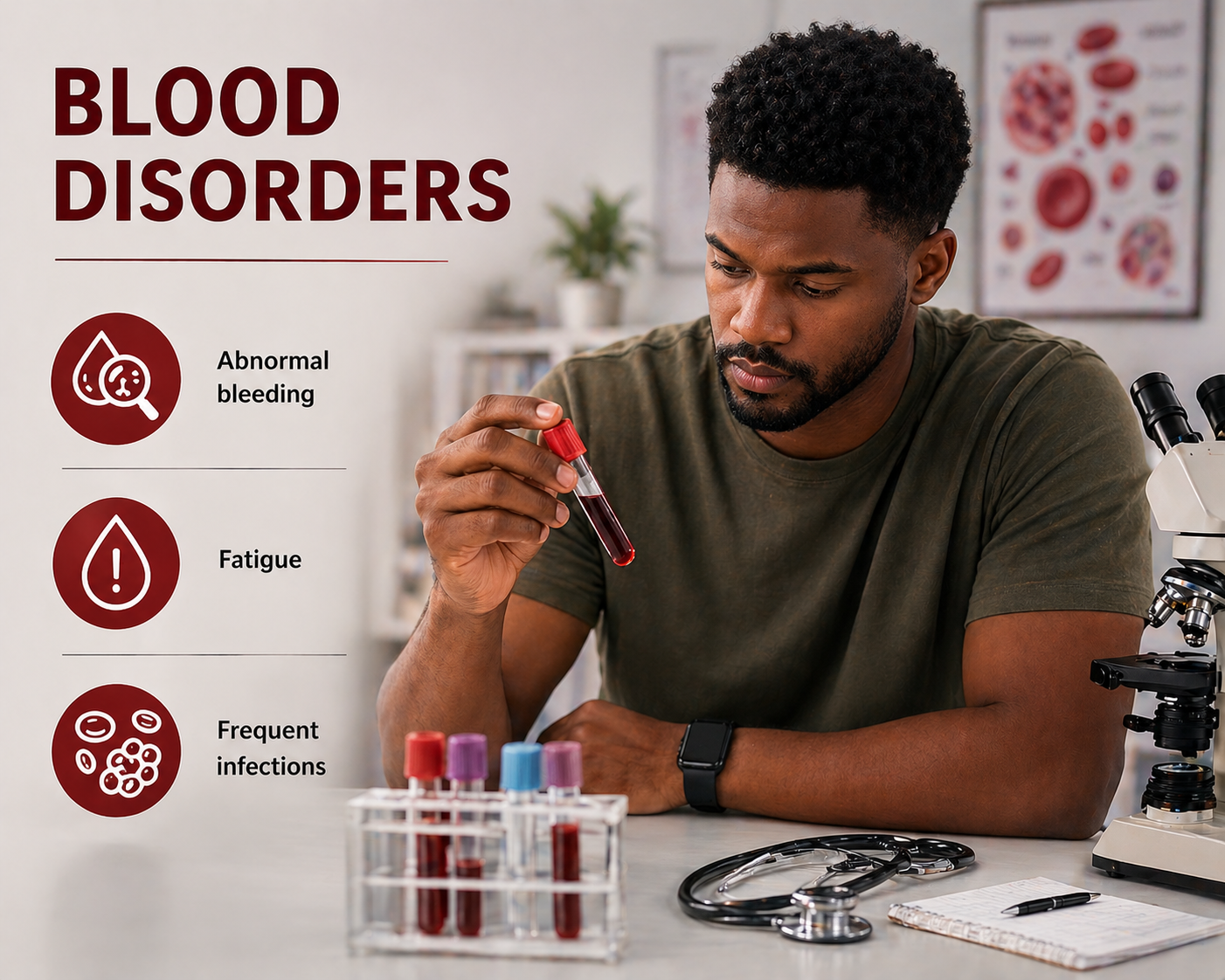
• you fit dey fall sick often
• easy bruising
• bleeding no dey stop quick
👉🏽 Depend on which part affected.
🟧 Wetin you fit do
• go for checkup
→ confirm diagnosis
• follow treatment
→ manage condition
👉🏽 Early care important.
🟧 Real life example
Stella dey secondary school (SS2)…
For some time:
• she dey feel weak often
• she dey miss school regularly
Teacher begin notice say:
• Stella no dey come class well
• e fit affect her WAEC exam
School sick bay come advise say make her papa carry her go hospital,
because she dey fall sick too often
After check-up:
• doctor do blood test
• dem see say her blood no normal
Her papa come explain say:
• she just start heavy menstrual period
• she no dey chop well
👉🏽 Doctor tell am say she get iron deficiency anemia
👉🏽 Na one common blood problem wey fit happen when body lose blood or no get enough nutrients
👉🏽 Na one type of blood disorder wey need proper care
🟧 When you suppose go hospital 🚨
• severe weakness
• bleeding no stop
• high fever
• breathing problem
👉🏽 These signs serious.
🟢 Final reassurance
Blood disorders different—but many fit treat.
👉🏽 Early diagnosis go help manage am better.
📚 Reference
For full medical references, see English version of this article.
⚠️ Disclaimer
This article na for education only.
E no replace doctor advice.
If you get symptoms or concern, abeg see healthcare professional.
🔗Related Health Topics
• Anemia
• Sickle cell disease
• Thalassemia
• Autoimmune Conditions
• Fatigue
• Hormonal Imbalance
• Coagulation problems (coming sooon)
👉🏽 If you still get questions or prefer full medical detail? Read English version