

Read in: English | Pidgin English
🩺 Medically reviewed by the Health Decoded Guide Editorial Team· Last reviewed: July 2026
🔍 Quick Summary
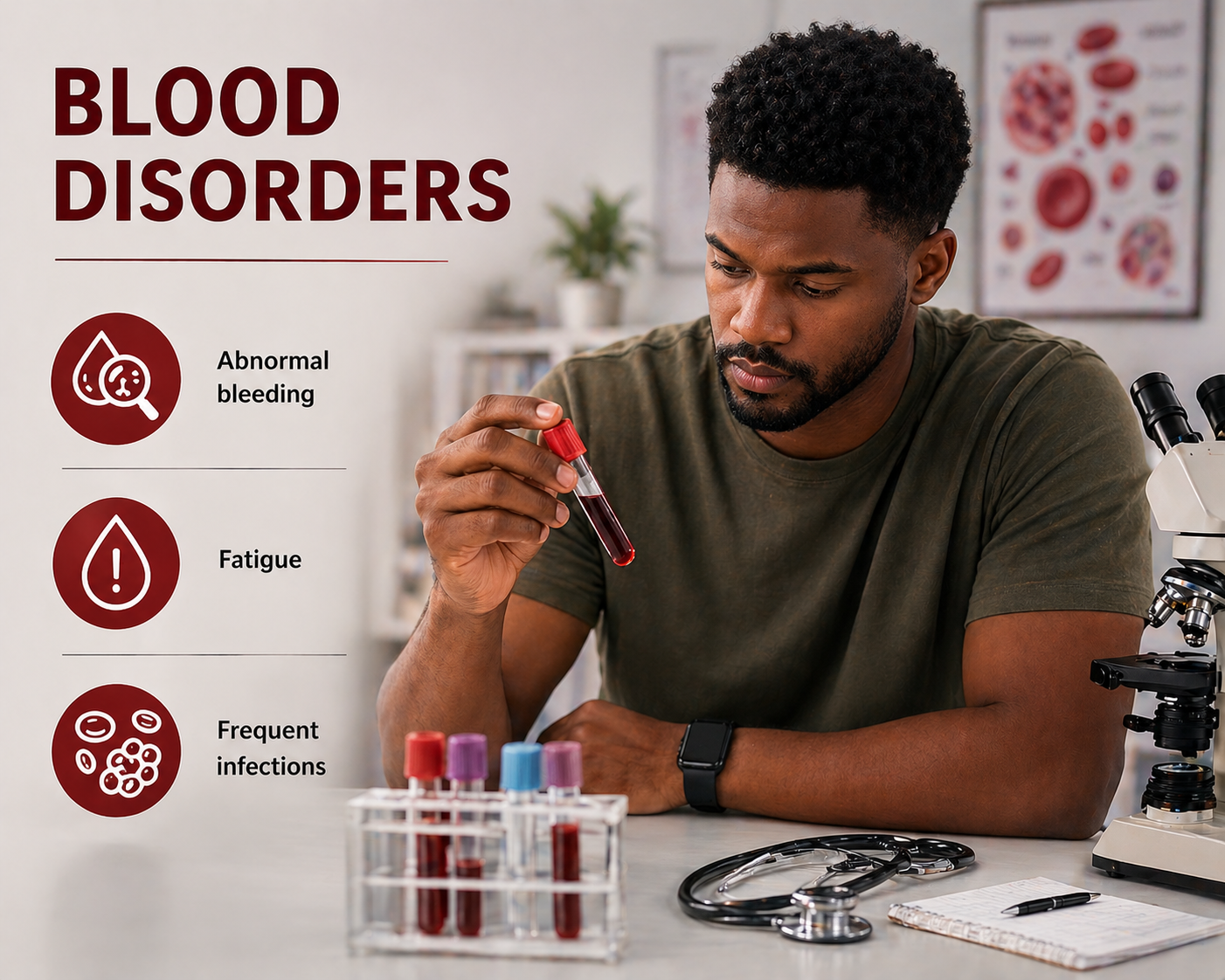
Blood disorders affect how blood cells or clotting work in the body.
They can cause fatigue, infections, or bleeding problems.
1️⃣ Introduction
Blood disorders are conditions that affect the blood and its components.
• red blood cells (carry oxygen)
• white blood cells (fight infection)
• platelets (help clotting)
👉 Any problem with these can affect overall health.
2️⃣ How it happens
Blood problems occur when cells are abnormal or imbalanced.
• reduced production of blood cells
• abnormal structure or function
• increased destruction of cells
👉 This disrupts oxygen delivery, immunity, or clotting.
3️⃣ Types
• Red blood cell disorders
• White blood cell disorders
- immune deficiencies
- some cancers (e.g. leukemia)
• Platelet/clotting disorders
- bleeding disorders
- clotting problems
👉 Different parts of blood affect different body functions.
4️⃣ Common causes
• Genetic conditions
- inherited disorders
• Nutritional causes
- iron deficiency
- vitamin deficiencies
• Medical conditions
- infections
- chronic diseases
5️⃣ Symptoms
• fatigue
• weakness
• pale skin
👉 These often occur due to reduced oxygen delivery.
6️⃣ Associated symptoms
• frequent infections
• easy bruising or bleeding
• dizziness
• shortness of breath
👉 Symptoms depend on which blood component is affected.
7️⃣🩺 When it becomes dangerous 🚨
• severe weakness
• uncontrolled bleeding
• high fever with infection
• chest pain or difficulty breathing
👉 These may indicate:
• serious blood disorder
• need for urgent care
8️⃣ Management / treatment
• depends on the condition
• may include supplements (e.g. iron)
• medications or transfusions
9️⃣ Diagnosis
• blood tests (complete blood count – CBC)
• specialized tests (if needed)
• genetic testing
👉 Blood tests are key for diagnosis.
🟢 Important message
Blood disorders vary widely—from mild to serious.
👉 Early detection and proper care improve outcomes.
FAQ
• Are all blood disorders serious?
No—some are mild, others require close care.
• Can they be treated?
Many can be managed effectively.
🔗 Related Health Topics
• Anemia
• Sickle cell disease
• Thalassemia
• Autoimmune Disease
• Chronic kidney disease
• Hormonal Imbalance
• Fatigue
📚 Medical References
• National Health Service (NHS). Blood conditions.
• MedlinePlus. Blood Disorders.
• National Institute of Diabetes and Digestive and Kidney Diseases (NIDDK). Blood Diseases.
• National Institute for Health and Care Excellence (NICE). Blood conditions.
• American Society of Hematology (ASH). Patient Resources.
⚠️ Medical Disclaimer
This article is for educational purposes only and does not replace professional medical advice.
If you have symptoms or concerns, consult a healthcare professional.