Tuberculosis (TB): Signs, Causes and When Person Suppose See Doctor
🌍 Pidgin English
Published on August 10, 2026 at 7:33 AM
🩺 Medically reviewed by the Health Decoded Guide Editorial Team · Last reviewed: August 2026
🔍 Quick Breakdown
Tuberculosis, wey people dey call TB, na infection wey bacteria dey cause. E dey mainly affect d lungs, but e fit also affect other parts of d body.
TB dey curable with d correct treatment.
But person need take d medicines exactly as healthcare team prescribe and complete d treatment even after symptoms don improve.
👉🏾 TB no be matter dey shame for. Early testing and correct treatment dey protect you and people around you.
🟧 Wetin be TB (Tuberculosis)
TB na infection wey bacteria wey dem dey call Mycobacterium tuberculosis dey cause.
If person get active TB for lungs or throat, d bacteria fit enter air when d person cough, talk or sing.
• another person fit breathe d bacteria wey go enter their lungs
• TB fit remain quiet inside body without causing sickness
• but sometimes d bacteria go later become active and start to dey cause symptoms
Person fit carry TB bacteria without knowing:
→ because inactive TB usually no dey cause symptoms (and this type no dey spread d infection to other people).
👉🏾 But if e later become active TB, and d person fit develop symptoms and e fit spread d infection to other people.
🟧 Wetin dey happen for your body?
When TB bacteria enter d lungs, your immune system go try control am.
• d body fit control d bacteria and keep them inactive
→ person no go get TB symptoms and no go spread d infection
• or d bacteria fit overcome d body defence system and continue to multiply
→ na dis one fit cause active TB disease
Inactive TB fit later become active TB, especially if d immune system become weak.
👉🏾 Na why person fit get TB infection today but only develop active TB disease much later.
🟧 Why e dey happen?
• Close contact with person wey get infectious TB
→ spending plenty time around person with active TB for lungs or throat fit increase your chance of infection.
• Weak immune system
→ conditions like HIV or medicines wey suppress immunity fit make active TB easier to develop.
• Some health conditions
→ diabetes and malnutrition fit increase the risk.
👉🏾 Anybody fit get TB. E no be sickness wey belong to one particular type of person.
🟧 How you go know say e dey?
If na latent (inactive) TB:
• you fit get no symptom at all
• you no go dey feel sick
• you no fit spread TB to another person
If active TB affect the lungs:
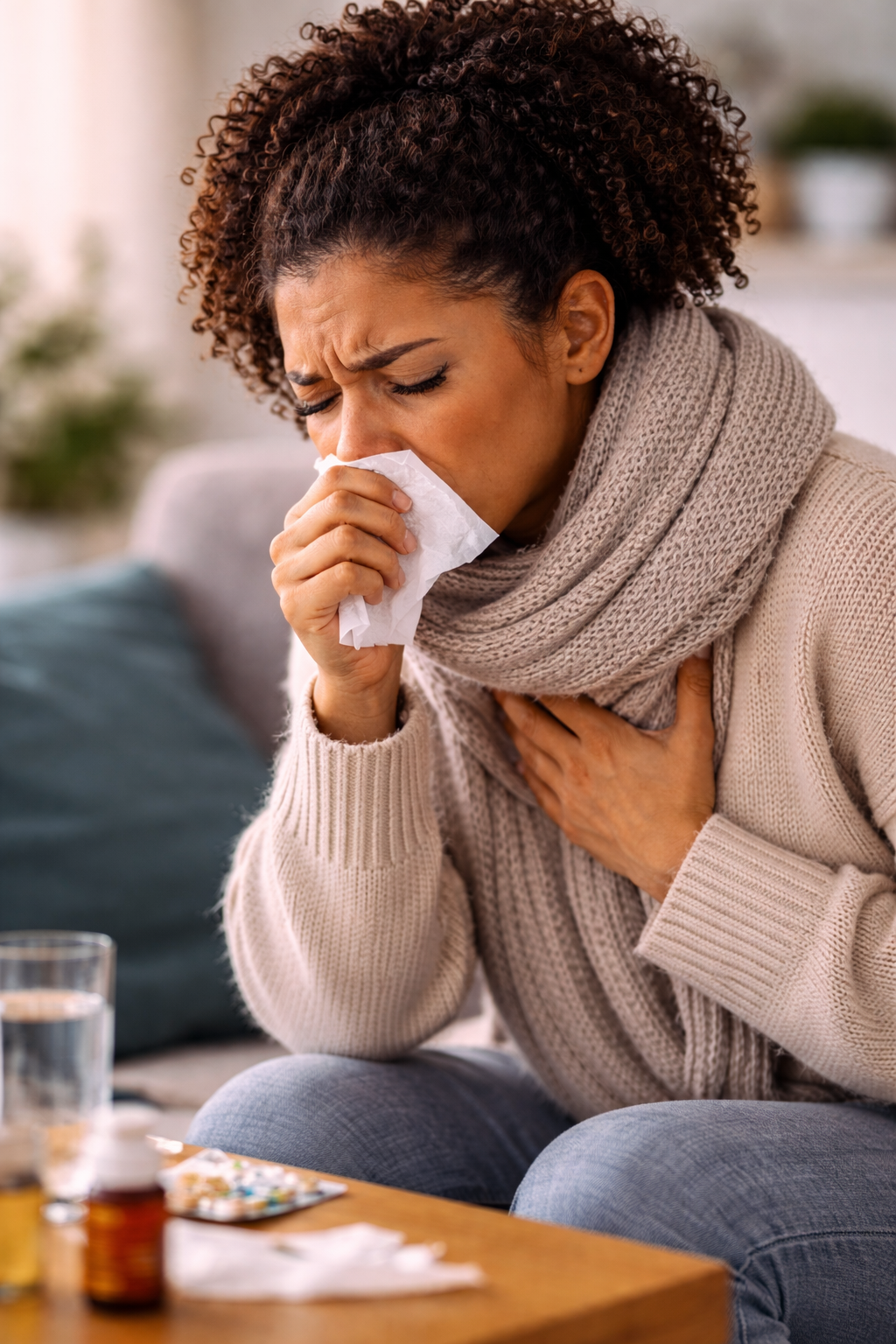
• cough wey persist, often 3 weeks or more
• fever
• night sweats
• unexplained weight loss
• poor appetite
• tiredness
• sometimes blood fit come out when person cough
👉🏾 TB symptoms fit start small-small, so person fit mistake am for ordinary cough or common cold at first.
🟧 Wetin you fit do
If healthcare professional diagnose TB:
• take every medicine exactly as dem prescribe
• complete d full treatment
• attend follow-up appointments and tests
• follow advice about how to avoid spreading TB
• encourage close contacts to get tested if healthcare team recommend am
👉🏾 No stop TB medicine because you don begin feel better. D bacteria fit still dey inside your body.
🟧 Real life example
Ibrahim begin dey cough after e recover from what e think say na ordinary chest infection.
At first, e no worry because:
• d cough no too serious
• e still dey go work normally
But after some weeks, e notice say him clothes begin loose for him body and e dey wake up for night with sweat.
Him sister encourage am make e go clinic.
After examination, chest X-ray and sputum tests, doctors confirm say Ibrahim get active TB.
After e understand, e:
• start d prescribed TB medicines
• follow d instructions about reducing spread
• attend every follow-up appointment
• complete d full treatment even after d cough disappear
👉🏾 With proper treatment, Ibrahim recover and doctors confirm say treatment work well.
👉🏾 Cough wey refuse to disappear—especially with weight loss or night sweats—deserve medical check up o.
🟧 🩺 When you suppose go hospital 🚨
• person cough blood
• breathing become very difficult
• severe chest pain
• person become confused
• severe headache with stiff neck
• persistent cough with weight loss, fever or night sweats
👉🏾 These symptoms fit mean serious TB or another serious illness. Early medical assessment dey important.
🟢 Final Reassurance
TB na serious infection, but TB get cure.
D important thing na to discover am early, start d correct medicines and complete d full treatment.
👉🏾 If you suspect TB, no hide because of fear or shame. Testing and treatment dey protect both you and d people around you.
📚 Reference
For full medical references, see the English version of this article.
⚠️ Disclaimer
This article na for education only. E no replace doctor advice.
🔗 Related Health Topics
• Persistent Cough for Pikin
• Cough
• Pneumonia
• HIV
• Unexplained Weight Loss
👉🏾 If you still get questions or prefer full medical detail, read the English version.