Read in: English | Pidgin
🔎 Quick Summary
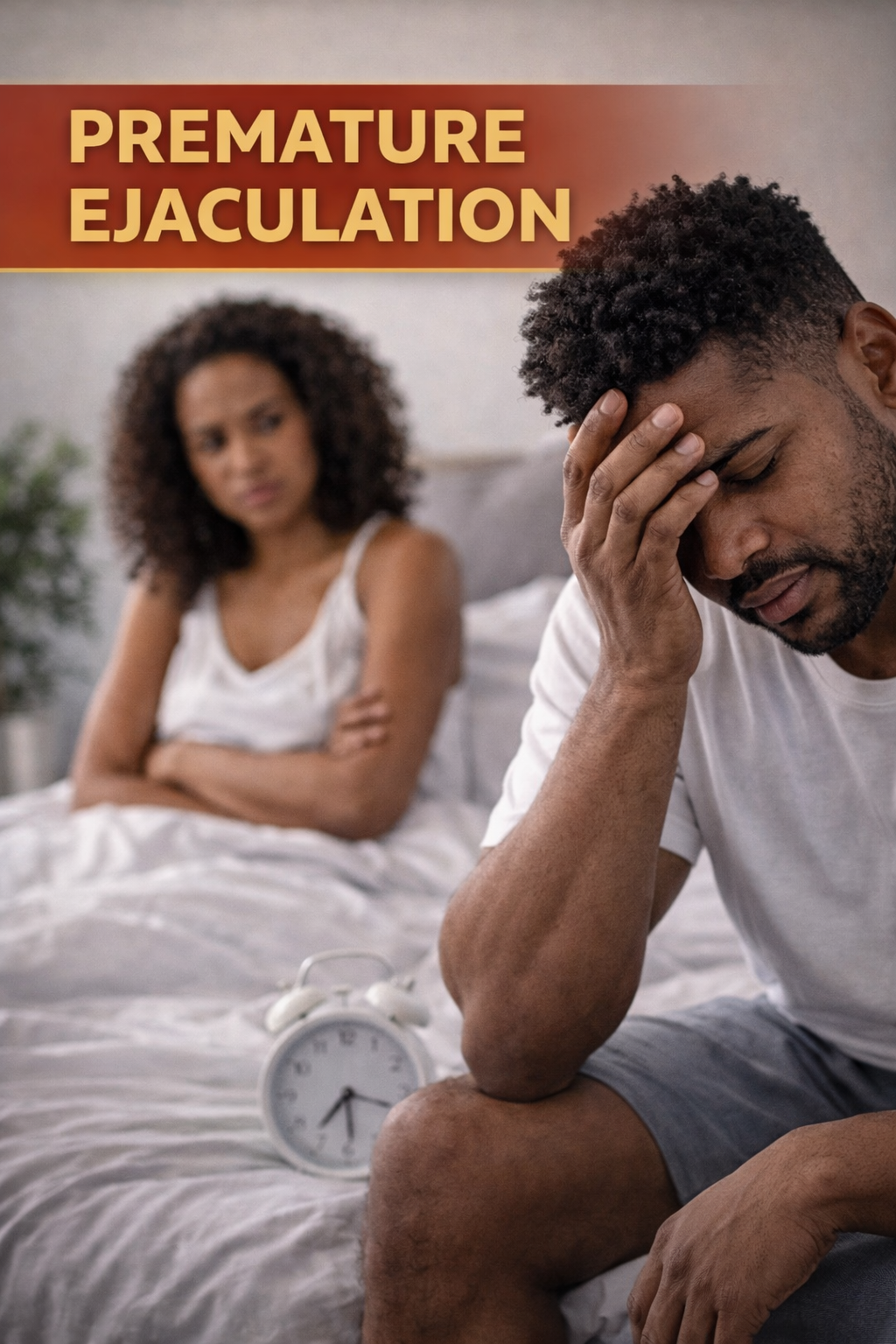
Premature ejaculation (PE) is when ejaculation happens sooner than desired during sexual activity and can be influenced by physical and psychological factors.
1️⃣ Introduction
Premature ejaculation (PE) is one of the most common sexual concerns in men.
It occurs when ejaculation happens earlier than desired, often with little control.
This can lead to frustration, anxiety and relationship stress.
👉 It is important to understand that PE is common and treatable.
2️⃣ How it happens
Ejaculation is controlled by:
• the brain
• the nervous system
• hormonal signals
In PE:
• this control may happen too quickly
• the body responds faster than expected
👉 This can be influenced by both physical and psychological factors.
3️⃣ Symptoms
• ejaculation occurs very quickly
• difficulty delaying ejaculation
• feeling of lack of control
• distress or frustration
👉 The key feature is not just timing, but lack of control.
4️⃣ Symptom explanation
PE may occur because:
• increased sensitivity
• heightened anxiety
• learned patterns of response
👉 The brain and body become conditioned to respond quickly.
5️⃣ Common causes
🔹 Psychological factors
• Sexual performance anxiety
• stress
• relationship concerns
• early sexual experiences
🔹 Physical factors
• hormonal imbalance
• nerve sensitivity
• underlying medical conditions
👉 Often, both factors are involved.
6️⃣ Comparison note
PE may be confused with:
• erectile dysfunction
• low libido
👉 PE is specifically about timing and control of ejaculation.
7️⃣ When to seek help
🚨 Consider seeking help if:
• it happens frequently
• it causes distress
• it affects relationships
• you feel loss of confidence
👉 Support is available and effective.
8️⃣ Management / support
🔹 Behavioral techniques
• pause–start method
• control techniques
🔹 Psychological support
• anxiety management
• counseling
🔹 Medical support
• medications (in some cases)
• topical treatments
👉 Treatment depends on the cause.
9️⃣ Diagnosis
Diagnosis is based on:
• symptom history
• frequency and duration
• impact on quality of life
🔟 Important message
Premature ejaculation is common and not a sign of failure.
👉 With the right support, it can be improved.
🔹 FAQ
🔹 Is PE common?
Yes, very common.
🔹 Is it psychological?
Often partly, but not always.
🔹 Can it be treated?
Yes.
🔹 Is it permanent?
No.
🔹 Should I seek help?
If it causes distress.
Related Health Topics
🔹 Erectile Dysfunction
🔹 Sexual Performance Anxiety
🔹 Stress and Burnout
🔹 Anxiety
🔹 Low Testosterone
🔹 Male infertility
🔹 Gynecomastia
🔹 Male Hormonal Imbalance
Medical References
• World Health Organization
• Mayo Clinic
• National Health Service
• American Urological Association
• International Society for Sexual Medicine
Medical Disclaimer
This article is for educational purposes only and does not replace professional medical advice, diagnosis or treatment.
If symptoms persist or affect your well-being, seek medical support.