Read in: English | Pidgin English
🔍 Quick Summary
Headaches and migraines both cause head pain—but they are not the same.
Migraines involve additional symptoms and can be more disabling.
1️⃣ Introduction
Headache is a general term for pain in the head, while migraine is a specific neurological condition.
• headaches are common and usually mild
• migraines are more intense and complex
• both can affect daily life
👉 Understanding the difference helps guide proper treatment.
2️⃣ How it happens
Both involve pain signals—but through different mechanisms.
• headache: muscle tension or mild nerve irritation
• migraine: brain sensitivity, nerve activation, and inflammation
• migraine involves changes in brain signaling
👉 Migraine is a whole-body neurological event—not just pain.
3️⃣ Common types of headaches
• Tension-type headache
- dull, tight, band-like pain
- usually mild to moderate
- often felt on both sides of the head
• Migraine
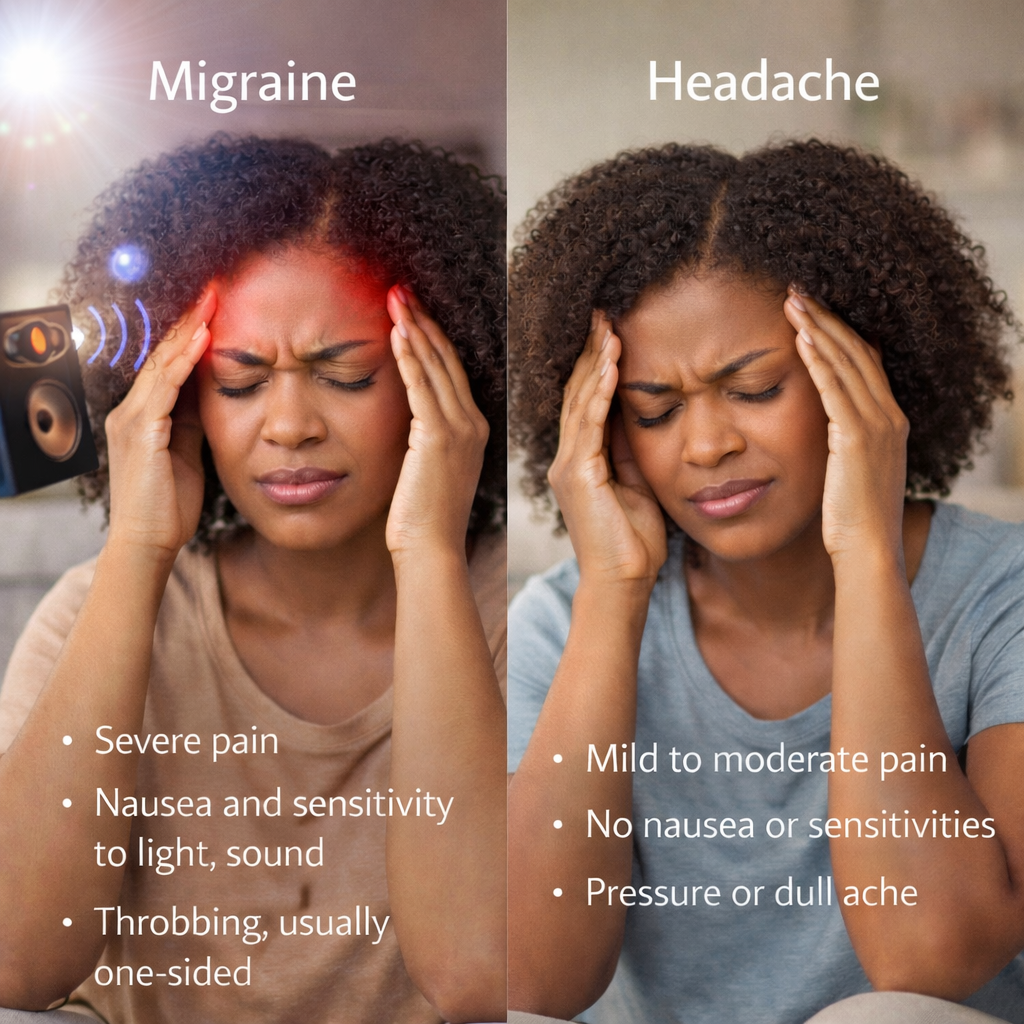
- throbbing or pulsating pain
- often one-sided
- may come with nausea, light sensitivity, or sound sensitivity
• Cluster headache
- severe, sharp pain (often around one eye)
- occurs in episodes or “clusters”
- may come with tearing or nasal congestion
👉 The type and quality of pain can give important clues about what’s causing it.
4️⃣ Common causes
• Headache triggers
- stress or tension
- dehydration or poor posture
• Migraine triggers
- hormonal changes
- certain foods, light, or sleep changes
5️⃣ Symptom explanation
• headache: dull pressure, mild to moderate
• migraine: throbbing pain, often severe
• migraine may worsen with movement
👉 Migraine pain is often due to heightened brain sensitivity.
6️⃣ Associated symptoms
• Headache
- usually no additional symptoms
- mild discomfort
• Migraine
👉 Additional symptoms strongly suggest migraine.
7️⃣ When it becomes dangerous 🚨
• sudden severe “worst-ever” headache
• headache with weakness, confusion, or vision loss
• headache with fever or stiff neck
👉 These may indicate:
• stroke or brain emergency
• infection or serious neurological condition
8️⃣ Management / treatment
• headache: hydration, rest, simple pain relief
• migraine: specific medications (e.g. triptans)
• avoid triggers and maintain routine
9️⃣ Diagnosis
• clinical history and symptom pattern
• neurological examination
• imaging if red flags present
👉 Diagnosis is based on pattern recognition.
🔟 Important message
Not all headaches are migraines—but migraines are more than just headaches.
👉 Knowing the difference helps you manage symptoms effectively.
FAQ
• Can a headache turn into a migraine?
They are different conditions, but symptoms can overlap.
• How can I tell the difference?
Migraines usually involve additional symptoms like nausea and light sensitivity.
🔗 Related Health Topics
• Migraine
• Headache
• Nausea
• Stress and anxiety
• Sleep problems
📚 Medical References
• World Health Organization (WHO). Headache disorders.
• National Health Service (NHS). Headache and migraine.
• Centers for Disease Control and Prevention (CDC). Neurological health.
• Mayo Clinic. Headache and migraine overview.
• National Institute for Health and Care Excellence (NICE). Migraine management.
• American Headache Society (AHS). Headache classification and treatment.
⚠️ Medical Disclaimer
This article is for educational purposes only and does not replace professional medical advice.
If you have symptoms or concerns, please consult a qualified healthcare professional.