Read in: English | Pidgin English
Published on April 13, 2026 at 8:47 PM
🩺 Medically reviewed by the Health Decoded Guide Editorial Team · Last reviewed: July 2026.
🔍 Quick Summary
HIV (Human Immunodeficiency Virus) is a virus that attacks the body's immune system. Without treatment, it can weaken the body's ability to fight infections. However, with early diagnosis and modern treatment, people living with HIV can live long, healthy lives.
1️⃣ Introduction
HIV (Human Immunodeficiency Virus) is a viral infection that attacks the immune system, particularly the cells that help protect the body from infections.
Without treatment, HIV can gradually weaken the immune system and increase the risk of serious illnesses. However, modern medicines can control the virus effectively and prevent these complications.
👉 HIV is now considered a long-term, manageable condition—not a death sentence.
2️⃣ How HIV affects the body
HIV enters the body through infected blood, semen, vaginal fluids, rectal fluids or breast milk.
Once inside the body:
• the virus infects CD4 (immune) cells
• it makes copies of itself inside these cells
• over time, the number of healthy CD4 cells decreases
👉 Without treatment, the immune system becomes weaker and less able to fight infections.
3️⃣ Types / stages
• Acute HIV infection
- occurs 2–4 weeks after infection
- many people develop flu-like symptoms
- the virus is highly infectious during this stage
• Chronic HIV infection
- may last for many years with few or no symptoms
- the virus continues to damage the immune system if untreated
• Advanced HIV (AIDS)
- occurs when the immune system becomes severely weakened
- serious infections and certain cancers become more likely
👉 Early diagnosis and treatment can prevent HIV from progressing to AIDS.
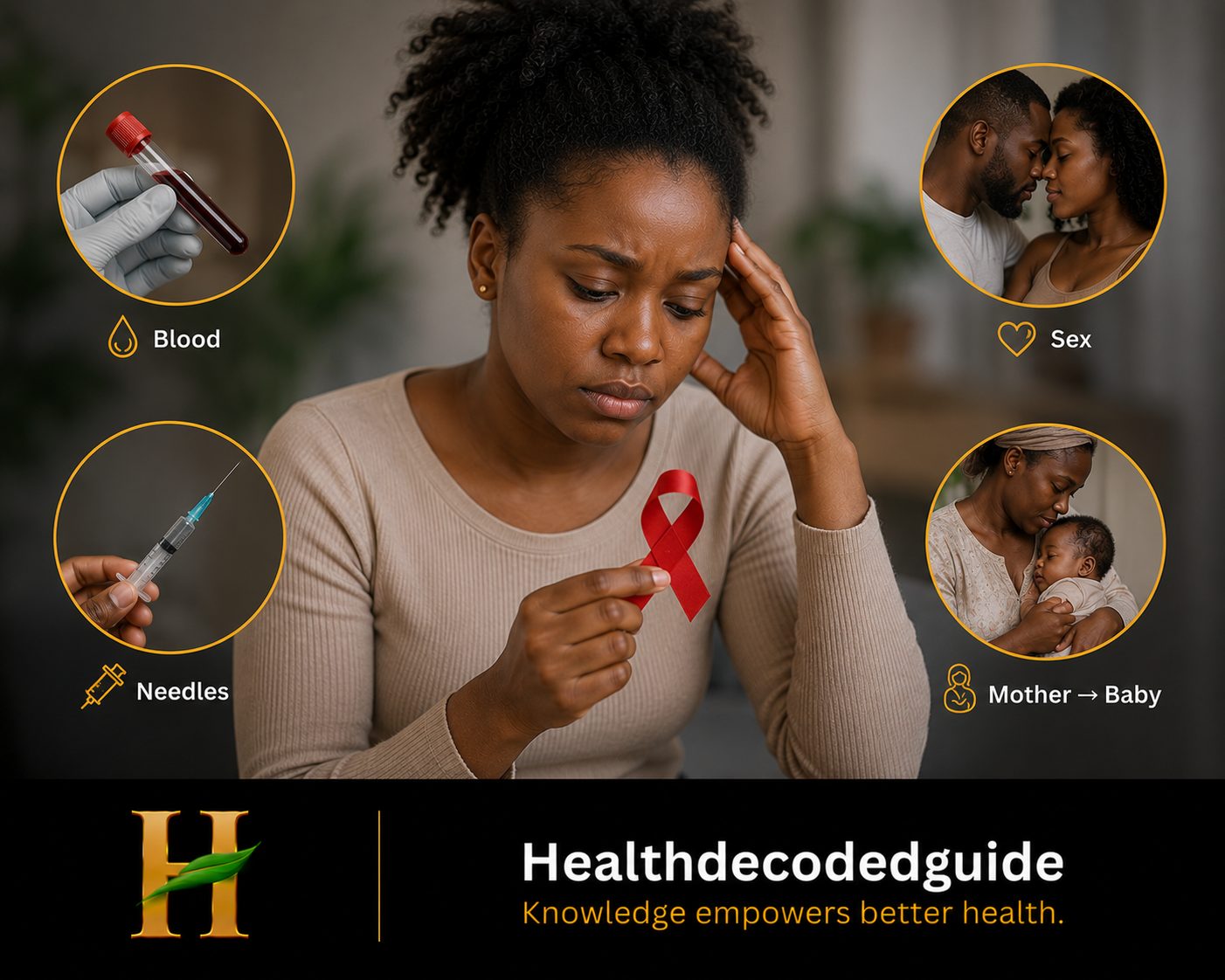
4️⃣ Common causes / transmission
HIV spreads through contact with certain infected body fluids.
• Sexual transmission
- unprotected vaginal or anal sex
• Blood exposure
- sharing needles or syringes
- contaminated blood products (rare where blood is screened)
• Mother-to-child transmission
- during pregnancy
- childbirth
- breastfeeding
👉 HIV is not spread through hugging, kissing, sharing food, shaking hands or mosquito bites.
5️⃣ Symptom explanation
Some people develop symptoms a few weeks after infection, while others may have no symptoms for years.
Early symptoms may include:
• fever
• sore throat
• skin rash
• tiredness
👉 These symptoms occur because the immune system is reacting to the virus.
6️⃣ Associated symptoms
As HIV progresses without treatment, people may develop:
• swollen lymph nodes
• unexplained weight loss
• persistent diarrhea
• recurrent infections
• night sweats
👉 Many people feel completely well for years, which is why testing is so important.
7️⃣ When it becomes dangerous 🚨
Seek urgent medical assessment if you develop:
• severe or unexplained weight loss
• persistent fever or night sweats
• recurrent or unusual infections
• difficulty breathing
• confusion or severe weakness
👉 These symptoms may indicate advanced HIV (AIDS) or another serious illness requiring urgent treatment.
8️⃣ Management / treatment
Treatment depends on how early HIV is diagnosed.
• antiretroviral therapy (ART) to control the virus
• regular medical follow-up and blood tests
• treatment or prevention of other infections when needed
• healthy lifestyle, good nutrition and avoiding smoking
👉 Taking HIV medicines every day can reduce the virus to undetectable levels, allowing most people to live long, healthy lives.
9️⃣ Diagnosis
HIV is diagnosed with blood tests.
Tests may include:
• HIV antibody/antigen test
• rapid HIV test
• follow-up blood tests to monitor viral load and CD4 count
👉 Anyone who thinks they may have been exposed to HIV should get tested, even if they feel well.
🧠 Why We Delay
"I feel fine, so I can't have HIV."
Many people with HIV feel completely healthy for months or even years after becoming infected. Because there may be no symptoms, some people delay getting tested until the infection has already damaged their immune system.
Fear, stigma or worrying about what others might think can also stop people from seeking help.
👉 The only way to know your HIV status is to get tested. Early diagnosis allows treatment to start before serious health problems develop.
🟢 Important message
HIV is no longer the life-threatening condition it once was for most people.
👉 Early testing, starting treatment promptly and taking medicines regularly allow many people with HIV to live long, healthy lives and prevent transmission to others.
FAQ
• Can HIV be cured?
No. There is currently no cure for HIV, but treatment can control the virus very effectively.
• Can people with HIV live a normal life?
Yes. With regular treatment and medical follow-up, many people with HIV have a normal life expectancy.
• How can HIV be prevented?
Using condoms, not sharing needles, regular testing, and medicines such as PrEP for people at higher risk can greatly reduce the chance of HIV infection.
• Can HIV be spread through kissing or sharing food?
No. HIV is not spread through hugging, kissing, sharing food, shaking hands or mosquito bites.
• Can someone have HIV without knowing it?
Yes. Many people have no symptoms for months or even years. The only way to know your HIV status is to get tested.
🔗 Related Health Topics
• Hepatitis
• STI
• Fever
• Unexplained Weight loss
• Night sweats
• Tuberculosis(TB)
📚 Medical References
• World Health Organization (WHO). HIV and AIDS.
• National Health Service (NHS). HIV and AIDS.
• Centers for Disease Control and Prevention (CDC). About HIV.
• Mayo Clinic. HIV/AIDS.
• National Institute for Health and Care Excellence (NICE). HIV and AIDS.
• Joint United Nations Programme on HIV/AIDS (UNAIDS). HIV prevention.
⚠️ Medical Disclaimer
This article is for educational purposes only and does not replace professional medical advice.
If you have concerns about HIV, consult a qualified healthcare professional.