

HIV no be end!—understand am early
Read in: English | Pidgin English
Published on April 13, 2026 at 8:47 PM
🩺 Medically reviewed by the Health Decoded Guide Editorial Team · Last reviewed: July 2026.
🔍 Quick Breakdown
HIV na virus wey attack d body's defence system (immune system).
Today, HIV no be death sentence again. If person know early and start treatment, e fit live long, healthy life
and reduce the chance of passing d virus to another person.
👉🏾 Early testing and treatment na d biggest weapon against HIV.
🟧 Wetin HIV really be?
Our body get immune system wey dey fight germs every day.
HIV go enter this defence system and gradually dey weaken am.
If person no receive treatment for long time, d body fit find am difficult to fight infections and some cancers.
👉🏾 HIV no dey kill people directly. Na d infections wey dey take advantage of weak immune system dey usually cause serious illness.
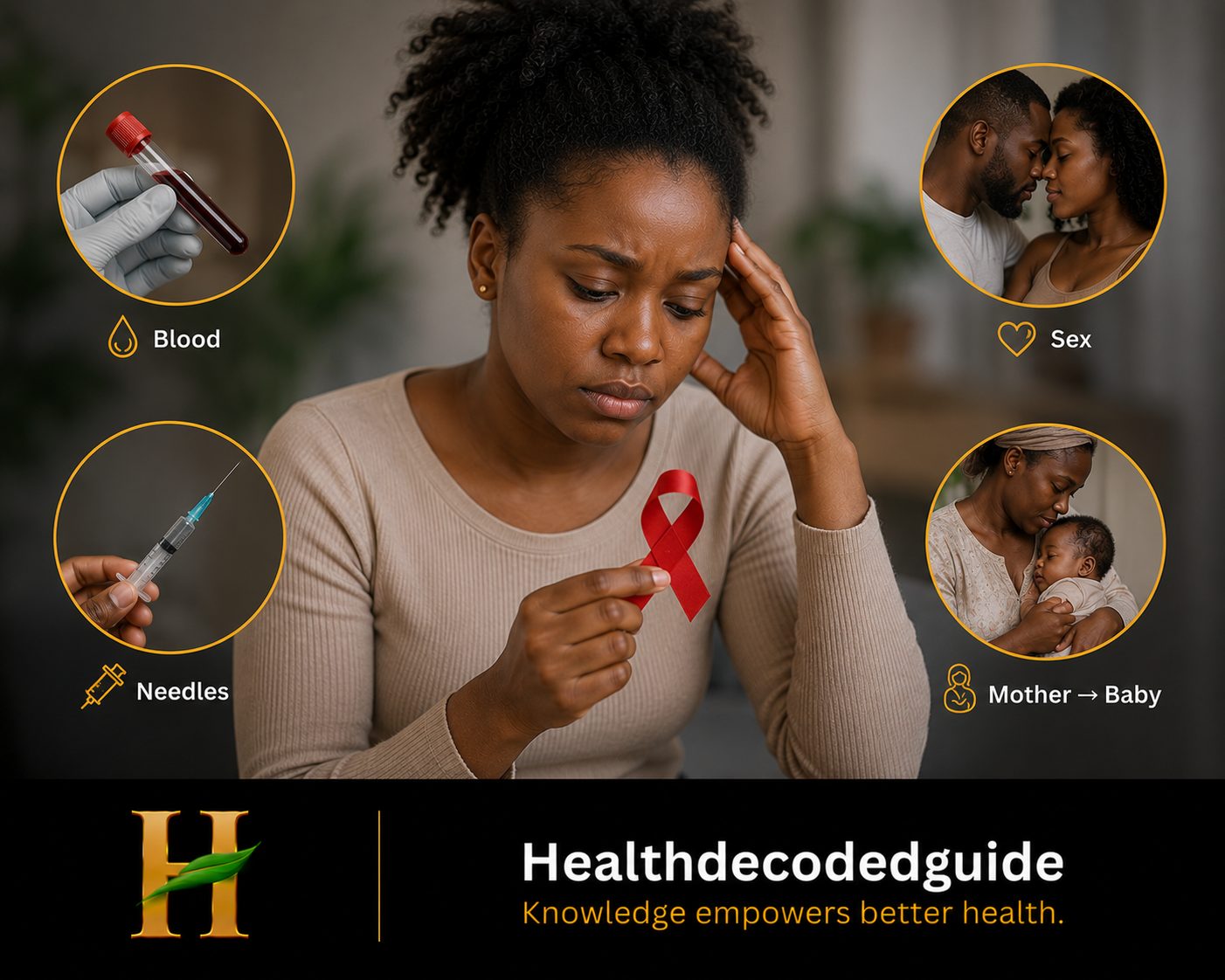
🟧 How person fit get HIV?
HIV spread when body fluids from person wey get HIV enter another person's body.
D common ways include:
• unprotected sex
→ especially if person no use condom.
• sharing needles or syringes
→ blood dey carry d virus.
• mother to baby
→ during pregnancy, delivery or breastfeeding if treatment no dey.
• infected blood transfusion
→ rare for many countries because dem dey screen/test d blood before dem give another person.
👉🏾 Person wey get HIV no fit spread am through ordinary skin contact.
🟧 Wetin people dey think wey no true about how HIV dey spread
You NO fit get HIV through:
• hugging
• shaking hands
• sharing toilet
• sharing plates or spoons
• mosquito bites
• coughing or sneezing
• swimming pool
• sharing food
👉🏾 Plenty people still believe these myths, but e no dey correct.
🟧 Wetin person fit notice?
Some people no get any symptoms for years.
Others fit first notice:
• fever
• sore throat
• body pain
• skin rash
• swollen glands
• tiredness
As time dey go without treatment, person fit begin get:
• weight loss
• repeated infections
• night sweats
• long-lasting diarrhea
• persistent cough
• mouth sores
👉🏾 Because early HIV symptoms resemble malaria, flu or other viral infections, many people no know say dem don get HIV.
🟧 Why early testing matter?
The only way to know whether person get HIV na through test.
Early diagnosis means:
• treatment fit start quickly
• immune system fit remain stronger
• person fit stay healthier
• chance of spreading HIV reduce greatly
👉🏾 Person fit look completely healthy and still get HIV.
🟧 How doctors treat HIV?
HIV no get permanent cure yet.
But doctors fit control am very well with medicines called antiretroviral therapy (ART).
If person take the medicine every day as prescribed:
• virus level fit become extremely low
• immune system fit recover
• person fit live normal life
• pregnancy fit become safer
• chance of passing HIV to sexual partner reduce greatly
👉🏾 When treatment reduce the virus to an undetectable level and e remain so,
the virus no dey sexually transmit to another person. This na the principle of Undetectable = Untransmittable (U=U).
🟧 Wetin you fit do to protect yourself?
• use condoms correctly during sex
→ e go reduce d risk of HIV and many other sexually transmitted infections.
• no share needles
→ always use clean, sterile equipment.
• know your HIV status
→ regular testing important if you dey at risk.
• consider PrEP (Pre-Exposure Prophylaxis) if your risk high
→ PrEP na medicine wey fit help prevent HIV before exposure.
→ Doctor fit recommend am if you get partner wey get HIV,
→ if you no fit always use condom, or if your chance of getting HIV high.
• encourage your partner to test too
→ knowing both partners' status go help una make informed decisions.
👉🏾 Prevention always easier than treatment.
🟧 Real Life Example
Chioma marry recently.
Before she and her husband stop using condoms ( because dem wan start family),
both of them decide to do routine HIV test.
One result come back positive.
D person start treatment immediately.
After some months, d virus reduce to undetectable level, and doctor continue to monitor both of them.
Later, dem welcome healthy HIV-negative baby.
👉🏾 Early testing and proper treatment fit protect both you and the people wey you love.
🟧 🩺When you suppose see doctor 🚨
See healthcare professional if:
• you think say you don expose yourself to HIV
• condom tear during sex
• you share needle with another person
• your partner test positive
• you get repeated unexplained infections
• you wan do HIV screening
If you think say you recently expose yourself to HIV, seek medical help as soon as possible,
preferably within 72 hours, because medicine called PEP (Post-Exposure Prophylaxis) fit reduce d chance of infection if e start early.
👉🏾 No wait until symptoms show. HIV fit stay inside d body for years without obvious signs.
🟢 Final reassurance
Today, people wey get HIV fit work, marry, have children and live long healthy lives.
D key na early testing, regular treatment and taking medicines exactly as prescribed.
👉🏾 HIV no define who you be. Knowing your status early fit help you take control of your health instead of fear taking control of you.
📚 Reference
For full medical references, see the English version of this article.
⚠️ Disclaimer
This article na for education only. E no replace advice from doctor.
If you think say you don expose yourself to HIV or you get concerns about HIV, abeg see healthcare professional or visit nearest testing centre for proper advice and testing.
🔗Related Health Topics
• Sexually Transmitted Infection (STI)
• Tuberculosis
• Unexplained Weight loss
• Night sweats
• Fever
👉🏽 If you still get questions or prefer full medical detail? Read English version