Read in: English | Pidgin English
🩺 Medically reviewed by the Health Decoded Guide Editorial Team · Last reviewed: July 2026
🔍 Quick Summary
Anxiety in children is more than occasional worry or fear.
It can affect emotions, sleep, school performance, physical health, and daily activities.
Early support and understanding can help children feel safer and cope better.
1️⃣ Introduction
Feeling worried sometimes is normal for children.
• anxiety becomes a problem when fear or worry is excessive
• symptoms may affect school, friendships, or home life
• children may express anxiety differently from adults
👉 Anxiety in children often shows through behavior, body symptoms, or emotional changes.
2️⃣ How it happens
The brain and body respond to stress or perceived danger.
• stress hormones increase alertness and fear responses
• some children become overly sensitive to stress
• anxiety may develop after stressful experiences or ongoing pressure
👉 Children may not always understand or explain what they are feeling.
3️⃣ Types
• Separation anxiety
- fear of being away from parents or caregivers
- common in younger children
• Social anxiety
- fear of embarrassment or social situations
- may affect school participation
• Generalized anxiety
- excessive worrying about many things
- ongoing tension or fear
• Specific phobias
- intense fear of particular objects or situations
- e.g., darkness, animals, or medical visits
👉 Different children may show anxiety in different ways.
4️⃣ Common causes
• Emotional stress
- family conflict
- bullying or school pressure
• Personality and temperament
- naturally shy or sensitive children
- difficulty coping with change
• Environmental or medical factors
- traumatic experiences
- chronic illness or neurodevelopmental conditions
👉 Anxiety often develops from a combination of emotional and environmental factors.
5️⃣ Symptoms
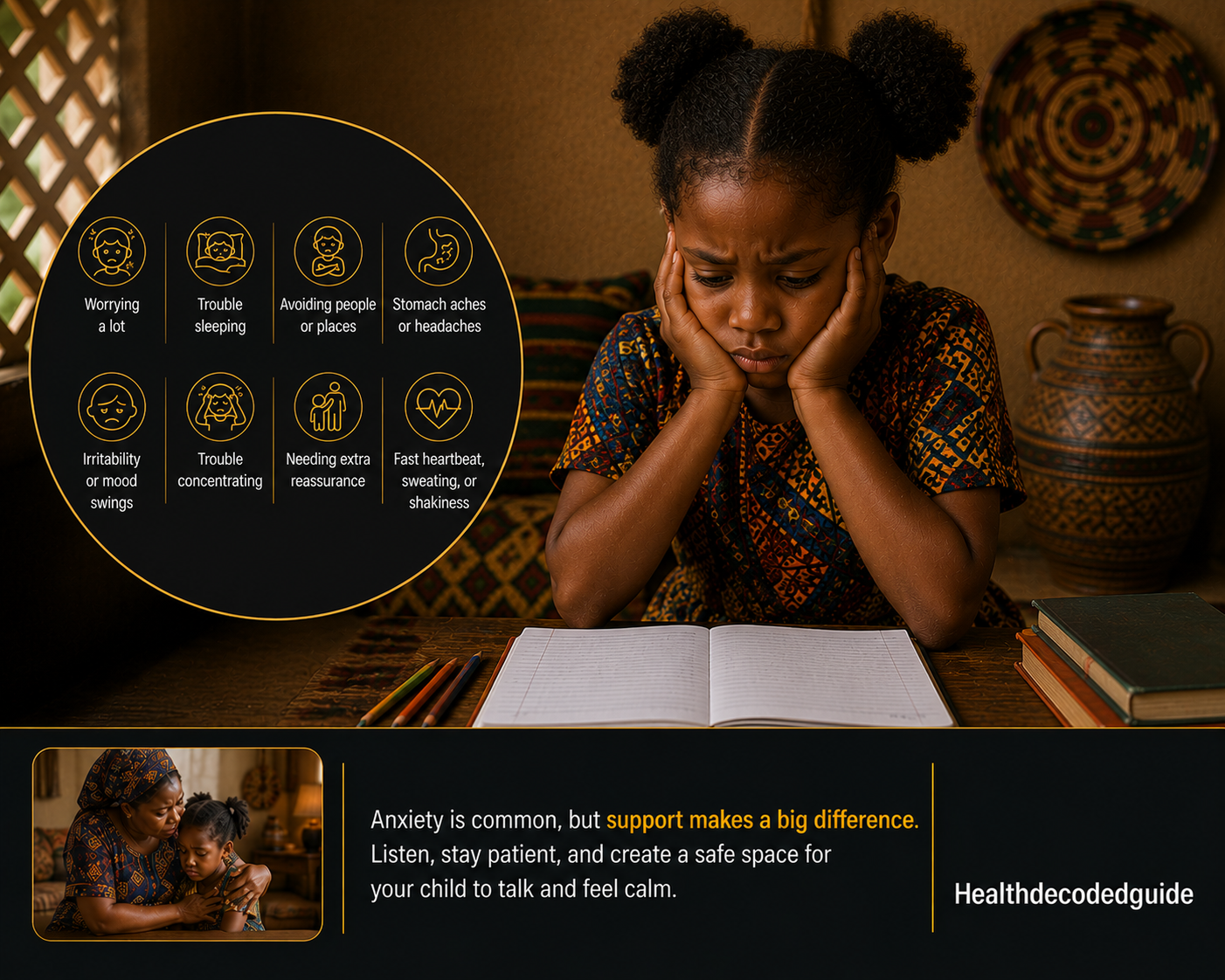
• excessive worry or fear
• irritability or clinginess
• stomach aches or headaches without clear physical cause
👉 Anxiety can affect both emotions and the body.
6️⃣ Associated symptoms
• sleep problems or nightmares
• difficulty concentrating
• school refusal or avoidance
• fast heartbeat or sweating during stress
👉 Physical symptoms are common in anxious children.
7️⃣🩺 When it becomes dangerous 🚨
• anxiety causing severe withdrawal or inability to function
• panic symptoms with breathing difficulty
• self-harm thoughts or significant emotional distress
• Poor nutrition
👉 These may indicate:
• severe anxiety disorder or mental health crisis
• need for urgent professional support
8️⃣ Management / treatment
• supportive listening and reassurance
• stable routines and emotional support
• counseling or therapy when needed
Supportive Measures
• encourage open communication
• avoid harsh criticism or excessive pressure
• maintain healthy sleep and routines
• involve school support if necessary
👉 Calm support from trusted adults can make a major difference.
9️⃣ Diagnosis
• discussion of symptoms and behavior patterns
• assessment by healthcare or mental health professionals
• evaluation of school, social, and emotional functioning
👉 Diagnosis focuses on how anxiety affects daily life and development.
🟢 Important message
Anxiety in children is common and treatable.
Early understanding, support, and professional help when needed can improve emotional well-being and confidence.
👉 A child acting “difficult” may actually be struggling with fear or worry.
FAQ
• Is anxiety normal in children?
Yes. Some anxiety is normal, but excessive or persistent anxiety may need support.
• Can anxiety cause physical symptoms?
Yes. Stomach aches, headaches, and sleep problems are common.
• What can parents do to help?
Provide reassurance, routines, open communication, and seek professional support if needed.
• Can school stress cause anxiety?
Yes. Bullying, academic pressure, or social stress may contribute.
• When should professional help be sought?
If anxiety affects school, sleep, relationships, or daily functioning.
🔗 Related Health Topics
• Stress Management
• Sleep Problems
• Depression
• Anxiety
• Picky Eating in Children
📚 Medical References
• World Health Organization (WHO). Adolescent mental health.
• National Health Service (NHS). Anxiety disorders in children.
• Mayo Clinic. Childhood anxiety: When to seek help.
• American Academy of Pediatrics (AAP). Anxiety: Pediatric Mental Health Minute Series.
• Centers for Disease Control and Prevention (CDC). About Children's Mental Health.
• National Institute for Health and Care Excellence (NICE). Social anxiety disorder: recognition, assessment and treatment (CG159).
⚠️ Medical Disclaimer
This article is for educational purposes only and does not replace professional medical advice.
If you have symptoms or concerns, please consult a qualified healthcare professional.