Read in: English | Pidgin English
🩺 Medically reviewed by the Health Decoded Guide Editorial Team · Last reviewed: July 2026
🔍 Quick Summary
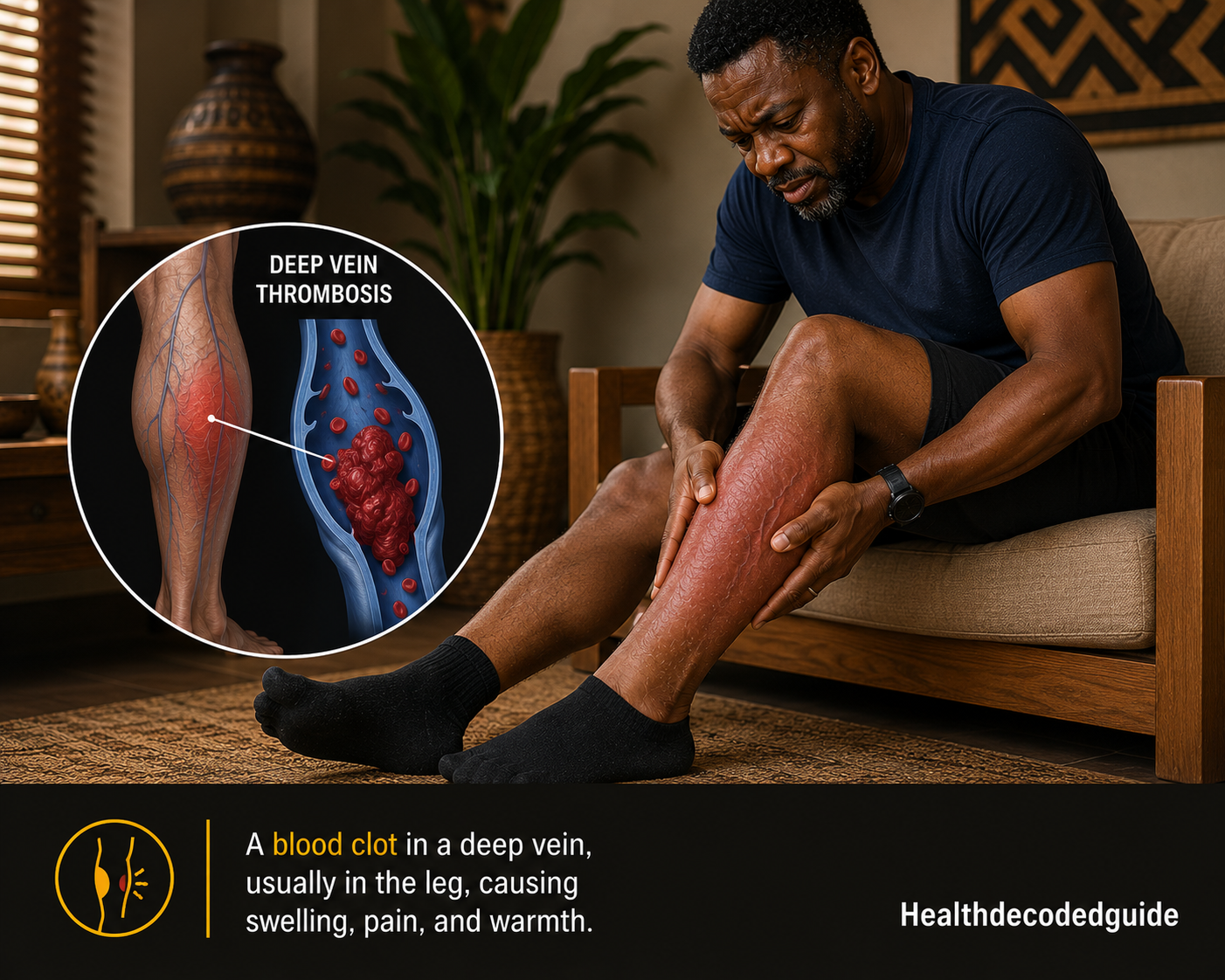
Deep vein thrombosis (DVT) is a blood clot that forms in a deep vein, usually in the leg.
It can cause pain, swelling, and redness—and may become dangerous if the clot travels to the lungs.
Early recognition and treatment are important to prevent complications.
1️⃣ Introduction
DVT affects the blood flow in deep veins.
• most commonly occurs in the legs
• can develop suddenly or gradually
• may lead to serious complications if untreated
👉 A clot that travels to the lungs is called a pulmonary embolism, which can be life-threatening.
2️⃣ How it happens
Blood normally flows smoothly through veins.
• slow blood flow can allow clots to form
• damage to blood vessels may trigger clotting
• certain conditions increase the tendency for blood to clot
👉 DVT often develops when blood flow is reduced or circulation is impaired.
3️⃣ Types
• Leg DVT
- most common form
- affects deep veins in the calf or thigh
• Upper limb DVT
- less common
- may occur in arms due to catheters or injury
• Complicated DVT
- clot breaks off and travels to lungs
- leads to pulmonary embolism
👉 The location of the clot influences symptoms and risks.
4️⃣ Common causes
• Reduced movement
- long travel or bed rest
- prolonged sitting
• Medical conditions
- cancer
- clotting disorders
• Risk factors
- surgery or injury
- pregnancy or hormonal therapy
👉 Smoking, obesity, and age can also increase risk.
5️⃣ Symptoms
• swelling in one leg
• pain or tenderness in the leg
• warmth and redness over the affected area
👉 Symptoms occur because the clot blocks normal blood flow.
6️⃣ Associated symptoms
• visible enlarged veins
• skin discoloration
• heaviness in the leg
• mild fever in some cases
👉 Symptoms usually affect one leg rather than both.
7️⃣🩺 When it becomes dangerous 🚨
• sudden shortness of breath
• chest pain, especially when breathing
• coughing up blood
👉 These may indicate:
• pulmonary embolism (clot in the lungs)
• life-threatening emergency needing immediate medical attention
8️⃣ Management / treatment
• blood-thinning medications (anticoagulants)
• compression stockings for circulation support
• early movement and walking when safe
Supportive Measures
• avoid prolonged immobility
• stay hydrated
• follow medical advice for anticoagulant use
• attend regular follow-up appointments
👉 Treatment reduces clot growth and lowers the risk of complications.
9️⃣ Diagnosis
• physical examination and symptom review
• ultrasound scan of the veins
• blood tests such as D-dimer
👉 Imaging tests help confirm the presence and location of the clot.
🟢 Important message
DVT is a serious condition but can be treated effectively when detected early.
Recognizing symptoms and risk factors helps prevent complications like pulmonary embolism.
👉 Sudden leg swelling or breathing problems should never be ignored.
FAQ
• What does DVT feel like?
It may feel like leg pain, swelling, or tenderness, usually in one leg.
• Can DVT go away on its own?
Some clots may resolve, but treatment is important to prevent complications.
• Is DVT dangerous?
Yes. If the clot travels to the lungs, it can cause a pulmonary embolism.
• Who is at risk of DVT?
People with reduced mobility, recent surgery, pregnancy, or certain medical conditions.
• When should emergency help be sought?
If breathing difficulty, chest pain, or coughing blood occurs.
🔗 Related Health Topics
• Pulmonary Embolism
• Leg Pain Causes
• Peripheral Artery Disease
• Artherosclerosis
• Heart Attack Warning Signs
• Emergency Response Basics
📚 Medical References
• World Health Organization (WHO). Cardiovascular diseases (CVDs).
• National Health Service (NHS). Deep vein thrombosis.
• Mayo Clinic. Deep vein thrombosis (DVT) – Symptoms & causes.
• Centers for Disease Control and Prevention (CDC). About Venous Thromboembolism (Blood Clots).
• American Heart Association (AHA). What Is Venous Thromboembolism (VTE)?
• National Institute for Health and Care Excellence (NICE). Venous thromboembolic diseases: diagnosis, management and thrombophilia testing (NG158).
⚠️ Medical Disclaimer
This article is for educational purposes only and does not replace professional medical advice.
If you have symptoms or concerns, please consult a qualified healthcare professional.