Read in: English | Pidgin English
🩺 Medically reviewed by the Health Decoded Guide Editorial Team· Last reviewed: July 2026
🔍 Quick Summary
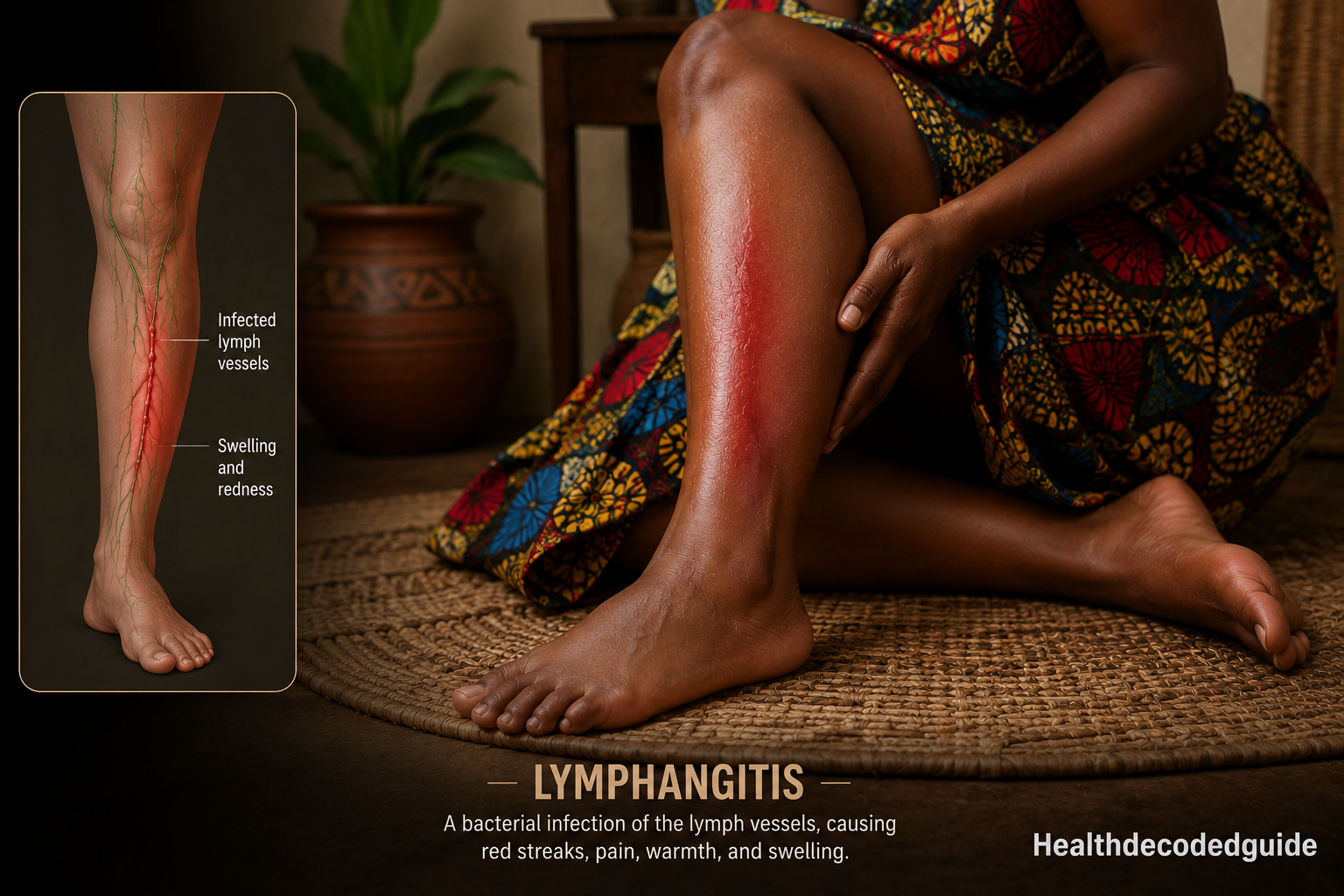
Lymphangitis is an infection or inflammation of the lymphatic vessels.
It often appears as painful red streaks spreading from an infected wound or skin area.
Early treatment is important because the infection can spread through the body.
1️⃣ Introduction
The lymphatic system helps the body fight infection and manage fluid balance.
• lymph vessels carry immune cells and fluid through the body
• bacteria can enter through cuts, wounds, or skin infections
• infection may spread along the lymphatic vessels
👉 Red streaks moving away from a wound are an important warning sign.
2️⃣ How it happens
Lymphangitis usually develops after bacteria enter the skin.
• small cuts or wounds may allow bacteria inside
• infection spreads through nearby lymphatic vessels
• the immune system reacts with inflammation
👉 The condition commonly develops from untreated skin infections.
3️⃣ Types
• Acute lymphangitis
- develops suddenly
- often linked to bacterial infection
• Chronic lymphatic inflammation
- longer-lasting lymph vessel irritation
- less common
👉 Acute bacterial lymphangitis is the most common form.
4️⃣ Common causes
• Skin injuries
- cuts or scratches
- insect bites
• Skin infections
- cellulitis
- infected wounds or ulcers
• Reduced immunity
- diabetes
- weakened immune system
👉 Even small skin injuries can sometimes lead to infection.
5️⃣ Symptoms
• red streaks on the skin
• pain or tenderness
• swelling around the infected area
👉 The streaks often spread toward nearby lymph nodes.
6️⃣ Associated symptoms
• fever or chills
• swollen lymph nodes
• fatigue
• warmth or redness around the skin
👉 Fever may suggest the infection is spreading.
7️⃣🩺 When it becomes dangerous 🚨
• rapidly spreading redness
• high fever or confusion
• severe swelling or worsening pain
👉 These may indicate:
• serious spreading infection
• bloodstream infection (sepsis) requiring urgent treatment
8️⃣ Management / treatment
• antibiotics for bacterial infection
• wound care and cleaning
• pain and fever management
Supportive Measures
• keep wounds clean
• avoid scratching infected areas
• monitor skin changes closely
• seek early treatment for skin infections
👉 Early treatment helps prevent complications.
9️⃣ Diagnosis
• medical history and physical examination
• assessment of skin and lymph node involvement
• blood tests or wound cultures in some cases
👉 Diagnosis is often based on the appearance of the skin and symptoms.
🟢 Important message
Lymphangitis is usually treatable, but delayed treatment may allow infection to spread.
Recognizing red streaks and infection symptoms early is important.
👉 Rapidly spreading redness or fever should not be ignored.
FAQ
• What is lymphangitis?
An infection or inflammation affecting the lymphatic vessels.
• What causes red streaks on the skin?
Infection spreading through lymph vessels.
• Is lymphangitis serious?
It can become serious if the infection spreads untreated.
• Can a small cut cause lymphangitis?
Yes. Even small wounds may allow bacteria into the skin.
• When should medical help be sought?
If fever, spreading redness, or worsening pain develops.
🔗 Related Health Topics
• Cellulitis
• Fever
• Skin Infections
• Diabetes
• Sepsis
📚 Medical References
• National Health Service (NHS). Cellulitis: https://www.nhs.uk/conditions/cellulitis/
• Mayo Clinic. Cellulitis – Symptoms and causes: https://www.mayoclinic.org/diseases-conditions/cellulitis/symptoms-causes/syc-20370762
• American Academy of Dermatology (AAD). Cellulitis: https://www.aad.org/public/diseases/a-z/cellulitis-overview
• National Institute for Health and Care Excellence (NICE). Cellulitis and erysipelas: antimicrobial prescribing (NG141): https://www.nice.org.uk/guidance/ng141
• Merck Manual Consumer Version. Cellulitis: https://www.merckmanuals.com/home/skin-disorders/bacterial-skin-infections/cellulitis.
⚠️ Medical Disclaimer
This article is for educational purposes only and does not replace professional medical advice.
If you have symptoms or concerns, please consult a qualified healthcare professional.