Read in: English | Pidgin English
🩺 Medically reviewed by the Health Decoded Guide Editorial Team · Last reviewed: July 2026
🔍 Quick Summary
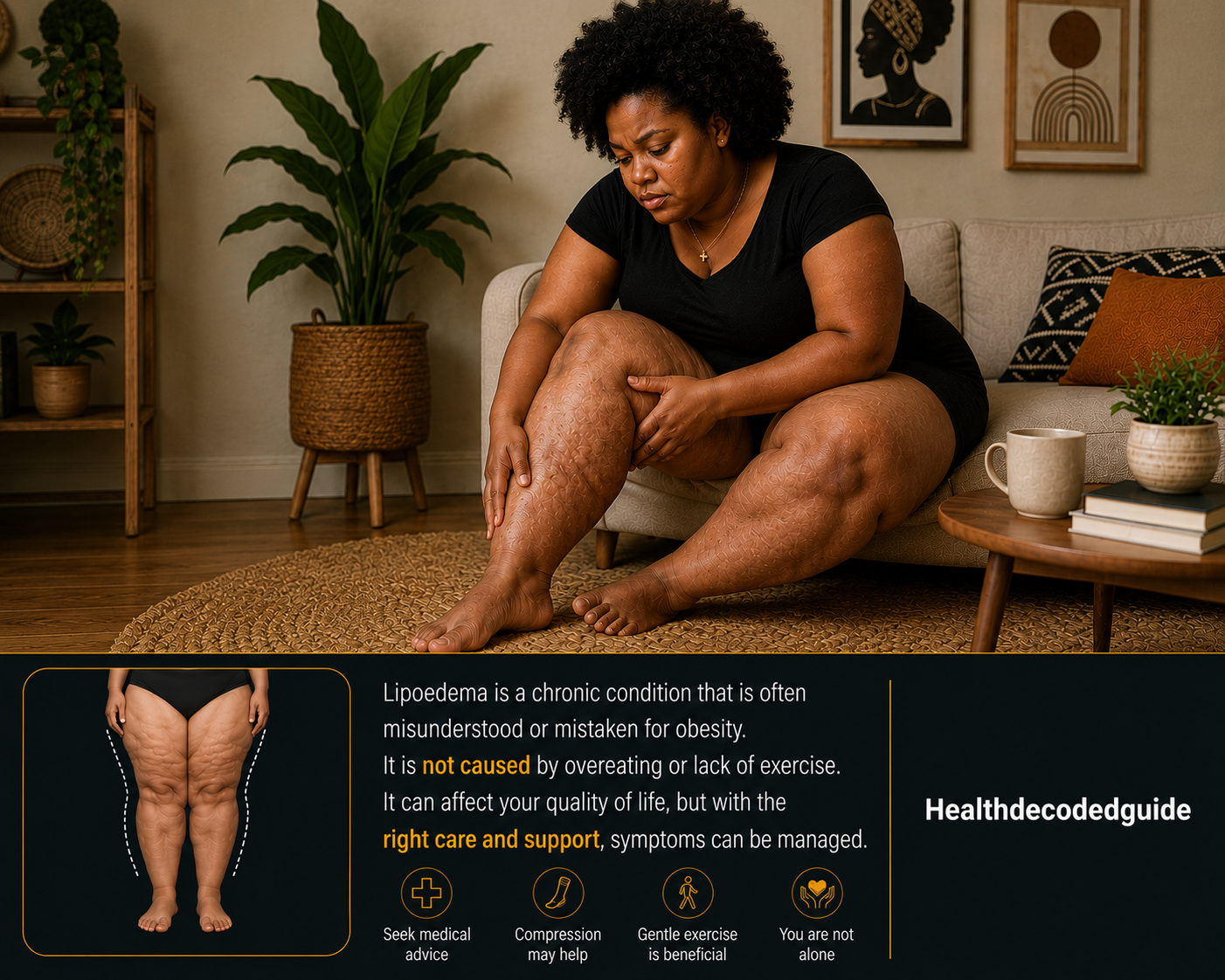
Lipoedema is a chronic condition involving abnormal fat buildup, usually in the legs and sometimes the arms.
It commonly causes pain, heaviness, swelling, and easy bruising.
The condition mainly affects women and is often misunderstood as ordinary weight gain or obesity.
1️⃣ Introduction
Lipoedema affects fat distribution in the body.
• fat accumulates symmetrically, especially in the hips, thighs, legs, or arms
• feet and hands are usually less affected
• symptoms may gradually worsen over time
👉 Lipoedema is a medical condition and not simply caused by overeating.
2️⃣ How it happens
The exact cause is not fully understood.
• abnormal fat tissue develops under the skin
• fluid and inflammation may increase discomfort
• circulation and lymphatic drainage may also become affected
👉 Hormonal changes often seem linked to symptom development.
3️⃣ Types
• Type 1
- affects hips and buttocks
- lower body enlargement
• Type 2
- affects thighs and knees
- uneven fat accumulation
• Type 3
- extends from hips to ankles
- legs may feel heavy and painful
• Type 4
- affects arms in addition to legs
- upper limb symptoms present
👉 Symptoms and body areas affected vary between individuals.
4️⃣ Common causes
• Genetic factors
- family history common
- may run in families
• Hormonal influences
- puberty
- pregnancy or menopause
• Circulation and lymphatic factors
- fluid buildup
- tissue sensitivity
👉 Many women first notice symptoms during hormonal life changes.
5️⃣ Symptoms
• enlarged painful legs or arms
• heaviness or tenderness
• easy bruising
👉 Pain and tenderness help distinguish lipoedema from ordinary body fat.
6️⃣ Associated symptoms
• swelling that worsens during the day
• reduced mobility
• skin sensitivity
• emotional distress or body image concerns
👉 Symptoms may affect both physical and emotional well-being.
7️⃣🩺 When it becomes dangerous 🚨
• sudden severe swelling in one leg
• skin infection or redness
• difficulty walking or severe pain
👉 These may indicate:
• additional lymphatic or circulation problems
• conditions needing urgent medical evaluation
8️⃣ Management / treatment
• compression therapy
• physiotherapy and gentle exercise
• weight and symptom management support
Supportive Measures
• low-impact exercise such as walking or swimming
• avoid prolonged standing where possible
• maintain skin care and hydration
• emotional and psychological support when needed
👉 Early recognition may help improve comfort and mobility.
9️⃣ Diagnosis
• medical history and physical examination
• assessment of fat distribution and tenderness
• tests to exclude other swelling conditions
👉 Diagnosis is usually based on symptom pattern and body changes.
🟢 Important message
Lipoedema is a real chronic condition that can affect comfort, mobility, and quality of life.
Early understanding and supportive management can help reduce symptoms and improve daily functioning.
👉 Persistent painful swelling or unusual fat distribution deserves proper medical evaluation.
FAQ
• What is lipoedema?
A condition causing painful abnormal fat buildup, usually in the legs and arms.
• Is lipoedema the same as obesity?
No. Lipoedema is a separate medical condition.
• Does lipoedema cause pain?
Yes. Pain, tenderness, and heaviness are common symptoms.
• Can exercise help?
Gentle exercise may improve mobility and circulation.
• When should medical help be sought?
If swelling, pain, or mobility problems worsen.
🔗 Related Health Topics
• Lymphangitis
• Peripheral Vascular Disease
• Obesity
• Leg Swelling
• Physiotherapy and Rehabilitation
• Lymphedema vs lipoedema
📚 Medical References
• National Health Service (NHS). Lipoedema: https://www.nhs.uk/conditions/lipoedema/
• Mayo Clinic. Lymphedema – Symptoms and causes: https://www.mayoclinic.org/diseases-conditions/lymphedema/symptoms-causes/syc-20374682
• International Lipoedema Association (ILA). https://theila.net/
• National Institute for Health and Care Excellence (NICE). Liposuction for chronic lipoedema (HTG618): https://www.nice.org.uk/guidance/htg618
• International Lymphoedema Framework (ILF). https://www.lympho.org/
⚠️ Medical Disclaimer
This article is for educational purposes only and does not replace professional medical advice.
If you have symptoms or concerns, please consult a qualified healthcare professional.