Read in: English | Pidgin English
🩺 Medically reviewed by the Health Decoded Guide Editorial Team
🔍 Quick Summary
Large or swollen legs compared to the upper body can happen for different reasons.
Common causes include lipedema, lymphedema, and obesity — but these conditions are not the same.
Understanding the differences may help people seek more appropriate care and support.
| Feature | Lipoedema | Lymphedema | Obesity |
|---|---|---|---|
| Main problem | Abnormal fat build-up | Lymph fluid build-up | Excess body fat |
| Who is affected? | Almost always women | Men and women | Men and women |
| Where does it occur? | Usually both legs (sometimes arms), feet usually spared | Usually one arm or leg (can affect both), often includes the feet or hands | Fat distributed throughout the body |
| Pain | Common; legs are tender and painful | Usually heavy or tight, pain less common | Usually not painful because of fat alone |
| Bruises easily | ✔️ Common | ❌ Uncommon | ❌ No |
| Swelling | Fatty swelling | Fluid swelling | Fat accumulation |
| Feet affected? | Usually No | Usually Yes | Yes, if obesity is severe |
| Weight loss effect | Legs often change very little | May help overall health but does not cure swelling | Usually reduces body fat |
| Common causes | Hormones and genetics | Lymphatic damage (surgery, cancer treatment, infection) | Excess calorie intake, inactivity, genetics, hormones, and other factors |
| Treatment | Compression, exercise, specialist care | Compression, lymph drainage, exercise, skin care | Healthy diet, exercise, lifestyle changes, medications or surgery (for some people) |
💡 Key Takeaway
- Lipoedema = painful fat disorder.
- Lymphedema = swelling caused by lymph fluid.
- Obesity = excess body fat affecting the whole body.
1️⃣ Introduction
Body fat and swelling patterns vary between individuals.
• some people notice enlargement mainly in the legs or lower body
• symptoms may involve fat buildup, fluid retention, or both
• discomfort, heaviness, or pain may also occur
👉 Leg enlargement is not always simply caused by weight gain alone.
2️⃣ How it happens
Different conditions affect the body in different ways.
• lipedema causes abnormal painful fat accumulation
• lymphedema involves lymph fluid buildup from poor drainage
• obesity causes generalized body fat increase
👉 The pattern of swelling and symptoms often helps identify the cause.
3️⃣ Differences between the conditions
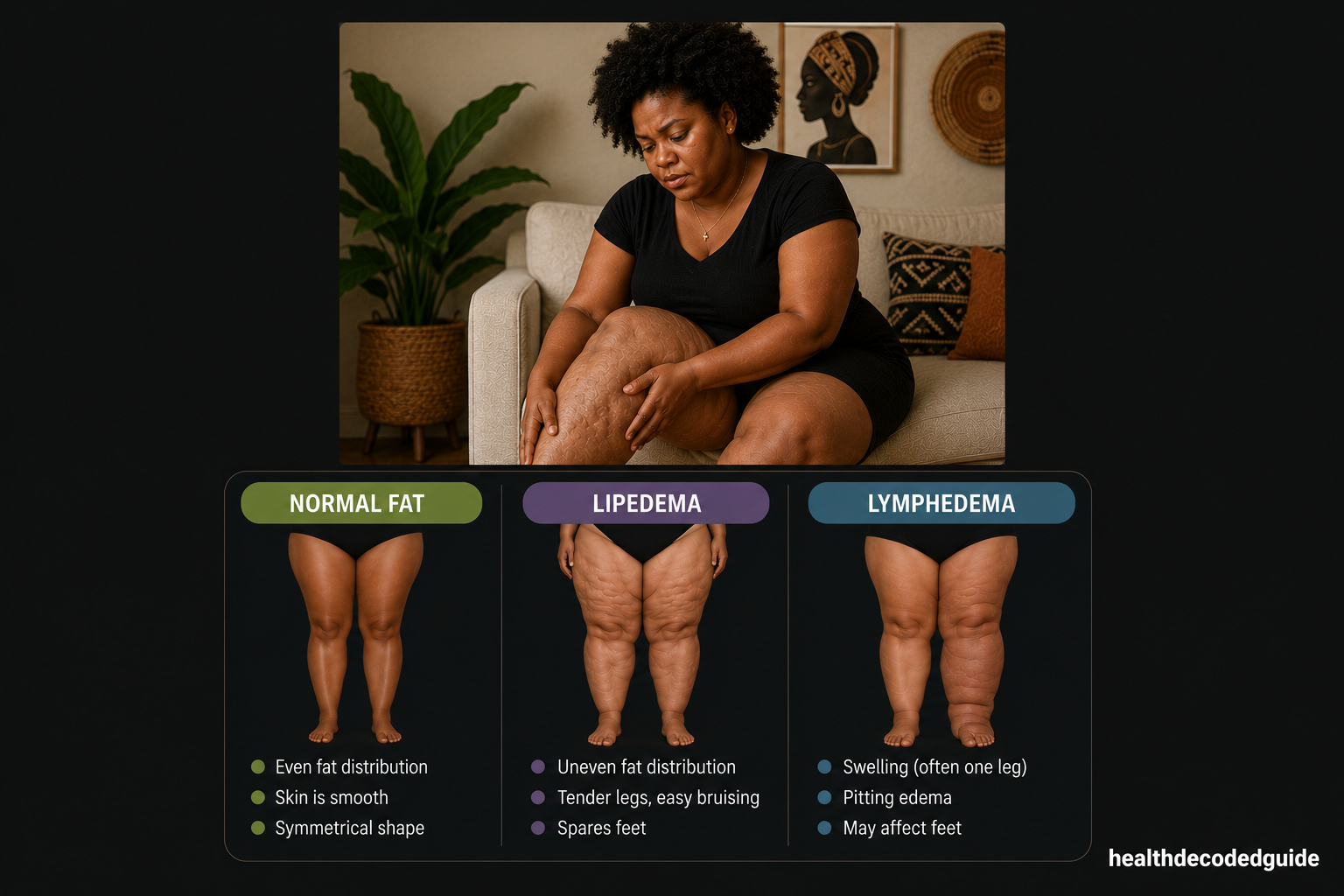
• Lipedema
- symmetrical painful fat buildup
- legs enlarge more than upper body
- feet are often spared
- bruising and tenderness common
- swelling caused by lymph fluid
- feet and toes are commonly affected
- skin thickening may occur
• Obesity
- overall body fat increase
- usually affects the whole body more evenly
- pain and bruising are less specific
👉 Lipedema often causes disproportionate lower body enlargement compared to the upper body.
4️⃣ Common causes
• Hormonal factors
- puberty
- pregnancy or menopause
• Lymphatic or circulation problems
- poor fluid drainage
- lymphatic damage
• Lifestyle and genetic factors
- obesity risk factors
- family history
👉 Some people may have more than one condition at the same time.
5️⃣ Symptoms
• enlarged legs or lower body
• heaviness or tightness
• discomfort when standing or walking
👉 Pain and easy bruising are more suggestive of lipedema.
6️⃣ Associated symptoms
• swelling around ankles or feet
• skin thickening
• mobility difficulty
• emotional distress or body image concerns
👉 Foot swelling is more common in lymphedema than lipedema.
7️⃣🩺 When it becomes dangerous 🚨
• sudden severe swelling in one leg
• redness, warmth, or fever
• skin ulcers or severe pain
👉 These may indicate:
• infection such as cellulitis
• circulation problems or blood clot risk
8️⃣ Management / treatment
• compression therapy when appropriate
• exercise and physiotherapy
• healthy weight and circulation support
Supportive Measures
• avoid prolonged standing where possible
• maintain skin care and hydration
• seek early medical evaluation
• gentle low-impact exercise may help mobility
👉 Proper diagnosis is important because treatment differs between conditions.
9️⃣ Diagnosis
• medical history and symptom review
• physical examination of swelling patterns
• imaging or lymphatic studies in some cases
👉 Doctors assess whether enlargement is mainly related to fat, fluid, or generalized weight gain.
🟢 Important message
Large legs compared to the upper body may have different medical causes beyond ordinary weight gain.
Recognizing symptoms early may help improve comfort, mobility, and long-term care.
👉 Persistent painful swelling or unusual body changes should not be ignored.
FAQ
• What causes legs to become larger than the upper body?
Conditions like lipedema, lymphedema, obesity, or fluid retention may contribute.
• Does lipedema affect the feet?
Usually no. The feet are often spared.
• Can obesity and lymphedema happen together?
Yes. Multiple conditions may overlap.
• Why does lymphedema cause swelling?
Because lymph fluid cannot drain properly.
• When should medical help be sought?
If swelling worsens, becomes painful, or is associated with redness or fever.
🔗 Related Health Topics
• Lipoedema
• Lymphedema
• Leg Swelling
• Peripheral Vascular Disease
• Obesity
📚 Medical References
• World Health Organization (WHO). Obesity and overweight: https://www.who.int/news-room/fact-sheets/detail/obesity-and-overweight
• National Health Service (NHS). Lipoedema: https://www.nhs.uk/conditions/lipoedema/
• National Health Service (NHS). Lymphoedema: https://www.nhs.uk/conditions/lymphoedema/
• Mayo Clinic. Lymphedema – Symptoms and causes: https://www.mayoclinic.org/diseases-conditions/lymphedema/symptoms-causes/syc-20374682
• National Institute for Health and Care Excellence (NICE). Liposuction for chronic lipoedema (HTG618): https://www.nice.org.uk/guidance/htg618
• International Lipoedema Association (ILA). About lipoedema: https://theila.net/
⚠️ Medical Disclaimer
This article is for educational purposes only and does not replace professional medical advice. If you have symptoms or concerns, please consult a qualified healthcare professional.